
















Home / MEDDPICC Explained / What is MEDDPICC?

What is MEDDIC, MEDDICC and MEDDPICC?

MEDDPICC is the B2B sales methodology that started as MEDDIC at PTC in 1996. This page explains each element, the extra depth MEDDICC teaches, and how it fits the sales process you already run.

Trusted by 2,500+ sales teams

AWS logoDun & Bradstreet logoLinkedIn logoCisco logoCrowdStrike logoCloudflare logoVerkada logoF5 logoZapier logoPwC logoTeamViewer logoCision logoMicrolise logoNet Health logoTeamtailor logoPerk logoFactorial logoDarktrace logoCognism logo
★★★★★4.98/5 Average rating across 1,145 reviews, as of November 2026 ★★★★★4.9/5 Rated on G2
“I have been in sales for 20 years. This is the most effective and comprehensive sales training program in the industry.”
Linda Mullins, Director, Enterprise Sales at Docebo
“Since implementing what I learned, I've seen a noticeable improvement in deal velocity and win rates.”
Heather Tommasi, MEDDPICC Masterclass alumni
“Worth every dollar. So many resources that I can use for the rest of my career.”
Jonathan Clater, Senior Account Executive at Ministry Brands
“I wish I could give you 10 stars. Phenomenal. Life changing.”
Desi Flynn, MEDDPICC Masterclass alumni

The short answer

MEDDPICC is the common language revenue teams use to win complex B2B deals: a sales methodology built on eight elements. They are Metrics, Economic Buyer, Decision Criteria, Decision Process, Paper Process, Implicate Pain, Champion, and Competition. Most teams start by using it to qualify deals. Run with depth, it guides every team that touches the deal, from the first meeting to go-live.

MEDDPICC explained in 10 minutes

What each letter of MEDDPICC stands for

Most definitions of the MEDDPICC framework stop at the letter. Each row shows the textbook version and the depth MEDDICC teaches, so you can see exactly where our version goes further.

  1. Metrics
  2. Economic Buyer
  3. Decision Criteria
  4. Decision Process
  5. Paper Process
  6. Implicate Pain
  7. Champion
  8. Competition
Element The textbook letter The MEDDICC way
The textbook letter

The measurable value your solution delivers.

The MEDDICC way

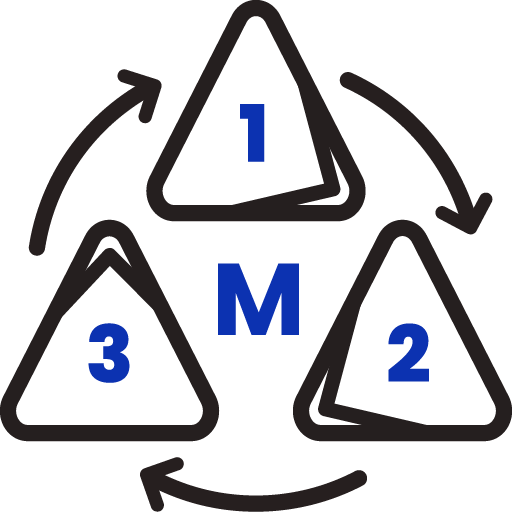
Three kinds of Metric for three moments. M1s prove you've done it before for customers like them. M2s are the customer's own numbers, each with an owner, a baseline, and a target. M3s are the goals you track together after go-live, and each one you hit becomes a new M1.

The textbook letter

The person with the overall buying authority.

The MEDDICC way

One person: the one with discretionary power over the funds. You move them from Assumed to Confirmed to the Go, and you don't commit a deal until you have the Go.

The textbook letter

How the customer will evaluate your solution.

The MEDDICC way

Three types: Technical, Economic, and Relationship. You find out what they are, then work with your Champion to inspire and shape them around what only you do.

The textbook letter

The steps the customer takes to make a decision.

The MEDDICC way

Two tracks that run side by side, business evaluation and technical validation, and both start at the first meeting. You map each step and who owns it, then use the map to create urgency instead of waiting for it.

The textbook letter

The steps from decision to signature.

The MEDDICC way

Includes the Go Live Plan, which maps legal, procurement, and security with the customer and carries the plan past signature to the first value they see.

The textbook letter

Find the customer's pain. The original MEDDIC calls this element Identify Pain.

The MEDDICC way

Also called Implicate the Pain. Three levels for every stakeholder. I1 Identify is the pain and why it matters to them. I2 Indicate is what it does to their day and their team. I3 Implicate is what it means for the business, in economic value, efficiency, or risk.

The textbook letter

Someone inside the customer who supports you.

The MEDDICC way

Every stakeholder is a Contact, a Coach, or a Champion. A Champion passes three tests: Power and Influence, a Vested Interest in your success, and Selling for You when you're not in the room.

The textbook letter

The other vendors in the deal.

The MEDDICC way

Anything competing for the same money and attention: external rivals, adjacent solutions, and incumbents, plus internal competition like self-builds, other priorities, budget moves, and plain inertia. You beat both through the Decision Criteria.

“The framework for competitive trap setting, combining implicated pain, metrics, and decision criteria, is a game changer for my current deal strategy!”
Maximilian GeiselhartMaximilian GeiselhartSolutions Engineer, TeamViewer

Not all MEDDIC is equal

The letters are public, and plenty of people teach them. This page describes MEDDICC's version. Here is why we run it the way we do.

1

Elements, not letters

We call them elements because each one has real depth, and because they overlap. A Champion is only as strong as the pain and Metrics they believe in, and an Economic Buyer only gives you the Go when the value is clear to them.

2

Methods, not just questions

Qualifying tells you where you stand. The methodology tells you what to do about it. Take the Champion:

Qualifying asks
  • Have I found a potential Champion?
  • Do they have Power and Influence?
  • Have I tested them?
The methodology answers

When the answer is no, you don't shrug and carry on, and you don't always qualify out. You use discovery to find new stakeholders, then storytelling, reference selling, and value selling to build one of them into a Champion.

3

One language for the whole deal

The same elements carry from the first meeting to renewal, and across every team that touches the customer. MEDDICC builds them into your sales process, how you measure execution, and how you talk about value, so nobody has to learn a second language.

Why we don't add a third C for Compelling Event

Some teams add Compelling Event as another letter. We don't. Compelling Events matter, but an event only becomes compelling when there is urgency behind it, and real urgency comes from several elements working together: Implicated Pain, quantified with Metrics, differentiated in the Decision Criteria, and believed in by a Champion who takes it to the Economic Buyer.

“Although I implemented MEDDPICC in the past, the depth and scope of this of course was so impactful, that it revolutionized how I approach my customers and prospects moving forward.”
Harry ShafferHarry ShafferEnterprise Account Executive, Velocity1
Read more about NAMIE →

How MEDDPICC fits your sales process

MEDDPICC sits inside the stages you already run and adds the evidence each one needs, so a deal only moves forward when the buyer has given you a reason to move it.

Example stages. Your stage names and exit evidence will be your own. The blue tags are MEDDICC's shorthand for each level, explained in the eight elements above.

To leave Discover, you have
  • Implicate PainEach stakeholder's pain and why it matters to them, in their words I1 Identify
  • MetricsA customer story, with results, that matches their situation M1
  • ChampionA potential Champion identified
Playbook play for this stage
NBMs

Run better New Business Meetings

See the play →
“Applied new knowledge to my sales process in M1's, M2's and M3's. I was doing most of this already, but did not have a methodology that I applied.”
Chad ZilkaChad ZilkaVice President of Sales, Apps Associates
Blueprint
MEDDPICC built around your stages

Blueprint maps the elements, exit evidence, and plays onto your own sales process, in your language.

See Blueprint →

A MEDDPICC example: one deal, eight elements

You sell for NightHound, a cybersecurity platform. Maddox Industries is switching on a new clean-energy division, and you have a meeting booked. This is what the enterprise deal looks like in MEDDPICC.

You sell for
nighthound

Cybersecurity platform

Your customer
MADDOXIndustries

Founder-led clean energy and defense

10,000new devices coming onto the network
Augustthe new division goes live
About 200 daysto detect a breach today
Value
Why Maddox should change
“Honestly? We're drowning. Thousands of alerts a day... I'm not confident we'd know if someone was already inside.”
Violet Hayes, CISO, Maddox Industries
Implicate Pain

The pain (I1): thousands of alerts a day, and no confidence they'd spot a breach. What it does (I2): it takes about 200 days to detect one. What it means (I3): someone who gets in the week of the launch could still be inside next year, next to Maddox's IP.

Metrics

About 200 days to detect a breach. It's Violet's number, not yours, and the target is minutes by the time the division goes live.

Decision Criteria

Written with Violet, in her words: detection in minutes, one platform across all 10,000 devices, and evidence that stands up in a defense audit.

Stakeholders
Who the value is for, and what's in the way
Champion

Violet Hayes, the CISO. You know she's a Champion when she quotes the 200 days to Jax and the CTO in a meeting you're not in.

Economic Buyer

Jax, the founder and CEO. He has promised the board and the market that the division ships this year, and what he cares about most is that the IP stays at Maddox.

Competition

One rival is the smallest part of it.

  • The rival
  • The incumbent's bundle
  • Their own engineers
  • The patchwork that works well enough
  • A launch that eats the budget
The path
From decision to go-live
  1. Decision Process

    The technical evaluation and the defense audit run alongside the business case, with every step dated back from August.

  2. Paper Process

    Security review, procurement, and legal mapped with owners and dates, and a Go Live Plan that has NightHound live before the division switches on.

  3. August: go-live

    “We need this live before the division switches on in August.” A real date, tied to a real consequence, in Violet's words.

NightHound, Maddox Industries, and the people in this deal are fictional. They come from the Three Whys episode of the MEDDICC Playbook Show. See the Three Whys play →

One language for the whole revenue team

MEDDICC customers use the same elements across marketing, SDRs, account executives, sales engineers, customer success, and sales leadership, and with the AI agents that work beside them, like Winni AI.

MEDDICC's software works with Salesforce, HubSpot, and Microsoft, and opens MEDDPICC to AI agents through an API and MCP, so agentic AI coaches and inspects deals in the same language your team uses.

“Nothing more satisfying than hearing the team doing their weekly forecast utilizing a common language and having a genuine understanding of their deals.”
Jon Clement-SmithJon Clement-SmithVice President of Sales and Customer Success, Together Software from Absorb

Who created MEDDIC?

From PTC in 1996 to a US federal court ruling in 2026.

  1. 1996

    MEDDIC is created at PTC

    Dick Dunkel created MEDDIC at PTC under John McMahon's leadership. It covered Metrics, Economic Buyer, Decision Criteria, Decision Process, Identify Pain, and Champion.

  2. Then

    MEDDICC adds Competition

    Teams selling into crowded markets added a second C. MEDDICC is also our company name.

  3. Then

    MEDDPICC adds Paper Process

    The P covers everything from the decision to signature. MEDDPICC is now the most common version.

  4. Today

    MEDDICC adds the depth

    We teach MEDDPICC with depth in every element: M1 to M3, I1 to I3, Contact to Champion, three Decision Criteria types, and the Go Live Plan.

April 2026 · US federal court ruling

The court confirms MEDDPICC belongs to everyone

A US federal court cancelled a MEDDPICC trademark and confirmed that MEDDPICC is a general sales methodology.

Read about the ruling →

MEDDIC vs MEDDICC vs MEDDPICC

We're not precious about the variation. What changes results is the depth your team runs it with and how many of your teams run it the same way. Read the full story of who created MEDDIC →

Andy's take

Stop X-raying your deals

MEDDIC was built at PTC in 1996 to qualify deals. Thirty years later, most teams still only use it for that, which is a bit like owning an iPhone and only using it for calls and texts.

Where it started

Dick Dunkel created MEDDIC at PTC under John McMahon's leadership. It worked. PTC grew from $300m to over $1bn in four years and hit its number 43 quarters in a row.

Then the letters kept coming. MEDDICC added Competition. MEDDPICC added Paper Process. Every version made the checklist a little longer.

And a longer checklist is still a checklist.

The X-ray

You'll hear MEDDIC described as an X-ray. Run it over a deal, find the broken bones, decide whether to keep going.

That's useful. Qualifying out fast is a good thing, and MEDDPICC is brilliant at it. But an X-ray only shows you what's already broken.

I don't want broken bones. I want to avoid the fall.

Qualify it, then run it

Take the Champion. Qualifying asks whether you have one. Do they have Power and Influence? Have you tested them? Important questions. So what do you do when the answer is no?

You don't shrug and carry on. You use discovery to find new stakeholders, then storytelling, reference selling, and value selling to build one of them into a Champion. Those are methods. Organize enough of them consistently, in one language, and you have a methodology.

Do that for every element and MEDDPICC stops being a list of questions you ask about a deal. It becomes how you run the deal.

Value, measurement, and the plays

Once every element has depth, the rest follows. Implicated Pain, Metrics, and the Decision Criteria are your value framework, so nobody on the team has to learn a second language to talk about value.

The same elements give you something real to measure. The quality of execution, deal by deal and team by team, instead of how many calls got logged.

And they're what the best playbooks are written in. The 3 Whys, the Go Live Plan, BVAs, New Business Meetings. Every one of those plays is MEDDPICC elements in a specific order, aimed at a specific moment in the deal.

Every team, every stage

MEDDPICC doesn't stop at signature. The goals you agree become M3s that Customer Success tracks with the customer after go-live, and every M3 you deliver becomes the M1 your next seller opens with.

Marketing writes to the same Implicated Pain your SDRs open with, sales engineers validate against the Decision Criteria the AE helped shape, and leaders forecast on the same evidence, with AI agents like Winni AI working beside them in the same language.

One set of words, from the first ad a buyer sees to the renewal three years later. That's a common language.

So be honest. Is MEDDPICC how your team checks deals, or how they win them?

How MEDDPICC compares with other sales methodologies

Each of these does something well. The table shows which parts of a deal each one covers, and the tabs below show what each is built for and where it runs out.

Which parts of a deal each sales methodology covers, against MEDDPICC run the MEDDICC way
What it coversMEDDPICC the MEDDICC wayBANTSPIN SellingSPICED from Winning by DesignCommand of the Message from Force ManagementSandlerChallenger
Quantified value (Metrics)YesNoPartialPartialPartialPartialPartial
Who holds buying authority (Economic Buyer)YesPartialNoPartialNoPartialNo
Internal advocate (Champion)YesNoNoNoNoNoPartial
What you are evaluated against (Decision Criteria)YesNoPartialPartialPartialPartialPartial
How the decision gets made (Decision Process)YesPartialNoPartialNoPartialNo
Decision to signature (Paper Process)YesNoNoNoNoNoNo
The pain and what it means (Implicate Pain)YesPartialYesYesYesYesPartial
Competitive risk, including doing nothing (Competition)YesNoNoNoPartialNoPartial
The full deal, first meeting to go-liveYesNoNoPartialNoPartialNo
BANTBudget, Authority, Need, Timeline
MEDDPICC, the MEDDICC wayThe eight elements, run with depth
Built for
BANT: built forA fast first check on whether a lead is worth a meeting.
MEDDPICC: built forComplex B2B and enterprise deals with several stakeholders and a business case behind them.
Best when
BANT: best whenVolume is high, cycles are short, and one person decides.
MEDDPICC: best whenDeals involve a buying group, procurement, legal, and an Economic Buyer who has to say go.
Strong at
BANT: strong atIt's easy to teach and quick to run on a first call.
MEDDPICC: strong atValue and stakeholders in one language, from the first meeting to renewal, for every team that touches the deal.
Runs out when
BANT: runs out whenSeveral stakeholders are involved, budget is created during the deal rather than found, and you need to know how to win, not only whether to pursue.
MEDDPICC: runs out whenThe sale is transactional, with one buyer, a low price, and a short cycle. Getting fluent also takes training and coaching.

Using bothMany teams keep a BANT-style check at the SDR handoff and switch to MEDDPICC once a real opportunity exists.

Read the full comparison: MEDDPICC vs BANT →

MEDDICC's own comparison. Last reviewed November 2026.

MEDDPICC training and how to get certified

MEDDICC provides MEDDPICC and MEDDIC sales training for individual sellers and for enterprise sales teams. The MEDDPICC Masterclass teaches every element in depth and ends with MEDDPICC Certification.

Learning it yourself

Get fluent, and get certified

The MEDDPICC Masterclass teaches every element in depth and ends with MEDDPICC Certification. MEDDICC Membership adds Winni AI, Deals, Calls, the Playbook, and every other MEDDICC program.

Rolling it out to a team

Make your revenue team fluent in MEDDPICC

We roll MEDDPICC out across mid-market and enterprise sales teams with the Masterclass, Coaching Kits, live workshops, and software that brings it into every deal review and forecast call.

Free download

Not ready to buy? Get the MEDDPICC Buyers Guide

Everything you need to compare your options and choose the right way to roll out MEDDPICC.

Questions about MEDDPICC

What is MEDDPICC?

MEDDPICC is the common language revenue teams use to win complex B2B deals: a sales methodology built on eight elements. They are Metrics, Economic Buyer, Decision Criteria, Decision Process, Paper Process, Implicate Pain, Champion, and Competition. It began as MEDDIC at PTC in 1996, and teams still use it to qualify deals.

What does MEDDPICC stand for?

MEDDPICC stands for Metrics, Economic Buyer, Decision Criteria, Decision Process, Paper Process, Implicate Pain, Champion, and Competition. MEDDIC, the original, stands for Metrics, Economic Buyer, Decision Criteria, Decision Process, Identify Pain, and Champion. MEDDICC adds Competition, and MEDDPICC adds Paper Process.

What is MEDDPICC and how is it different from MEDDIC?

MEDDIC is the original, created at PTC in 1996. MEDDICC adds Competition, and MEDDPICC adds Paper Process, which makes it the most common version today. MEDDICC is also our company name. The bigger difference is depth: the version matters less than whether your team runs each element as a method or just a checklist.

Who is MEDDICC for?

MEDDICC works with B2B sales organizations of every size, from individual sellers building their skills to enterprise sales teams of thousands. MEDDPICC rollouts are usually led by CROs, sales leaders, RevOps, and enablement leaders. MEDDICC is strongest in tech companies, and the methodology works in any complex B2B sale.

How does MEDDPICC fit into a sales process?

MEDDPICC runs inside the stages you already have. It doesn't dictate your stages. It enriches them by setting the evidence a deal needs before it moves on, such as Implicated Pain and a mapped Decision Process before you propose, or the Economic Buyer's Go before you commit a deal to the forecast.

How do I embed MEDDPICC into Salesforce or my CRM?

Add the eight elements as fields on the opportunity, make them the exit evidence for each sales stage, and coach against them in every deal review and forecast call. MEDDICC's software works with Salesforce, HubSpot, and Microsoft, so Deals, Calls, and Winni AI run MEDDPICC inside the CRM your team already uses.

How much does MEDDPICC training cost?

For one seller, the MEDDPICC Masterclass costs $499 for 12 months and includes MEDDPICC Certification. MEDDICC Membership costs $899 a year and adds Winni AI, Deals, Calls, the Playbook, MEDDICC Live, and every other MEDDICC program. Team Membership is priced by seat. Prices are as of November 2026.

How do I get MEDDICC certified?

Complete the MEDDPICC Masterclass. It teaches every element in depth and ends with MEDDPICC Certification, which you can add to your LinkedIn profile. You can buy the Masterclass on its own or get it with MEDDICC Membership, which adds Winni AI, Deals, Calls, the Playbook, and every other MEDDICC program.

Every winnable deal won, on time, at full value

It starts with a team that speaks MEDDPICC the same way, from the first meeting to go-live.