




























 The MEDDICC Buyers Guide
 Customer Stories
 Team membership
 What is MEDDPICC?
 NAMIE
 Metrics
 Economic Buyer
 Decision Criteria
 Decision Process
 Paper Process
 Implicate the Pain
 Champion
 Competition















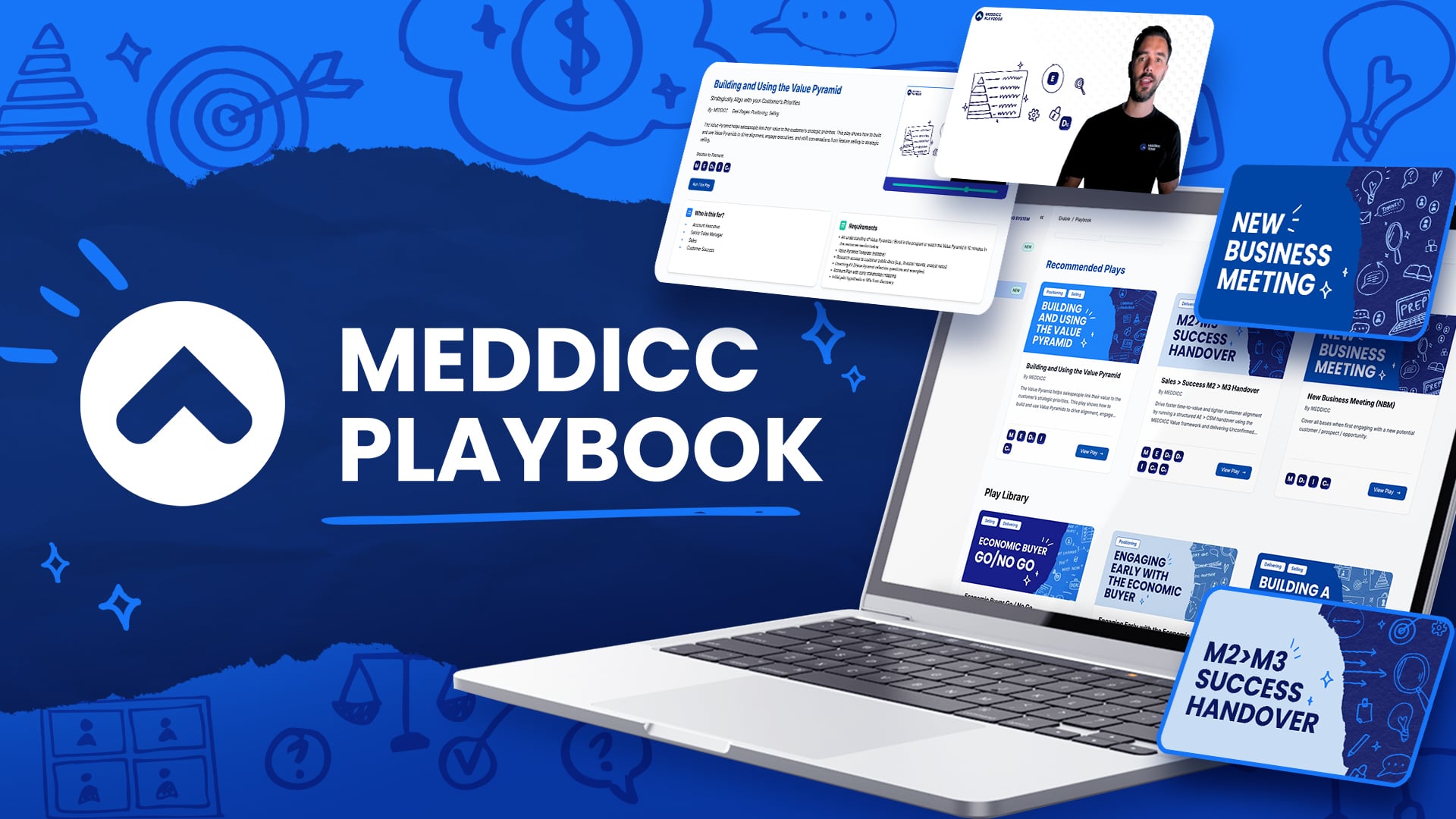

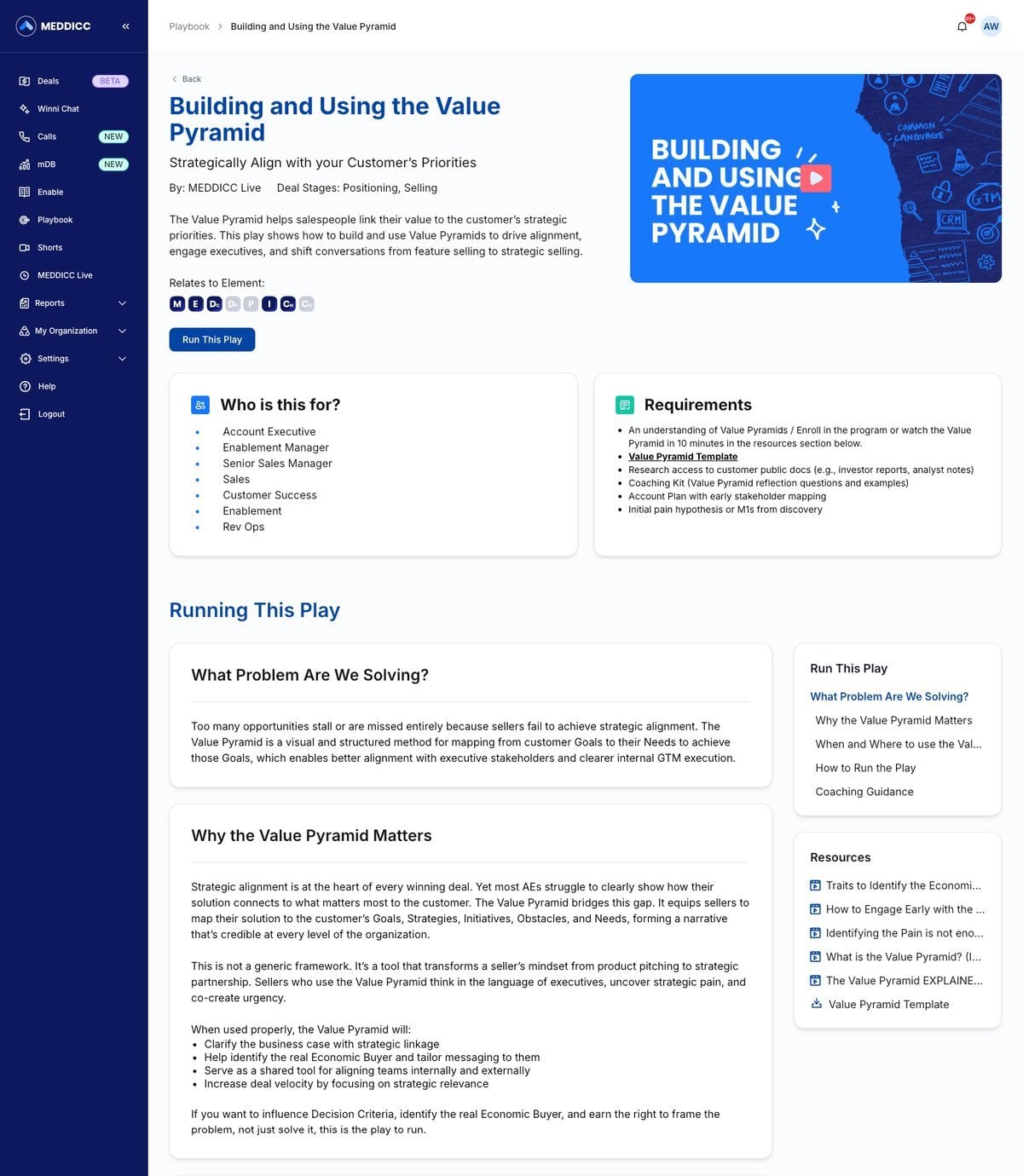
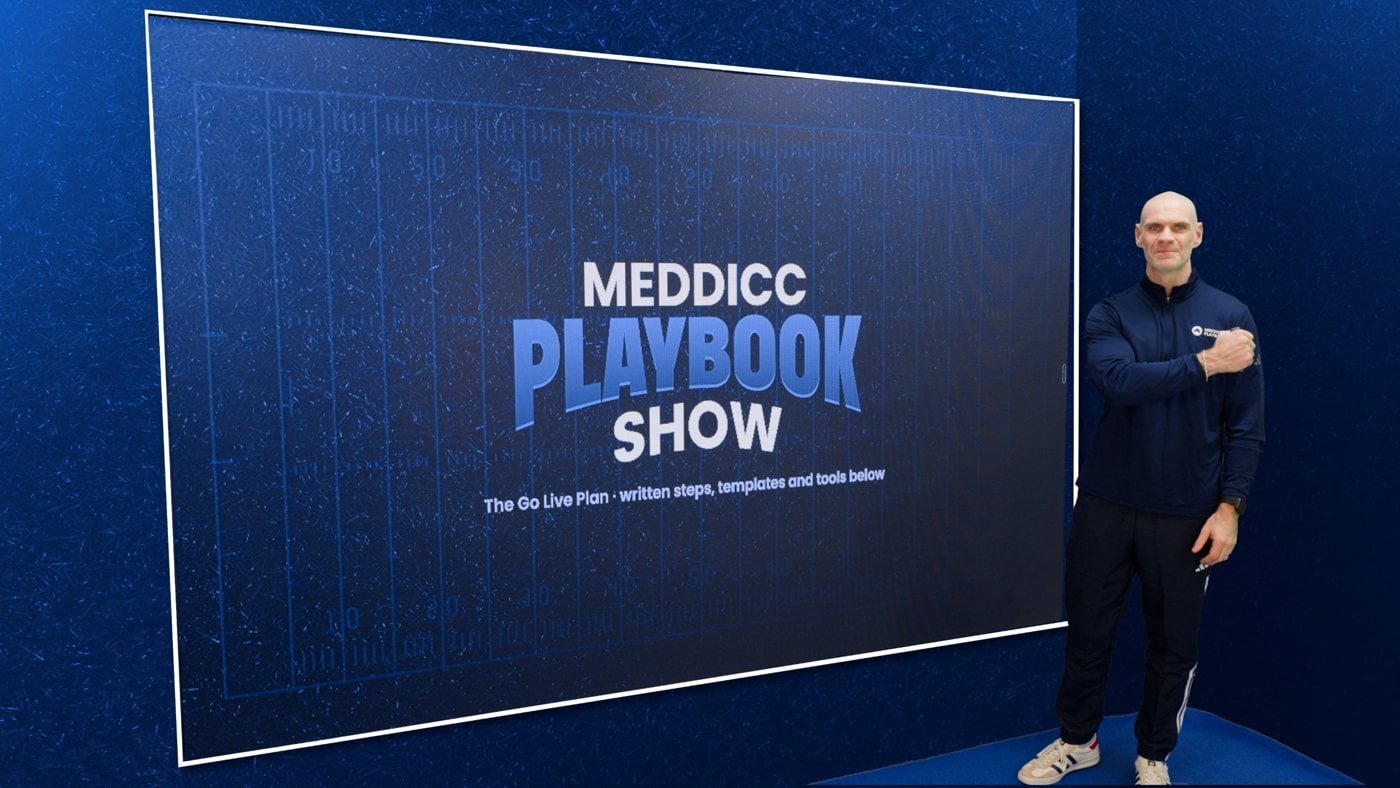
In most revenue teams, the playbook is tribal knowledge. It lives in the heads of a few top performers and leaders, and each of them speaks a different dialect. MEDDICC Playbook puts those plays into one common language, underpinned by MEDDPICC, so every seller runs them the same way.
Everyone speaks a different dialect
Ask three people on the same sales team what a Champion is. You'll get three answers.
One means the friendly contact who always takes your call. One means the person who sells for you when you're not in the room. The third means whoever is signing. Same word, three very different deals sitting in the same forecast.
Commit is no better. To one manager it means the paperwork is with legal. To another it means "I've got a really good feeling about this one."
None of them are bad at selling. Most of them learned it somewhere good. They just learned it in different places, from different managers, at different companies, and brought their version with them. So the AE, the SE, the manager and the CRO each speak a slightly different dialect, and a new hire picks up whichever one they hear first.
That's tribal knowledge. It works right up until the person holding it leaves.
The playbook travels with people
The playbook the best companies run has a family tree. MEDDIC was born at PTC in 1996, where John McMahon's team took sales from $1 million to $1.1 billion in nine years. The people who learned it there took it with them to Snowflake, MongoDB, Datadog and every company they scaled after that. By our count, over 500 CROs and SVPs came out of the first two generations of MEDDIC companies.
The latest chapter came this August. OpenAI hired Dali Rajic as its CRO. His path runs AppDynamics, Zscaler, Wiz, then OpenAI, and Fortune describes him as following MEDDPICC and as part of the "PTC Mafia". OpenAI's president, Greg Brockman, said he wants Rajic to "turn what we've learned into repeatable execution."
That's what a playbook company looks like. One written set of plays, one language, run the same way by every seller at every stage of the deal. The system wins the deals, so you don't need heroes to.
Most teams can't hire the playbook
OpenAI could hire the person who carried the playbook. Most companies can't. And even when you do land a leader like that, the playbook still lives in one head until it's written down and the whole team speaks it.
That's the problem MEDDICC Playbook exists to solve.
Why MEDDPICC sits under every play
Handing a team a set of plays doesn't fix the dialects on its own. Give ten regions the Three Whys, a mutual plan and a business case template and you'll get ten versions back, because the words underneath still mean different things.
So every play in the Playbook is built on MEDDPICC. The Champion in the Champion Deck is the same Champion your manager tests in the deal review. The Metrics in the Value Pyramid are the same Metrics in the business case you take to the Economic Buyer. An Account Executive, a Sales Engineer, a manager and a partner can pick up the same deal and read it the same way.
MEDDPICC is the language. The plays show your team how to use it at each moment of the deal.
Where the plays come from
Some of the plays are universal. The Three Whys, the business case and the Champion test have been run by the best sales teams for decades, and we don't pretend to own them. Others we built ourselves, like the Go Live Plan. Either way, what's usually missing is the How, written down, in one language, somewhere the whole team can find it.
Every play in the Playbook comes with the Why, the What and the How: a video, step-by-step guidance, a workshop and templates. And we're picky about what gets in. A play only goes into the Playbook once it's been tried and tested in the field. That's 30+ plays, each mapped to the moment in the deal where it belongs.
Written, shared and inspected
A real playbook passes three tests. It's written down. It's shared, in the same words, by everyone who touches the deal. And it's inspected every week, in deal reviews and forecast calls.
Most teams pass the first one, sort of. There's a deck from the last sales kickoff somewhere in a shared drive.
The Playbook lives in mOS, next to your deals. The play shows up on the opportunity, managers coach it before the meeting, and the deal review checks whether it was run. Snowflake's Chris Degnan said methodologies work when they're "reinforced relentlessly." That's the bar.
So try this. Ask three people on your team what a Champion is.
Do you get one answer, or three?