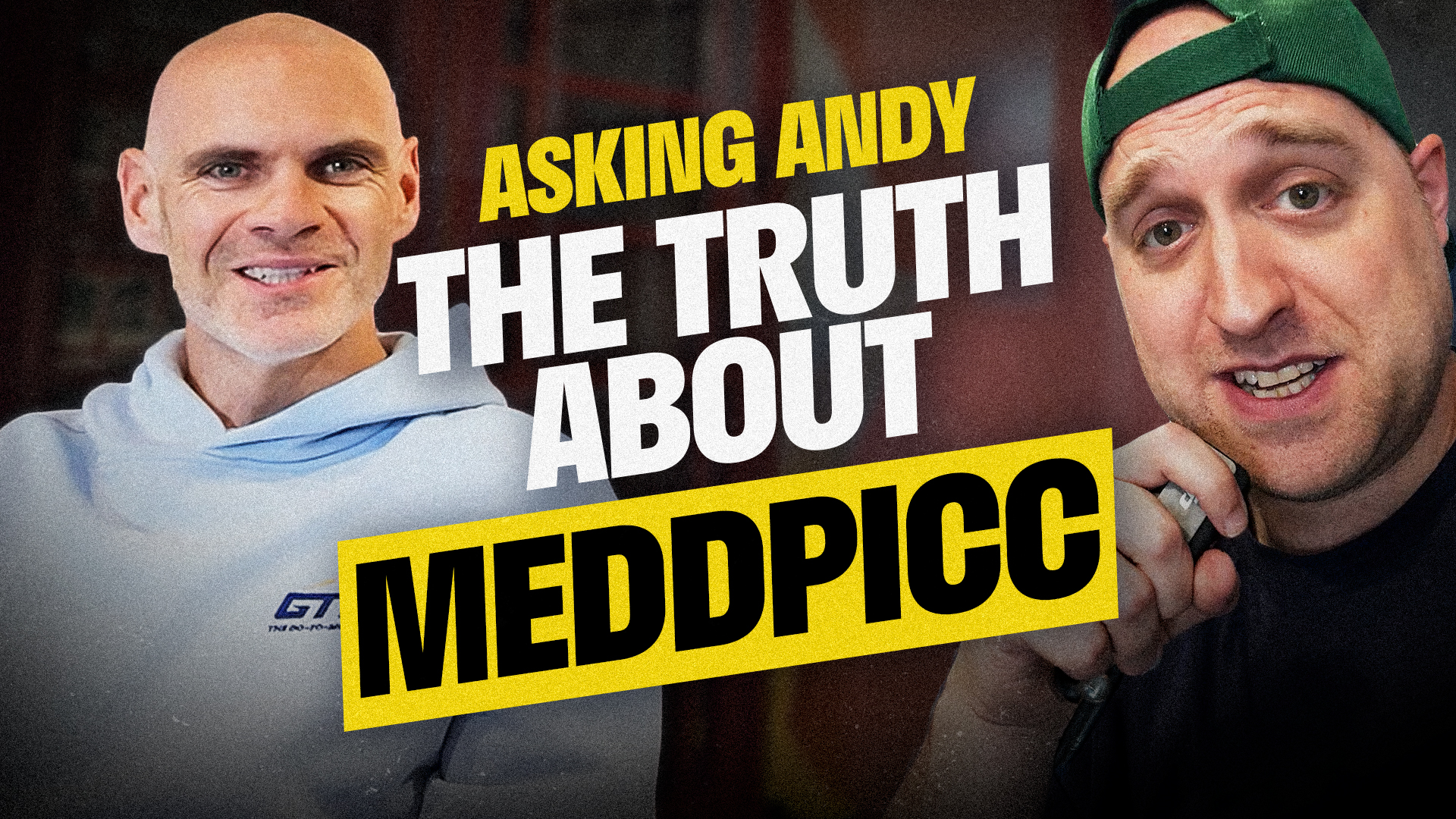
00:00:00 Nick: I have some more questions for the boss. Let’s go and see him. Boss, I’ve got more questions for you. You got five minutes? 00:00:07 Andy Whyte: Sure. 00:00:08 Nick: What do you think of when you hear “We lost on price”? 00:00:11 Andy Whyte: “We lost on price”? [unclear] If somebody says that, I think: no, you didn’t. You didn’t lose on price. If you’re selling to somebody on price, you’re selling to a bad buyer, an unqualified buyer, because no one smart makes a business decision based on price. They buy based on value, right? And the best way I can frame this up, because I can remember when it clicked for me, very early in my career, at this moment where I said, “Okay, that makes sense”: let’s say you were looking to get a car, and you’re going to lease it, just to make it all really straightforward. You come to me and say, “I want to lease a car from you. I’ve got a $1,000-a-month budget.” And I say, “Okay, a thousand.” And I’m thinking to myself, “Well, I don’t have any cars for a thousand.” So I ask some questions, trying to understand what you’re trying to do. I ask you how much you spend on fuel a month, how much you spend on insurance, and how much you think you spend on maintenance. 00:01:10 Andy Whyte: And you’re like, “Oh, probably $100 a week on fuel, and 100 here for this,” and let’s say it totals up to $600, just for argument’s sake, on maintaining, insuring and fueling the car. So $1,600 a month is actually what you’d spend. That’s your real budget. If I then say to you, “Buy a car from me, it comes with half-price fuel. Buy a car from me, it comes with maintenance. Buy a car from me, we insure it for you,” then all of a sudden you’re saving, let’s say, $400 or $500 a month. And I say the best news is, my car is $1,200 a month. You could be $400 better off than you would be, but your budget was $1,000. Would you, I mean, tell me, would you go for that, if you were going to spend $1,600 anyway, and I’m telling you that, all in, you’re going to spend $1,200? So it’s always a question of value. People want to get good value, not necessarily a price. The price is just a figure they associate with what they think the value is that they’re going to get. 00:02:13 Andy Whyte: But if you can find more value through discovery, by speaking to more people in the business, by finding more pain, and basically by quantifying the value you can create by solving that pain, then budget isn’t the thing. Value is. Price is something that maybe people from outside of sales will look at and think, “Well, of course they want to charge the most money for the most things.” But actually, those in the know want to make sure the person they’re selling to is getting the most value for it, and knows what the value of that thing is. 00:02:44 Nick: When you hear “We lost on price” in a closed-lost review, where does your brain go? Does it go into unpack mode, and try to find out, “Okay, what actually happened here?” 00:02:54 Andy Whyte: Exactly, because you don’t lose on price. You lose on either value, where the customer’s like, “I can see your solution is better, but the price doesn’t justify the increased investment,” so they don’t get the value, right? You might have done an okay job in that situation. The customer can see there’s more from your solution, but they can’t justify the increased cost. Or you’ve just not differentiated at all. We had a situation, I think it was last year now, where we were buying a customer success platform for our business. Our COO had a recommendation; she had bought it in her previous role. And I said, “Hey, let’s get another vendor in and compare the two against each other, to make sure the pricing is right.” And from what we could tell, they both did exactly what we needed them to do. There wasn’t anything different between the two, so it did just come down to price in that instance. 00:03:48 Andy Whyte: Now, I’d like to think that if I were working for the losing party, I would have had a better point of view. I would have been able to find something, even if the solutions were the same. I’d have been able to do a better job as a salesperson, to present myself as the better partner, the one that understands the business, the one that’s going to serve them better. Even if the products are technically the same, there’s always an angle you can find to create more value. Or not, which means you should just qualify out. 00:04:13 Nick: Economic buyer. What is the biggest mistake AEs make trying to get to them? 00:04:17 Andy Whyte: Doing it alone. And people will instantly think I’m going to say one thing here, which is that they should use their champion to get to the economic buyer. And that’s true. But what I actually mean by doing it alone is that they see it as their responsibility to engage the economic buyer, when actually the most success comes when they use their team: their manager, or somebody even more senior. You want to almost align seniority. So if your manager is a director of something and the economic buyer is a CXO, then look in your business: is there someone who’s willing to make that connection? It doesn’t have to be CXO to CXO, but try and level up a little bit, because that’s going to increase your chances of getting that engagement. The economic buyer can be like, “Okay, this is my kind of person.” It feels a little bit more like you value their time if somebody more senior is engaging and saying, “Hey, look, my team is engaged with your team. It sounds like there’s a lot of real excitement going on here. I’d love to engage, and if we do work together, I’ll be your executive sponsor.” Whatever the angle is. 00:05:20 Andy Whyte: But that’s the thing. So often, the scenario looks like this: the deal rolls on, and the salesperson struggles to engage the economic buyer. They can’t get engagement. They’re either being kept away or pushed back down. Then it gets to the point where we’ve gone beyond the point of economic buyer engagement, and now we’re on the back foot. We’re losing the deal because we didn’t get that sponsorship engaged early. And then everyone goes, “Oh, let’s get the manager involved. Let’s get this person involved,” and it’s too late. So don’t do it alone. Use your team. 00:05:49 Nick: That early piece, I think, is quite important as well, because a trap I’ve seen a few people fall into is that they assume it will come later in the stages, whereas it’s actually something you’ve been very consistent about: you want to get that engagement early on in the cycle. 00:06:06 Andy Whyte: Yeah. Right now, as we speak, somewhere in the world there’s a war-room meeting going on, because some sales team has left it too late to engage the economic buyer. If not right this moment, then in the calendar for today, there will be a meeting where they’re in some war room, brainstorming tactics to try and engage the economic buyer too late. You’re already on the back foot. You want to be on the front foot. 00:06:27 Nick: So, you’ve said budget objections are never actually about budget. What are they about? 00:06:31 Andy Whyte: Value and priorities. And those two are linked. What I mean by that is, whatever’s going on in the organization, they have a budget that’s set aside for investments, right? So if something is locked in as an investment, as something they’ve budgeted for, and you can come in and prove your solution is going to provide more value, then that budget can be moved. It can be shifted toward your project. And vice versa: if you’re working on something that’s had budget allocated to it, that budget can be stolen from you. So really, it’s a game of prioritization. You want to make sure you’re putting enough value on the table that your project, your solution, whatever you want to call it, is at the top of the priorities list, which is all about value, right? No one’s going to go, “Wow, we’re going to put this at the top because we like the salesperson,” or because they were first in the door. It doesn’t work like that. It’s always going to come back to value, which, in this context or any context, is economic value. Is this going to make us more money, or save us more money? 00:07:45 Andy Whyte: Efficiency is similar to that. Are we wasting resources on something? Is something not as effective as it could be? And the one people always forget about is risk, because risk can rapidly change priorities. If an organization becomes aware that they’re susceptible to a fine, or that people are going to start leaving the business, or there’s some competitive threat, then that will get pushed right to the top of the priority list. So you have to be thinking about value. It’s not really going to be about budget, because budgets can be created if there’s enough value, and they can also be stolen if there’s not enough value. 00:08:17 Nick: On cost, something I was thinking about recently that I think will resonate with people is the cost of doing nothing. People will be thinking about their immediate budgets, depending on what quarter they’re in, and they might think they’re saving money in the long run by not going for a solution. But there could be a greater cost to not doing anything, like inertia, or whatever it may be. 00:08:39 Andy Whyte: Yeah, that’s the one. Once people click and understand that the cost of inaction is as powerful as, and sometimes more powerful than, the cost of the pain itself, it’s about really making the person realize that if they don’t take action here, it’s not just going to stay as it is. It’s going to get worse. People have this thing, and it’s a natural human reaction, where we’re risk averse, right? So if you’re presented with a situation that seems okay, and someone’s saying, “Hey, if you take this risk, make this decision, make this investment, it might get better,” you think, “It might, but it’s okay at the moment.” And that’s where inertia happens, which is why most people lose deals not to competitors, but to doing nothing. But if we can present the case that doing nothing is the riskiest thing of all, that’s how you get customers to take action. And the way to underpin the cost of inaction is in the business case. It’s not just, “If you spend $1 with me, I’ll give you $2 back.” It’s, “If you don’t spend a dollar with me, you’re going to start losing dollars.” 00:09:46 Andy Whyte: So it’s not “spend one, get two back.” It’s “don’t spend any, lose five.” That’s the kind of mindset we need to be presenting. Obviously, we’ve got to be authentic. We’re not making things up. But we have to focus on the cost of inaction just as much as the ROI, which is the most famous term used in relation to value. 00:10:07 Nick: Quick maths. Yeah. Can AI actually help an account executive, or is it a bit of a red flag? 00:10:14 Andy Whyte: Well, the short answer is, of course it can help. But it can also be a massive red flag. I’m faster than ever at filtering through sales messages sent to me. I’m rapid now. Before, even with automated cadences, there was still some manual action that went into them. Whereas now, because of AI, I’m so quick to go, “That’s AI,” and not even bother reading past the first line. I think we’re all getting conditioned to do the same thing. We start reading posts, or I even hear adverts now, and I’m like, “That script for that advert is from AI,” so I just disregard it. It loses credibility; I lose interest. So the answer here, for me, is that you can’t just use AI as a salesperson to do the things you used to do, so you don’t have to do them anymore. You have to use AI to make yourself better. For example, yesterday I was working with Kensi on, not a proposal, but a three-page slide deck or PDF following a first meeting, to really show the economic buyer our position on something. I could have just used AI, input the transcripts and said, “I want this to say that.” 00:11:29 Andy Whyte: And it would have created a very good-looking, three-page PDF that did exactly what I wanted it to. That’s an example of using AI to do something I’d normally do. Instead, what I was able to do was work with AI to really think about what the theme of what they’re trying to do is, and add some creativity to it. So what they actually got was a very, very personalized PDF. Just for fun, because their theme is around space, I was able to get everybody’s headshots, put them in astronaut suits, and make a rocket-themed deck. Just little things like that. I would have been able to do it myself; I still have those Photoshop skills. I’m kind of a big deal in the Photoshop game. But I wouldn’t have had time in the window I had. So it was a question of: do I use AI just as a shortcut, and take a third of the time it would probably take me normally? Or do I use the same amount of time I would have without AI, and get something that’s much better as a result? 00:12:29 Nick: I think you’ve described it best in the past, particularly when it comes to things like research reports: it’s like a really good junior analyst that can speed things up, but it’s not necessarily going to replace a lot of the human skills and mindset that are going to make or break a deal. 00:12:46 Andy Whyte: Yeah. I can remember saying that. It’s maybe not quite a year ago now, which is kind of scary, but I almost feel like it’s evolved a bit from the junior analyst. Where I see it now is: if you’re not an A player, it’s taking all the B-player traits away. So you really have to be thinking about being at the sharp end of your game. Where I think AI still struggles is in connecting dots. Where A players are very good is that they can see different bits of context and pull them together to tell a story, to connect those dots and make smart decisions. And in taste. AI can still be creative, but you have to inspire it with what to do. Like the astronaut story I gave you before: you have to say, “Turn these people into astronauts.” AI isn’t necessarily going to know to do that, though it’s probably getting closer. Whereas the actual taste of these things: is that the right thing to do? Will that make the economic buyer smile? Will it make them want to work with us more? I don’t think AI is going to have that taste, that intuition, for a while, if ever. 00:13:51 Nick: What’s one MEDDICC element you wish more people would zone in and lock in on? 00:13:56 Andy Whyte: Wow. Well, I’m actually going to say decision criteria here. I think most people would expect me to say champion. But in relation to your question, which ones you wish more people would focus on: I think everyone in sales who knows what they’re doing focuses on champion. I always say you’re not a salesperson if you’re not selling with a champion, because you can’t sell without a champion. All of the best endeavors salespeople make need a champion to be effective. So for me, the short answer to your question is decision criteria. It’s the MVP of MEDDICC. Most valuable player. 00:14:31 Nick: Why are you so attached to the decision criteria side of it? Because I think people will be surprised. Some people might say it’s about the economic buyer, the person with the purse strings, if you like. Some people would go champion, because, like you said, no champion, no deal. 00:14:47 Andy Whyte: Yeah. So why decision criteria? Because it’s the one that empowers all of those other important elements, right? Take champion, for example. A champion has to have a vested interest so that they sell for you. That’s the number one thing. They’re not going to be selling for you unless they have a vested interest. If they’re selling for you without a vested interest, they’re effectively just a cheerleader, and no one will take them seriously. They’ll get argued down, and they’ll have no reason to stand up to being argued with. So vested interest is absolutely critical to having a champion, and you’re not going to get to the economic buyer without a champion. So they all connect, right? Pain is how you find the vested interest. But how you make it a vested interest in you, rather than just in the initiative, how you make it a vested interest in your solution, and not in your solution plus everyone else that has a solution like it, is decision criteria. It’s by being proactive, inspiring and influencing the customer to see the world your way, how your solution does things, so they associate the value you’ve put on the table with only your solution. You’ve differentiated; you’re unique. 00:15:56 Andy Whyte: So that’s why I like decision criteria so much. It’s how you lock out everybody else, all the other solutions. It’s how you make sure you’re not building pipeline for your competitors; you’re building pipeline and value only for yourself. And there are all these beautiful byproducts you get from that. By entering into a conversation with a hypothesis, a point of view on value and on how the customer should do things, the customer sees you as a consultative seller. They’re like, “Oh, I learn from this person. I like engaging with this person. They make me feel smarter.” They’re more likely to want to introduce you to other people in the business. It’s just a better experience. So there’s nothing but good that comes from really doubling down on decision criteria, being proactive, and using it as the way to frame your point of view. Make sure any value you find isn’t left lying loose for all of your competitors to come and go, “Yeah, we do that as well,” so that the customer can only see your solution as the way to get it. 00:17:00 Nick: Thank you, boss.