







































We have a problem with GTM performance measurement. Teams like Marketing, Sales, and CS work in siloes, each prioritizing different things and tracking different metrics. GTM leaders are responsible for improving performance across the full customer lifecycle, but you can’t improve what you don’t measure.
You may already be familiar with Sales Velocity, a reliable way to assess potential revenue by measuring how fast and efficiently deals move through your pipeline. But as go-to-market teams become more interconnected and the customer lifecycle extends well beyond closed-won, we need a more comprehensive view of performance.
Introducing GTM Velocity, a next-level approach to performance measurement that goes beyond selling and closing. It builds on the foundation of Sales Velocity to include every function that contributes to growth.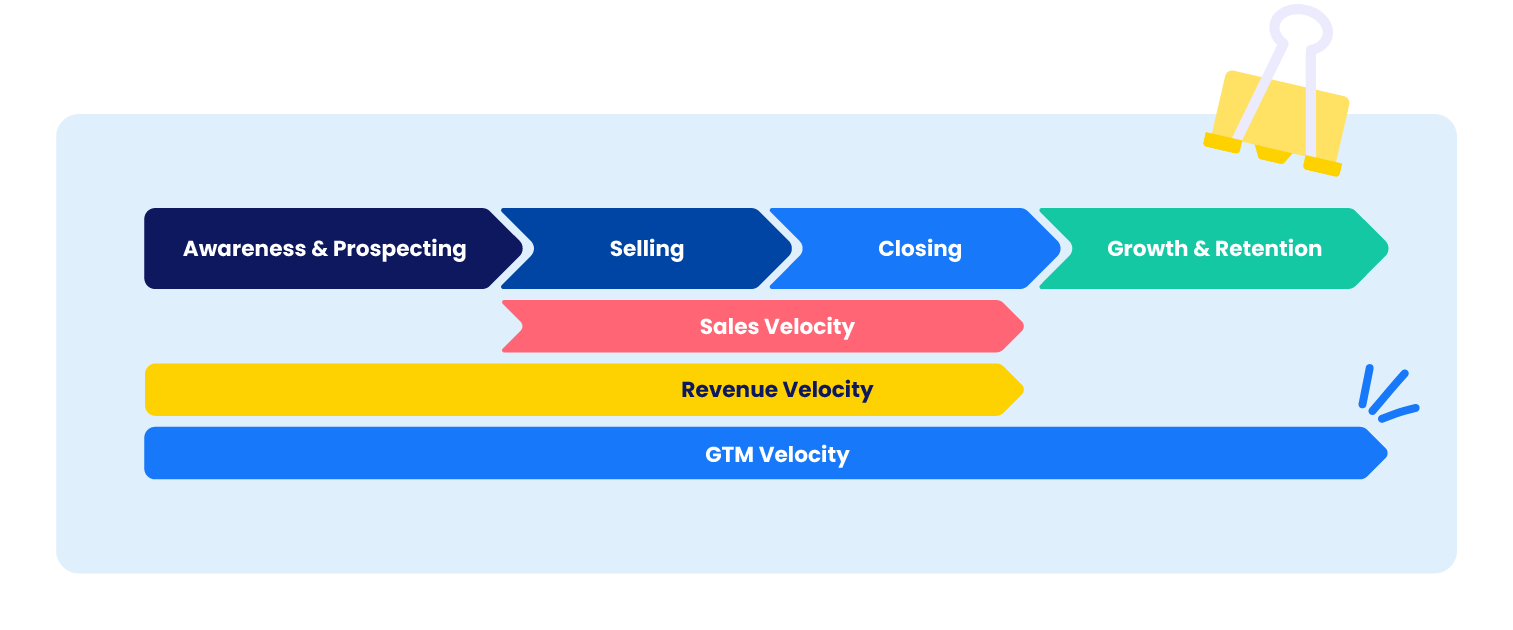 To break down how it works, we’ll walk you through a hypothetical measurement process for the fictional company Pied Piper from Silicon Valley.
Step 1: Pipeline Generation Velocity
We start at the top of the funnel with Pipeline Generation Velocity (PG Velocity). This measures how efficiently your organization creates and qualifies opportunities before they hit the sales pipeline.
The equation includes four key levers:
-
Leads = Number of new potential customers from marketing, outbound, referrals, etc.
-
Lead-to-Opportunity Conversion Rate = % of leads that become qualified opportunities
-
Average Pipeline Value = Average deal size at the opportunity stage.
-
Average Qualification Time = How long it takes to move a lead to a qualified opportunity
For this example, we’ll focus on the first three levers.
The equation looks like this: .png?width=1512&height=586&name=Artboard%204%20copy%202%20(1).png) Example:
Example:
Pied Piper’s monthly performance:
-
Leads: 50
-
Conversion rate: 50%
-
Average pipeline value: $25,000
Pipeline Generation Velocity =
50 leads × 0.5 conversion × $25,000 = $625,000 in qualified pipeline/month
Step 2: Sales Velocity
Next is Sales Velocity, which measures how quickly and effectively your team converts opportunities into revenue.
It consists of four key levers:
-
Avg Number of Opportunities = Active deals in your pipeline, on average
-
Avg Conversion Rate = % of deals that close
-
Avg Selling Price (ASP) = Typical revenue per deal
-
Average Sales Cycle Length = Time it takes to close a deal (won/lost)
The equation looks like this: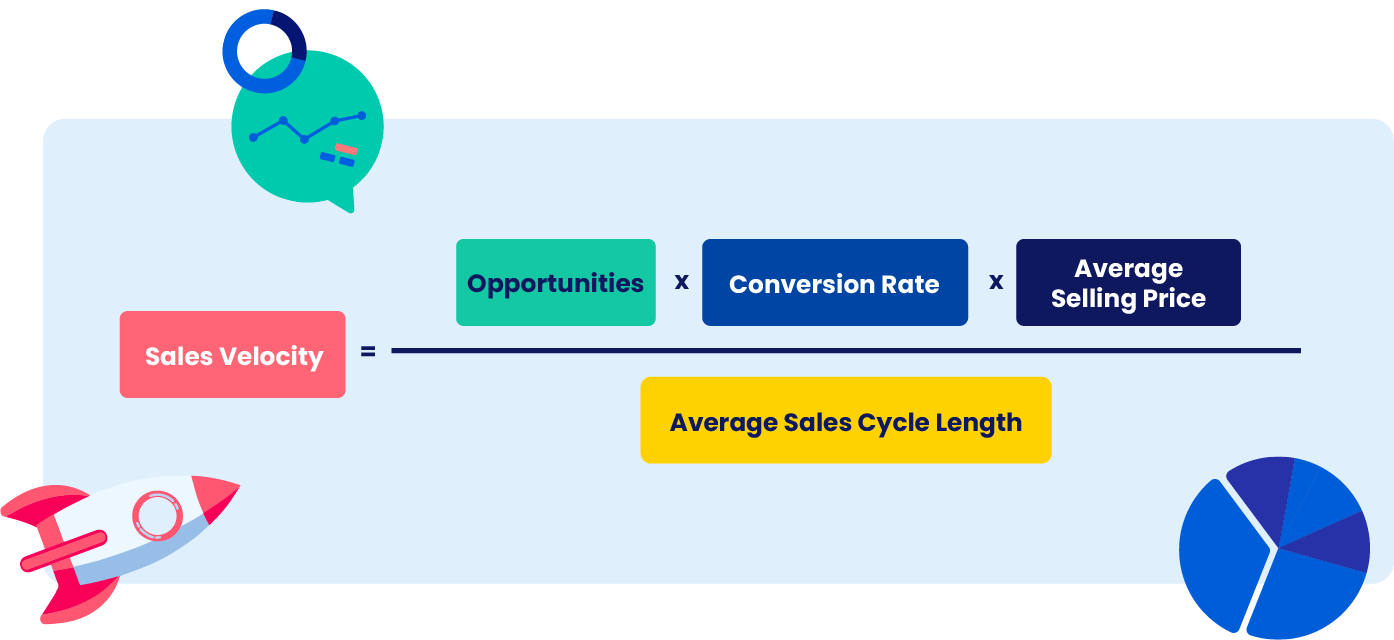
Example:
Pied Piper’s monthly performance:
-
Opportunities: 25
-
Conversion rate: 57%
-
ASP: $25,000
-
Sales cycle: 45 days
Sales Velocity =
(25 × 0.57 × $25,000) ÷ 45 × 30 ≈ $356,300 in closed-won revenue/month
Step 3: Revenue Velocity
If we combine Pipeline Generation Velocity and Sales Velocity, we get a broader view of how efficiently we generate and close revenue. This is Revenue Velocity.
But revenue performance doesn’t stop at the deal.
Step 4: GTM Velocity
GTM Velocity (Go-To-Market Velocity) brings in the final piece: Net Revenue Retention. This is the revenue you retain or expand through renewals and upsells.
The full GTM Velocity equation includes:
- PG Velocity = How efficiently you generate pipeline
- Sales Velocity = How efficiently you close it
- NRR = How well you retain and grow existing customers
It looks like this: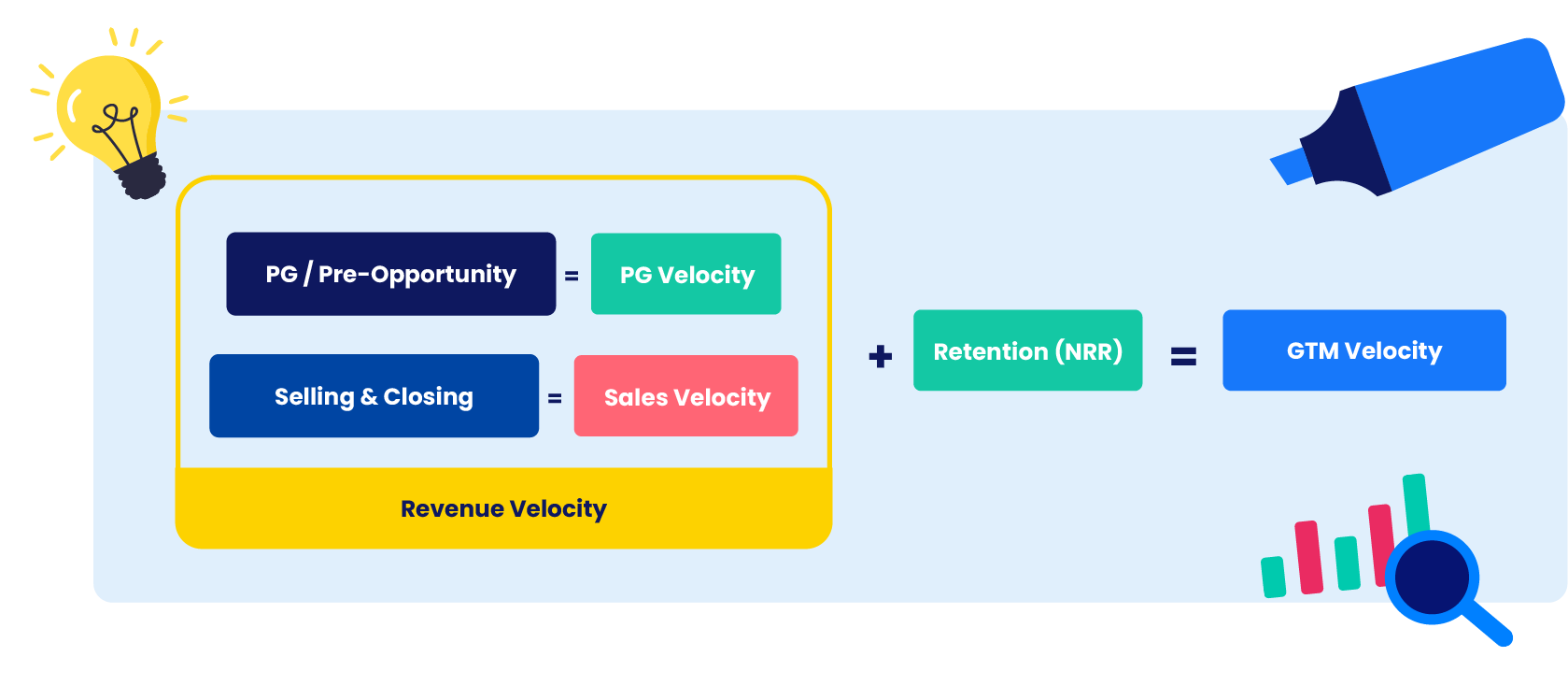
Example:
-
Monthly recurring revenue (MRR): $416,667
-
NRR: 80%
- Sales Velocity: $356,300
-
PG Velocity: $625,000
GTM Velocity =
(MRR × NRR) + ((PG Velocity + Sales Velocity) × NRR)
= (416,667 × 0.8) + ((625,000 + 356,300) × 0.8)
= 333,333.60 + 785,040 = $1,118,373.60/month
This includes both retained revenue from existing customers and new pipeline converted through marketing and sales.
Conclusion
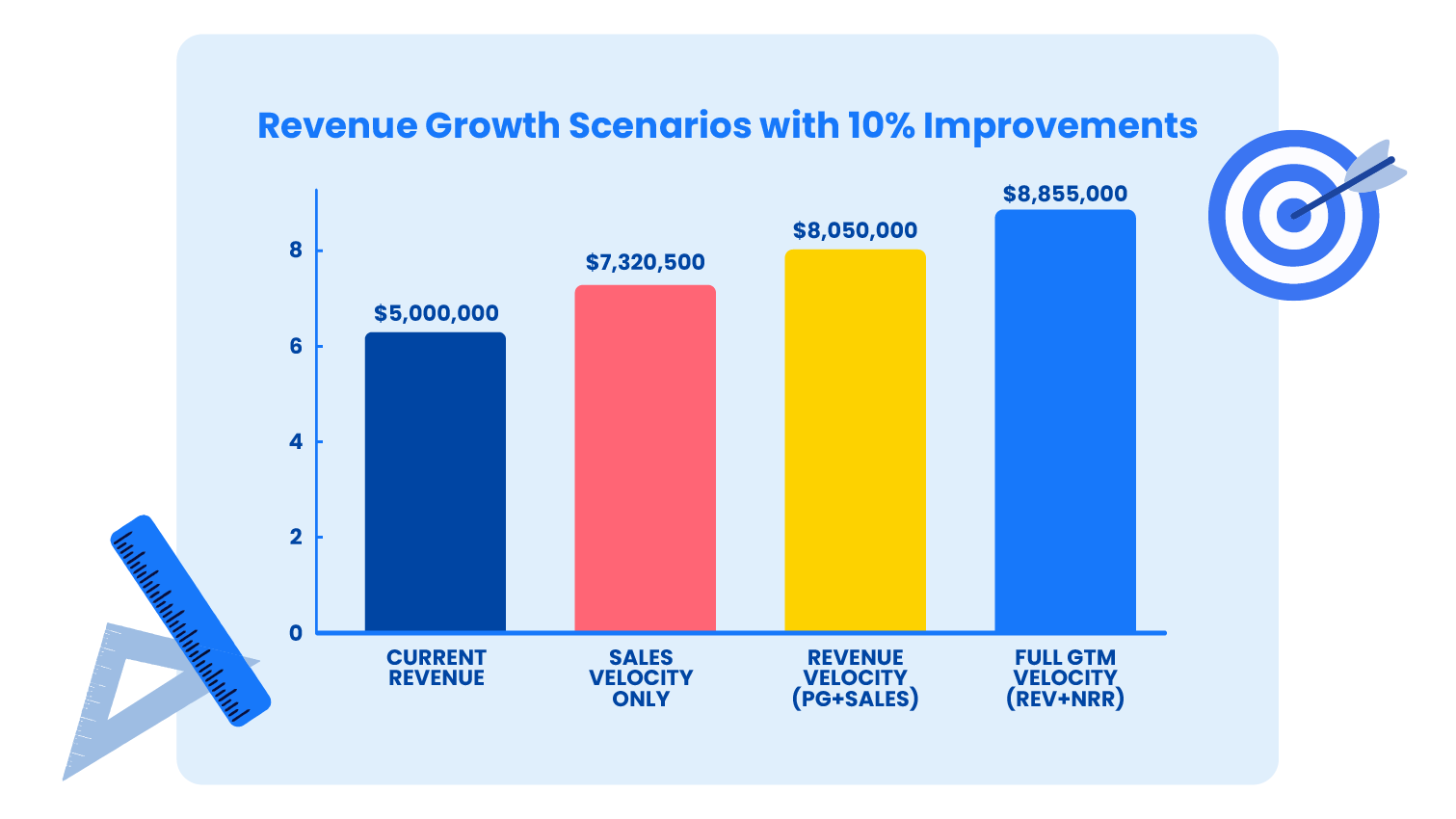
Understanding the individual components of GTM Velocity forces us to understand how revenue is created, not just how much. By splitting these levers out, we can see where our gaps are and where we can make improvements. Even the most incremental of improvements on individual levers can have a massive impact. Think about how much of an impact a 10% boost on individual levers could have on ARR.