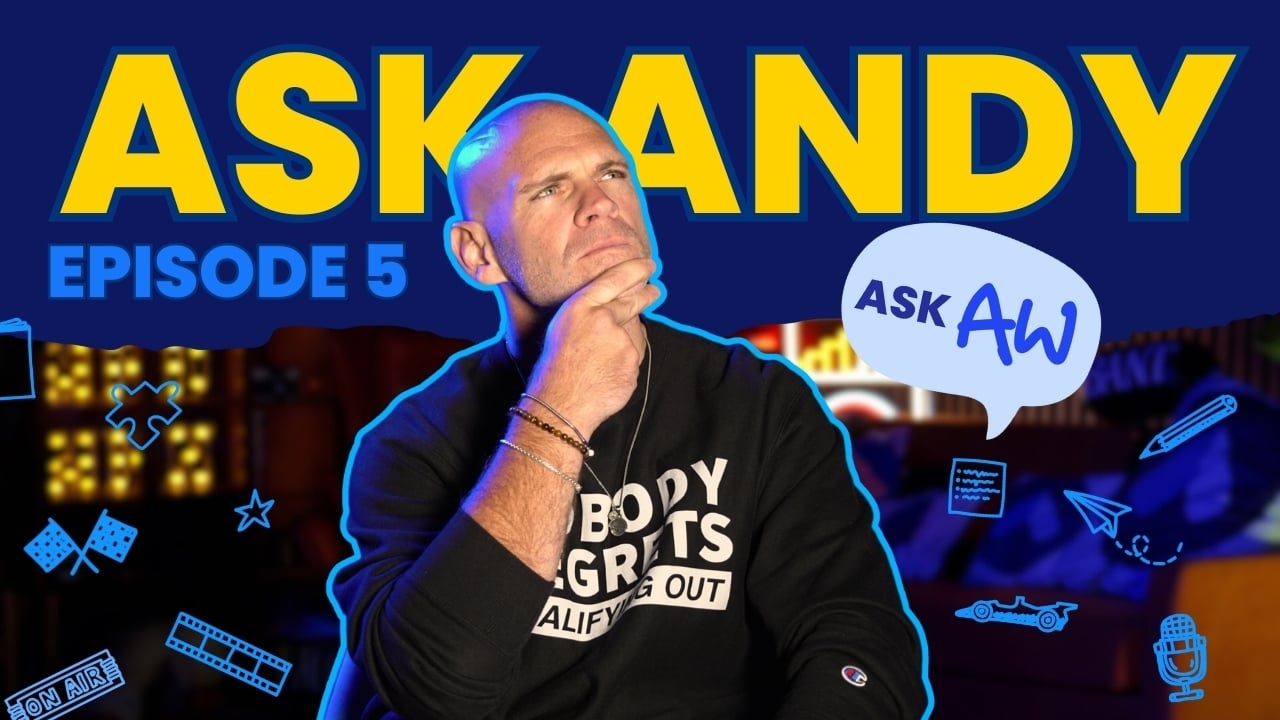
00:00:00 Andy Whyte: Producer Nick tells me we’ve got some questions. Let’s dive in. Okay, question number one. It says it comes from Producer Nick, which is you. 00:00:09 Nick: Yes. So, my question for you, sir, is: what is your favorite part, or letter, of MEDDICC, and why? 00:00:16 Andy Whyte: Oh, that’s easy. I talk about this one a lot. Decision criteria is my favorite. It’s like having a favorite child. I shouldn’t have any favorites, but yeah, it’s my favorite. Because when you’re approaching any conversation with a customer, there are a few things you should be thinking. By nature of spending your precious time with that prospective customer, you should go in on the basis that your solution is the best for them. And if you genuinely believe that, then the decision criteria the customer has should align with your solution. So your job is to try to inspire and influence the customer to build that decision criteria around your strengths, the things you’re really good at. You can also lay some traps for your competition there, by building it around their weaknesses as well. If they already have a decision criteria, it’s probably come from a place that isn’t great for you: a competitor, maybe an analyst, maybe their own research. But the chances of it being very well thought out, certainly to the level of your understanding of your category, are pretty low. 00:01:12 Andy Whyte: So for me, if you can get your arms around the decision criteria, lead with it, inspire with it. Don’t react to the customer’s. Be on the front foot with it. That’s it for me. It’s my favorite, the one that can really make a difference. Thank you. So the next question is a video from Nicole. 00:01:33 Nicole Senna: Nicole Senna here. I hope you’re doing well. So the question I have for you: has there been a time where you were in lockstep with an opportunity and suddenly there was an internal competitor, or internal competition, that put a halt to the process? And what were the steps you took to overcome that challenge and earn the customer’s business? Look forward to hearing from you. 00:01:52 Andy Whyte: So, there’s an interesting example I have for this question. It’s a little bit unusual, but I think there’s a really interesting lesson I learned from it. I was selling a marketing technology solution to a brand, and my economic buyer was the CMO. What’s interesting about this story is that a few months earlier, at a previous company, I’d also been selling a marketing solution to this same company, to the same CMO. So I had the same economic buyer, but the other stakeholders were different. The champion was different. I’d left that company, joined a new one, and had a new solution I was selling to them, and they were very interested in buying it. The problem was, the CMO said they didn’t have the budget to buy both my new solution and the old solution I used to sell, which someone else had obviously picked up and was working on. And they asked me what they should do, because I knew both solutions. I said, “Well, obviously you should buy my new solution.” Let’s park that. I was obviously going to say that anyway. I’d be mad not to. I’d be wasting my time if I didn’t think that was the best thing for them. 00:02:45 Andy Whyte: Then I said to the CMO that what they should do with the other solution is buy its competitor instead. And the reason this is a good lesson is that it shows the importance of relationship decision criteria. What I said to the CMO was that the competing solution isn’t quite as good. It’s probably about 90% as good as the solution I used to sell. But the critical thing that I think shifted the destiny of that deal, and allowed me to win it, winning over the internal detractors who thought they should pause my new deal and buy my old one, so to speak, was all around relationship decision criteria. I was able to say to that CMO, “Look, if you buy the solution I used to sell, you’d be one of 100 brands like you. You’d just be one of 100. And of course, they’ll look after you and all that sort of stuff. But if you buy from the competitor to that solution, you’ll be the biggest brand in the UK, and I believe they’ll look after you accordingly. They’ll want you to be their marquee customer.” 00:03:51 Andy Whyte: And it was that which changed the course. They ended up buying my solution and the competitor to the solution I used to sell. The real key takeaway there, I think, is the importance of relationship decision criteria. Whoever had taken over from me hadn’t given that CMO confidence that, in this case, he would be an important customer. The key is getting back to the decision criteria to make sure you’re differentiating on all elements. So, it says here the next question comes from a Mr. John Hodge. 00:04:16 Nick: Yes. So the question from John actually came up in our recent webinar, MEDDICC for Startups. And the question was: how do you make sure you don’t burn your champions when upselling? 00:04:33 Andy Whyte: This is one of those questions that, for me, shows the power of MEDDICC. If you’re talking to an existing customer about an upsell, then the value should be very clear. The customer should understand why you’re talking about an upsell. First off, if it’s an upsell, you should already have delivered the initial value you set out to deliver. If you haven’t, and you’re talking about upselling, then you’re probably going to upset some people. They’ll be like, “Hey, slow down, we haven’t even got the value from what you sold us in the first place.” So the case now is that you’re trying to broaden into the account, perhaps selling other modules or selling to other regions, whatever it is. You’re trying to spread your wings. The point here is that your champion, by nature of being a champion, should have a vested interest in your success. Your success, in this case, is that organization obtaining more value from your solution. So if your champion isn’t seeing that vested interest, you either need to do some more work with them to show them how it benefits them... 00:05:26 Andy Whyte: ...or it could just be the case that that person is no longer your champion. This happens a lot. You do an initial deal and you have a champion, and then as the opportunity evolves, as the relationship with the organization evolves, you have different champions. So I’d say, if you find yourself in a situation where you feel like you’re at a dead end, where if you try to upsell you’re going to upset your champion, then you either need to work on showing that champion why they shouldn’t be upset and what’s in it for them, or, if there’s nothing in it for them, they’re not going to be your champion anyway. Oh, this is a video. Oh, okay. Hang on. Please hold, caller. Oh, he’s a handsome man, isn’t he? Jake. 00:06:02 Jake: Hey, Andy. Okay, I’ve got a question for you. What is the craziest, most ridiculous interview that you’ve ever been a part of? 00:06:13 Andy Whyte: I was actually only just talking to someone about this. I was once interviewing someone for an account executive role. Their background looked great. The companies they’d worked for were all the kind of companies we like to hire from. They said they had implemented MEDDICC into Salesforce; that was one of the things on the resume. They’d had lots of success. They also said they used to play cricket internationally for the Netherlands. On paper, it seemed pretty good, definitely worth having a second conversation. The only challenge was that a big part of his resume, his CV, had him at one particular company for about three years, with a lot of the success he talked about coming from there. We had three colleagues from that company, and it wasn’t a massive company, maybe 150 people. I went to seek out my colleagues, and they had no idea who he was. That obviously rang a few alarm bells. I went to the next colleague. No idea. Third colleague. No idea. 00:07:12 Andy Whyte: They started texting their group chat. No one had ever heard of this person. I went back to the recruiter and said, “Hey, there’s something up here. Can you look into this? I’m pretty sure we were talking about this one particular company. It had a very particular name. But can you just check that I didn’t mishear?” And from that point on, that person vanished. Gone. Didn’t exist anymore. The LinkedIn profile was gone. As fun as it sounds, this keeps me awake at night. What were they trying to do? What was their plan? What was the con here? I managed to figure that much out, but not entirely. That keeps me awake at night. Producer Nick, [unclear]? Yeah. 00:07:43 Andy Whyte: So thank you, Jake, for reminding me of that. Next question: [name unclear] from CrowdStrike asks, “How does one uncover decision criteria when the customer won’t reveal their cards?” For me, it comes down to a couple of things. One is that the customer is unlikely to have a very good decision criteria anyway. We know it’s likely to have been inspired by review sites, research they’ve done, or even your competitors. So park, for a second, what they think their decision criteria is, and approach it with an open mind. Think about the challenges they’re likely facing, the goals they’re likely to have, and how best you can provide them a solution that helps them achieve those goals and solve those pains. What you’ll find, hopefully, if the customer is a serious person, is that they’ll see you more as a consultant, more as someone they can learn from. They’ll start to open up, you’ll end up in more of a conversation, and you’ll be able to help them craft and curate a more open decision criteria. Because no one should keep their decision criteria a secret. That’s not going to help anyone, least of all the customer. 00:08:51 Andy Whyte: All right, so the last question here. Oh, it’s little Jesse Walker, who has recorded a voice note. Let me just bring this up. She knows how much I love voice notes. That’s why. 00:09:00 Jesse Walker: Andy, I have a question for you. How can sales and marketing teams use MEDDICC to create better synergy? 00:09:07 Andy Whyte: As you know, we love to define MEDDICC as a common language you use across the whole go-to-market team, across the whole customer lifecycle. And that customer lifecycle often starts with marketing. It starts with the positioning, the messaging. Basically, what is it that your solution does for your customers? What better way to align marketing and sales than making sure the messaging and the selling of the value proposition go hand in hand, so that marketing and sales talk about value the same way and talk about the solution the same way? For me, that’s all in MEDDICC. So it’s very much a case of, when marketing teams, product marketing teams and product teams are considering how they’re going to create the positioning and messaging, they start by thinking: okay, what is life like for our customers without our solution? What pain exists for them without it? 00:09:58 Andy Whyte: What are the implications of those pains? Then, what is life like for our customers with our solution, and what are the positive implications? What good stuff happens? How do we measure the metrics between the good state and the bad state? What’s improving, and by how much? And then, how does our solution do those things? That’s decision criteria: what does the customer need to go from that negative pain state to that positive gain state? What are the actual criteria needed? If we build that into our proposition, we now have a value proposition that doesn’t just match across sales and marketing. It’s seamlessly the same thing. It runs all the way through. That’s just value. Then we can talk about stakeholders. If marketing, product marketing and product start to think about the MEDDICC stakeholders, they start to think: okay, how does our solution support the economic buyer’s interests? How does it support our typical champion’s interests? Different types of champions have different interests, so how can we create different personas for different types of champions, different roles? And how can we make sure we’re looking after their interests in everything we do? 00:11:11 Andy Whyte: Then there’s the process side of things. Marketing 101 is always right message, right person, right time. So we can use process to make sure we’re giving the sales team the marketing support they need at every stage of the customer’s buying process. Get those things right together, and everybody’s happy. Everyone’s talking the same language, everyone’s cohesive, everyone’s collaborating. I’d love to hear more questions from you. Obviously, Producer Nick did a great job of seeking out questions for this one, but if you have questions, please get in touch: LinkedIn, Instagram, email, however you want to get hold of me. I’d love to hear from you. What I will say, and the team doesn’t know this, is that if you send in a video, if you record yourself on video asking me a question, every one that makes its way onto the show will be awarded a champion slogan T-shirt. You can choose “No Regrets Qualifying Out,” “May Your Champions Be Strong,” or SELR, whichever one you prefer. We’ll send you a champion T-shirt. So I look forward to seeing your questions very soon. Until next time: make champions, be strong.








































.png?width=273&height=327&name=image%201%20(1).png)