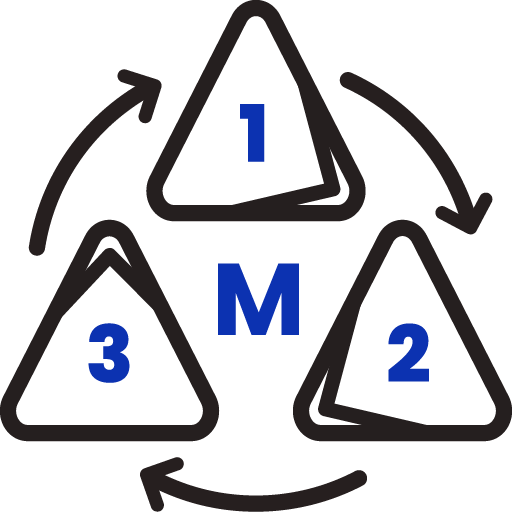








































A Compelling Event is the specific, time-bound reason a buyer must act, and in MEDDPICC it isn't a separate step. It's woven through Pain, Metrics, Champion, Economic Buyer, Decision Criteria, Competition, and Decision Process alike.
That's why we don't add a third C for it: if you're selling without a Compelling Event, you're not selling. You're order-taking. Below, what it is, why it runs through every letter of the framework, and how to spot a real one instead of manufacturing a fake one.
What is a Compelling Event in MEDDPICC?
A Compelling Event is the reason a buyer must act by a specific date: a business, financial, or regulatory consequence that makes doing nothing more costly than doing something. In MEDDPICC, it isn't a standalone step you tick off. It's the thread that runs through every other letter, from Metrics to Decision Process. Without one, you're not qualifying a deal. You're hoping one closes itself.
MEDDPICC only works when you understand its principles, not when you just fill in fields. Proactively uncovering and implicating a real, time-bound Compelling Event, rather than manufacturing urgency with a discount, is what turns qualification into real engagement, urgency, and partnership.
Why We Don't Add a Third "C" for Compelling Event
MEDDPICC doesn't need a third C for Compelling Event because a missing Compelling Event is a skill gap, not a missing field, and adding a letter won't teach a rep to find one.
"We added a third C for Competition because… why not?" said the CEO of a sales tech company.
Well, actually, you didn't. The C for Competition was added around the year 2000. What you actually did was add a third C for Compelling Event because your team doesn't use MEDDPICC proficiently.
Now I know what you may be thinking:
"How is adding a C for Compelling Event any different from adding a P for Paper Process?"
The answer is straightforward.
The P is added to MEDDIC because salespeople often forget to consider the specific Paper Process as part of the Decision Process. Separating it out ensures a salesperson doesn't forget to stay on top of it.
"But why can't you do the same with Compelling Event?"
Because Paper Process is a step you can forget. A Compelling Event is the reason every other step matters in the first place.
This is why we say not all MEDDIC is equal. A Compelling Event is a core part of every letter in MEDDIC.
How a Compelling Event Powers Every Letter of MEDDPICC
A Compelling Event isn't confined to one letter of MEDDPICC. It shapes how you approach Pain, Metrics, Champion, Economic Buyer, Decision Criteria, Competition, and Decision Process alike.
|
MEDDPICC element |
Why Compelling Event matters here |
|
Pain only drives change when it's compelling enough on its own, not just identified. |
|
|
Metrics compel change when they're quantified against a specific timeframe. |
|
|
A Champion needs something time-bound and compelling to justify taking on the risk of championing you. |
|
|
Your Champion can only get your solution prioritized with the Economic Buyer if the Economic Buyer sees a compelling reason to act. |
|
|
Attaching your strengths to the pain driving the Compelling Event is also how you defend against Competition hooking itself onto that same event. |
|
|
Progress through the Decision Process depends on a fired-up Champion with Economic Buyer sponsorship, and that sponsorship depends on urgency. |
Real vs. Manufactured Compelling Events: What to Look For
A real Compelling Event is a business, financial, or regulatory consequence the buyer already faces. A manufactured one is a deadline the seller invents to force a decision, usually with a discount attached.
|
Real Compelling Event |
Manufactured "Compelling Event" |
|
A compliance deadline or audit date the buyer must hit |
"This price is only good until end of quarter" |
|
A contract renewal or auto-uplift date with an incumbent vendor |
A discount that resets every time the buyer stalls |
|
A board-mandated cost or headcount target with a fixed deadline |
An arbitrary "decision date" the rep picked, not the buyer |
|
A competitor already live inside the account, forcing a response |
Vague pressure to "move fast" with no named consequence |
The tell is simple: a real Compelling Event exists whether or not you're in the room. A manufactured one disappears the moment you stop pushing it.
This distinction matters more as buyers do more of the journey without a rep in the room. Gartner's research on the B2B buying journey shows buyers now spend most of their time in self-directed research and consensus-building before they want a sales conversation at all.
A rep who shows up only to discount at the end has already missed the window to shape the real reason to act, and manufacturing one at that point only trains the buyer to wait for the next discount.
How to create urgency in sales without discounting
- Ask what happens if nothing changes. “What happens if this isn’t solved by Q3?” If the answer has no date and no consequence, you don’t have a Compelling Event yet. Use the table above to tell real from manufactured.
- Put a number on waiting. Turn the consequence into Metrics: what does each month of delay cost? “Every month on the old system costs us $X” is urgency the buyer owns.
- Make it personal. Implicate the Pain by tying the cost to someone’s goals: whose target, budget, or credibility is on the line?
- Build the plan back from the date. Map the Decision Process and Paper Process steps backward, including legal and procurement lead times, so the buyer can see the date at risk.
- Revisit it in every deal review. If the date slips or the consequence softens, the urgency is gone. Requalify instead of discounting. Link [deal review] to the new template.
Learn to Find Real Compelling Events
MEDDICC Membership is where reps and teams move past checkbox MEDDPICC. It pairs MEDDPICC Masterclass certification with the ongoing tools and coaching, including the Deals platform, Winni AI, and the MEDDICC Playbook, that help you keep spotting real Compelling Events long after the training ends. Explore Membership →
FAQ
What is a Compelling Event in sales?
A Compelling Event is a specific, time-bound business, financial, or regulatory consequence that forces a buyer to act. It's the reason "do nothing" costs more than "do something."
Is Compelling Event part of MEDDIC or MEDDPICC?
Compelling Event isn't a separate letter in MEDDPICC. It's a thread woven through every existing element, including Metrics, the Economic Buyer, Decision Criteria, Decision Process, Identify Pain, Champion, and Competition. That's why some teams mistakenly try to bolt on an extra "C" for it.
Why shouldn't you add a third C for Compelling Event?
Because doing so treats a mindset problem as a fields problem. A rep who doesn't understand that pain, Champion motivation, and urgency to the Economic Buyer must all be time-bound won't fix that by adding a checkbox. They need to understand the framework, not extend it.
How do you find a Compelling Event in a deal?
Look for a specific date tied to a business, financial, or regulatory consequence, then confirm the Champion and Economic Buyer both feel the cost of missing that date. If neither stakeholder can name the consequence of inaction, you haven't found a Compelling Event yet. You've found a preference.
What happens if a deal has no Compelling Event?
The deal stalls, gets deprioritized behind whichever competing initiative does have urgency, or closes only after a late-stage discount manufactures a deadline that should have existed from the start.
How do you create urgency in sales?
You don’t create urgency; you uncover it. Real urgency comes from a Compelling Event the buyer already faces, such as a compliance deadline, a contract renewal, or a board target. Quantify what missing that date costs, tie the cost to the people who own it, and build the buying plan back from the date. Discounts only create urgency that disappears when the offer does.