






































MEDDIC’s core principles are timeless. It works because it’s based on universal deal drivers: Pain, Metrics, Champion, Economic Buyer, Decision Criteria & Process.
Flexibility is key. Variations like MEDDPICC (adding Paper Process & Competition) adapt to modern needs, but the foundation remains unchanged.
MEDDIC has stood the test of time. Since its inception more than twenty years ago, it has been embraced by enterprise sales organizations worldwide.
In its modern forms, MEDDPICC and MEDDICC, it remains one of the most widely recognized proficiencies in enterprise sales. Regardless of the combination of letters, the foundation is the same.
Almost daily, sellers and sales leaders ask about learning or implementing MEDDICC. Sellers often see a variation listed as a requirement in job descriptions. Sales leaders hear that MEDDIC can improve deal velocity and want to understand how to apply it.
Two years ago, I wrote a Medium post about implementing MEDDIC at a Series B startup. That post nudged me to write a book, as many people reached out asking how to implement it. Despite MEDDIC being well known, there were surprisingly few voices with hands-on experience sharing how it actually works in practice.
It seemed the doers of MEDDIC were too busy doing.
Then COVID-19 happened, and suddenly I gained four hours a day without commuting into London. The lockdown became the push I needed to finish the book, which I had started nearly twenty months earlier.
If COVID-19 had happened later, would I still have written a book on MEDDIC? The answer is yes. Few things have enhanced my ability as a seller and sales leader as much as MEDDIC.
Why is MEDDIC Timeless?
The answer is straightforward. Dick Dunkel at PTC investigated why deals were won and lost and identified six recurring elements:
-
Metrics
-
Economic Buyer
-
Decision Criteria
-
Decision Process
-
Identify the Pain
-
Champion
These elements form MEDDIC. Whether by design or creativity, aligning them into a memorable acronym helped cement its adoption.
Enterprise deals are still won and lost for the same reasons today. Enterprise software exists to solve Pain. Sellers build Metrics into a business case, gain buy-in from a Champion, and secure approval from the Economic Buyer. To focus on the right priorities, they understand Decision Criteria, and to forecast accurately, they map the Decision Process.
How MEDDIC evolved
Over time, the framework has evolved.
Adding the extra C: MEDDICC
Adding in the second C to MEDDIC, you include the competition, which is an important aspect to monitor in any deal, whether they are internal or external competition.
Adding the P: MEDDPICC
The P stands for Paper Process. This is valuable in complex deals, although it is sometimes included within Decision Process. MEDDPICC is the most common modern variation.
MEDDIC and another Phantom P for Partners
Some teams include Partners when integrations, consultancies, or system integrators are central to the deal. This is less common.
Adding an R for Risks
For sales cycles with known pitfalls, identifying Risks can help teams proactively manage them. This is sometimes implemented as MEDDPICCR.
MEDDIC and yet another C, this time for Compelling Event
Rarely, teams call out Compelling Event as its own element. In most cases, this is covered within the Decision Process.
MEDDIC and whether the C stands just for Champion?
IIn MEDDIC The Book, I describe the Coach-to-Champion transition. A Champion must be qualified. Until then, they are a Coach. This does not require another letter, it is still the same C.
Looking ahead
One of the most interesting questions is how MEDDIC evolves over the next 25 years. Will some elements become less important? Will new ones emerge? Innovation around MEDDIC has always come from practitioners.
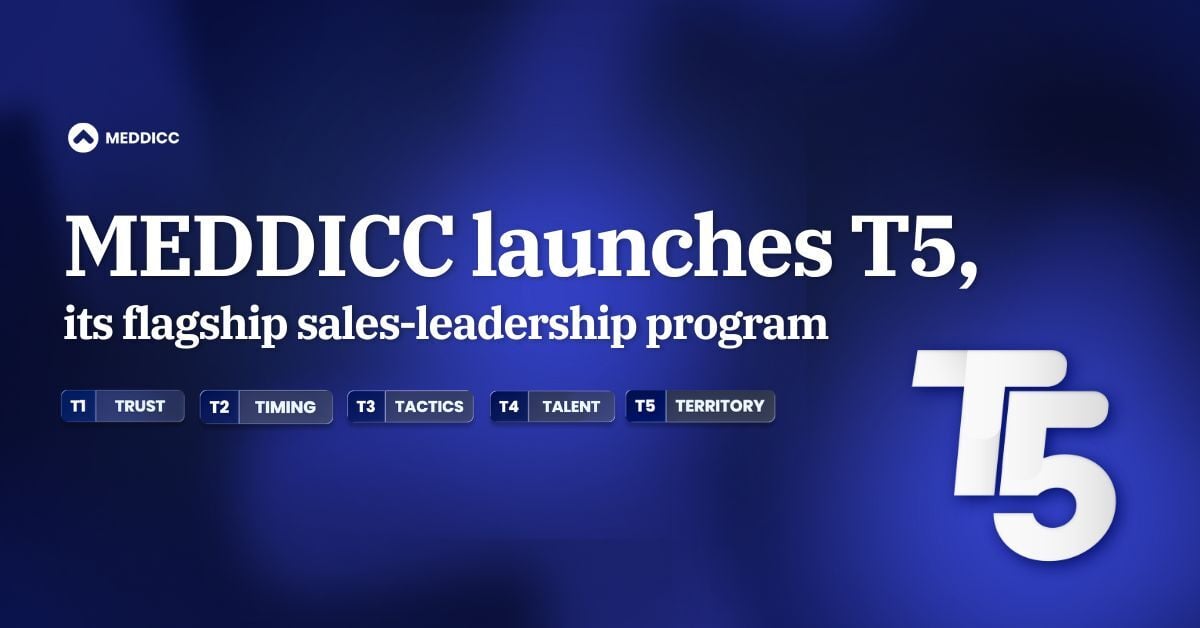
Here is a potential future addition, inspired by MEDDIC co-creator Dick Dunkel: Trust.
Trust is critical in modern selling. Buyers have access to reviews, peer feedback, and alternatives. SaaS has shifted spending to operating expenditure, which can be stopped quickly. That makes trust central to every deal.
Just like we say:
"No Champion, No Deal."
A future extension could be:
"No Trust, No Deal."
MEDDPICCT? 🤔