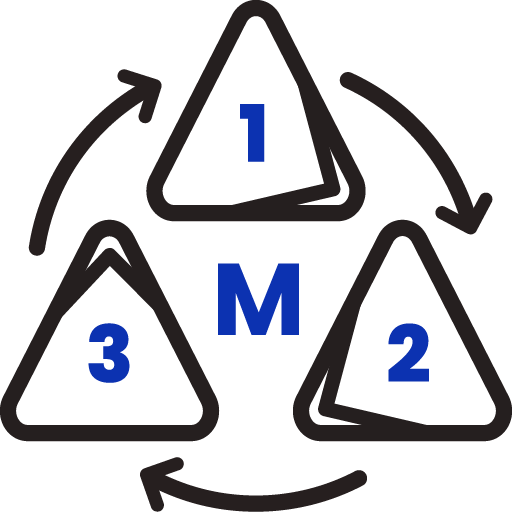
00:00:00 Producer: Right, before you start, could you please stare into each other's eyes for about ten seconds, please? 00:00:05 Pim Roelofsen: What is this for? 00:00:06 Producer: Just keep going. 00:00:08 Pim Roelofsen: Why? 00:00:09 Producer: It's technical. And then... now hold each other's hands. Trust me. 00:00:13 Lee Gregory: This is not... 00:00:15 Pim Roelofsen: Welcome back to the show. That didn't turn out to be bigger than the World Cup. 00:00:22 Lee Gregory: I think it was close, early on, wasn't it? 00:00:25 Pim Roelofsen: Very close. And so today, we're answering questions about metrics, which I think is typically the element within MEDDICC considered to be the trickiest, especially early on in an initiative. You ready for this? 00:00:40 Lee Gregory: You ready? 00:00:41 Pim Roelofsen: I am. 00:00:42 Lee Gregory: Okay. So, Pim: what if my customer doesn't know their metrics? 00:00:47 Pim Roelofsen: Right. I think that's a very common situation, because you have professional sellers, but not necessarily professional buyers, right? So how should they know? This often comes up. I think the answer there is, "Hey, come prepared with an M1," how you've delivered value in a quantifiable way before, so that you've earned the right to start figuring it out together as you're working with your customer, your proposed champion, to build them. I mean, what do you think? 00:01:13 Lee Gregory: Well, I totally agree. That's the reason why M1s exist, right? It's storytelling, to help people understand what the art of the possible is, which helps them think about the things they need to think about. 00:01:24 Pim Roelofsen: Yeah, absolutely. Okay, here we go, Lee. So, with metrics: what's the difference between an M1, an M2 and an M3? 00:01:33 Lee Gregory: Right. So metrics are all about quantifiable impact. The M1 is how we've done it before, in a quantified way. The M2 is how we'll do it for you, so it's personalized, for selling and closing. And the M3 is the mutual, measurable goals with your customer. 00:01:47 Pim Roelofsen: I like this one, because this really leads into how we see MEDDICC, right? Around positioning, selling and delivering. 00:01:54 Lee Gregory: I don't know if you've heard that. 00:01:55 Pim Roelofsen: I know. I'm helping you out. 00:01:57 Lee Gregory: So: how can I use metrics to drive renewals and expansion? 00:02:00 Pim Roelofsen: Oh, good. Okay. So we divide metrics into three categories, and M3 is the last of those. It's basically the mutual goals you have with the customer: what you're aiming for together, and basically achieving that. That creates a situation where you have a quantifiable answer to the question, "What does success look like, and how does it measure?" Being able to do that creates a much stronger base, and a much stronger case, to drive renewals. 00:02:28 Pim Roelofsen: All right. Next question for you: what if my company doesn't have any M1 stories? 00:02:33 Lee Gregory: Yeah, good question. And, Pim, that's not unusual, right? Well, let me take a step back. It would be unusual for you not to have any M1 stories. What we find when we speak to our customers is that they don't have that bank of proven M1s that are reference-able, that they've got on the website and can use in collateral. 00:02:48 Pim Roelofsen: Okay. 00:02:49 Lee Gregory: Right. So the way we actually tackle that is we reverse engineer it. We call it a metrics map. It actually helps guide them through understanding value, stakeholders and process, and how they can build out their bank of M1 stories. 00:03:00 Pim Roelofsen: The knowledge is probably within the organization. It's about the mechanism for getting that knowledge and documenting it in a formal, consistent way. 00:03:06 Lee Gregory: Yeah, I like that a lot. Reverse engineering. 00:03:09 Pim Roelofsen: So if you want that, reach out. We've got a resource for this. [unclear] 00:03:14 Lee Gregory: All right. Where in the sales cycle do metrics show up? 00:03:17 Pim Roelofsen: So metrics, if used correctly, should really be used as an M1 first: the storytelling around when you've delivered value elsewhere. So it really starts there, and it should be consistent all the way through to value delivery. 00:03:29 Lee Gregory: I would agree. Yeah. It's the full customer lifecycle, from positioning value we've delivered in a quantifiable way before, to, "Hey, here's how we'll do it for you," in selling and closing, all the way to our mutual goals, basically what the outcome we're measuring against looks like, right? So M1, M2, M3 across the customer lifecycle. 00:03:50 Pim Roelofsen: Oh my gosh. All right. Next question up: how can I use metrics to implicate pain? 00:03:55 Lee Gregory: That's a tricky one, isn't it? 00:03:57 Pim Roelofsen: I mean, you tell me. 00:03:58 Lee Gregory: So there are a couple of different ways to implicate pain here, right? If you look at it from a measurement perspective, a quantification, you can actually implicate the lost opportunity cost, as an example: "If you don't do this, here's what it's going to cost you," right? You can also use an M1, the art of storytelling around what you've done elsewhere, and try to put them into the position of another customer so they really understand a different situation. So: your win rates are not where you want them to be. You dig deeper, and deeper. "What I saw at this other organization was that if they didn't do this, it rolled up to this level of pain. And actually, if they didn't resolve that, there was an implication for their exit criteria with their private equity firm," as an example. 00:04:42 Pim Roelofsen: Yeah, yeah, I agree. I also think the way we break down metrics, as well as pain, into three levels is a really simple way to think about this. If we're talking about pain right now: the identification of pain is just the headline the customer already knows. The indication is how that pain measures, right? So that's how pain and metrics connect together. And then the implications, I think, are at the individual stakeholder level: the implications downstream, but still with the measurement attached. So if you constantly remind yourself, "Hey, I'm working with this stakeholder, this pain shows up in their perception as whatever it is, and this is how it measures," and keep bringing that back, it will drive urgency. But it will also answer the question, "Is this a burning pain, and is it really worth solving for?" Right? Because if you can't get there, well, that's feedback too. 00:05:31 Lee Gregory: That's qualification too, isn't it? Absolutely. And the beauty of using metrics in this way, though, if you think about it, is that it's not necessarily qualification in its own right. It's value messaging and methodology all woven together. It's the art of how you do it. 00:05:43 Pim Roelofsen: Yeah, I think that's a good point, because people still often mistake MEDDICC for just qualification, and it's great at that. But it can be more, if you're open to it and actually invest the time and effort into making it work for you at the biggest possible level. 00:05:56 Pim Roelofsen: Okay. That's good. This was our episode on metrics. 98% of our customers say this is the most challenging element at the beginning of their initiative. If you feel like, "Hey, I could use some help with this," reach out. And don't forget to like this, follow us, subscribe. You know what to do. See you soon. 00:06:16 Lee Gregory: It's proven. Oh, wait, wait, wait, wait. This is more like it. You know what? Need a little different? Yeah. You must be built different. I'm fine. Actually, look. Okay? Yeah. Go for it.































 The MEDDICC Buyers Guide
 Customer Stories
 Team membership
 What is MEDDPICC?
 NAMIE
 Metrics
 Economic Buyer
 Decision Criteria
 Decision Process
 Paper Process
 Implicate the Pain
 Champion
 Competition