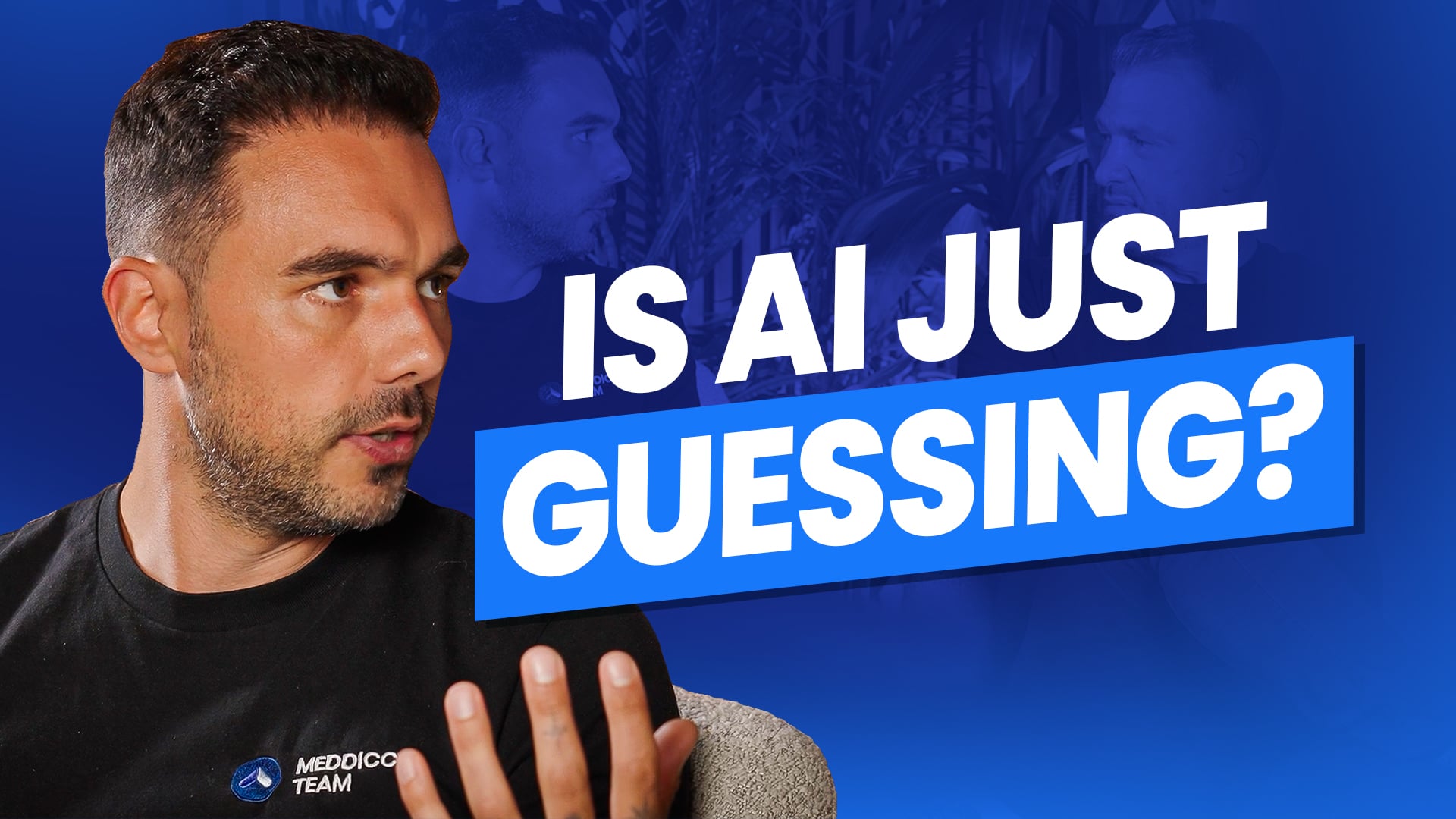
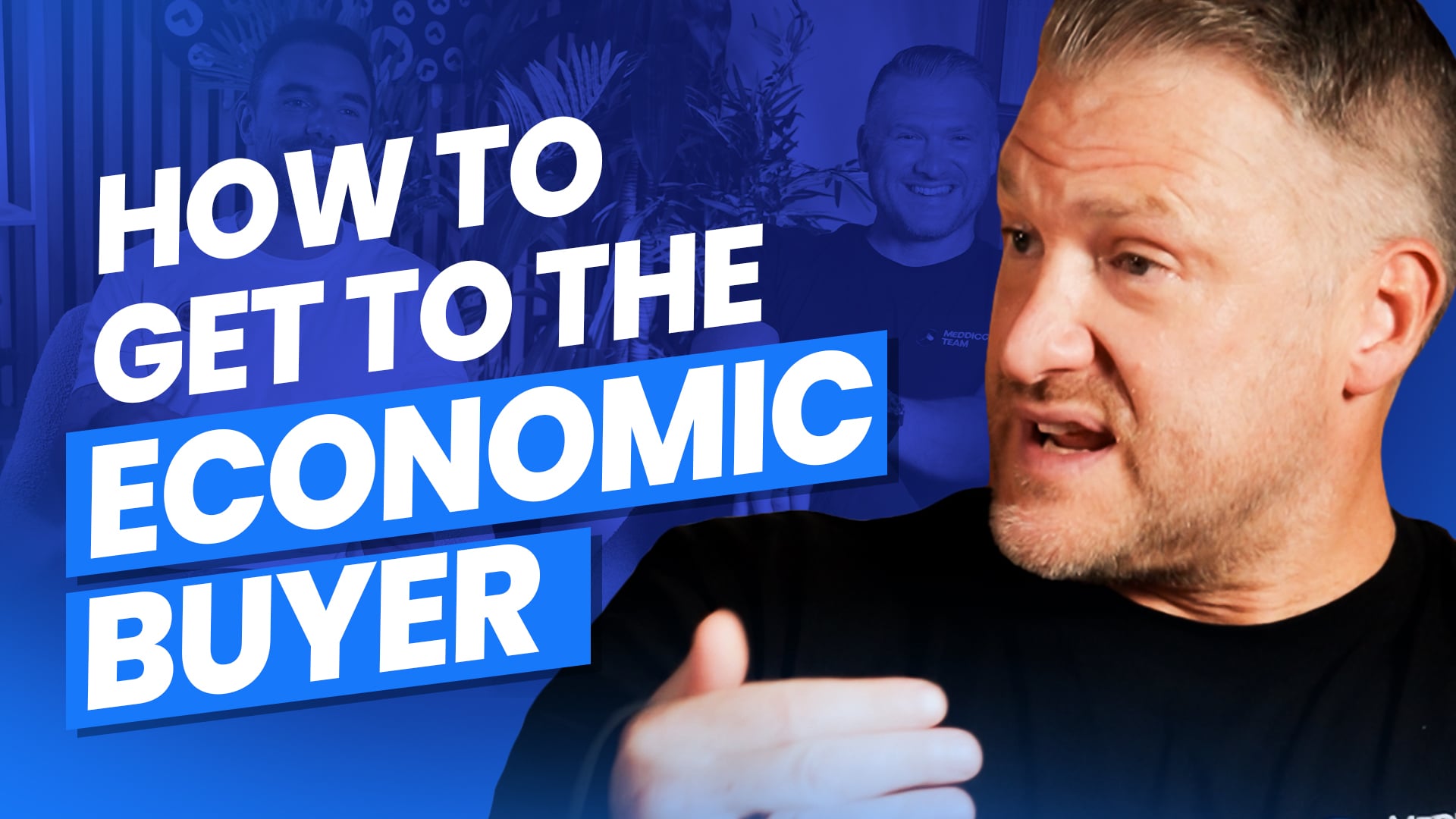
00:00:00 Scott Roberts: The relationship is so much more key for me, because that relationship is being built as well. The confidence I have in the solution, I'm more likely to go with them all the way through this. 00:00:08 Andy Whyte: Just thinking, like, salespeople need to hear this. 00:00:11 Scott Roberts: Typically, it will be the CEO or the COO who will hold the finance. We are trying to build a business case, and I need their help to help sell that solution to them too. 00:00:21 Andy Whyte: What is one thing that you love it when salespeople do, that you wish every salesperson would do? 00:00:26 Scott Roberts: I have one good example of someone doing this, but most of the people I engage with won't do this. 00:00:33 Andy Whyte: Today on Selling To, I'm talking to our CTO, Scott Roberts. How are you doing, Scott? 00:00:38 Scott Roberts: Great, thanks. 00:00:39 Andy Whyte: Good. You're a little bit different from perhaps your peers, other CTOs, in that the salespeople selling to you actually fess up. They say, "Hey, I know MEDDICC," and that's what you can expect from them: to use MEDDICC when selling to you. Is that something you've experienced? 00:00:54 Scott Roberts: Yeah, I think predominantly most of them will either mention they know the book, or that they've done the programs and everything else. So it does give a little bit of a different dynamic, because I have a bit of an expectation that they're going to use it on me. Yeah. So it does change the dynamic a little. 00:01:08 Andy Whyte: And how do you think they do? 00:01:10 Scott Roberts: I think sometimes I'll use it more than they do. They'll bring some of it, and with some of them you can see it in their processes. But other times, I'm the one using it, like, "Here's our decision process," or whatever that may be, or, "This is my pain." Whereas they don't really use the language the other way with me as much. 00:01:30 Andy Whyte: Okay, well, surely with that in mind, if you're using it, then you see it as a positive, if you like? 00:01:36 Scott Roberts: Yeah, I do like it, I think. Before this, and before knowing MEDDICC, I would have done things a little differently. I wouldn't have framed it in a certain way. So it allows me to frame what I'm looking for and how I'll buy, and it gives me a bit of a framework that way as well. 00:01:52 Andy Whyte: This is interesting. One of the things we hear a lot when we're talking to potential customers and our customers about MEDDICC is that it's great for these big, complex opportunities, deals and companies, which of course we know is true. But they also say, almost as a counter, that if you're selling smaller deals, or to smaller companies, it's less effective. But we're a small company, with 50 people, sub-$10 million ARR. So we're effectively a small company. But here you are saying it helps you. 00:02:25 Scott Roberts: Yeah, I think it helps. Obviously, some of these, like paper process, are going to be at a lower level versus a bigger business. Even a business like this has security and compliance. We're ISO certified, so we'd still need to do something about paper process, and there's always going to be a contract, but it's just less intense. Then the same with the economic buyer. That's probably either you or maybe Julie who are going to be the economic buyers, but there's not going to be this big chain of people as such. But you're still potentially going to have other champions as well, like [name unclear], who's our engineering manager, who helps me make a lot of our decisions. He may be a coach, he may be a contact in the deal, but he has to be involved as well. So there's still a level of the framework that works at this level, as well as at the big one. 00:03:02 Andy Whyte: Yeah. And it's fascinating to hear you talk there. I often do this exercise with people who are all proficient in using MEDDICC, MEDDPICC, where I say, "Okay, you've just described a situation, a deal, whatever it may be, to me. Now imagine trying to explain what you just said, but without MEDDICC." You said "paper process," and we instantly knew what you were talking about. The same with champion, all those things. So it's quite interesting that it works on your side as well, because you can communicate internally. Particularly decision criteria, which, for me, is the way I buy now. We're actually looking at a number of tools at the moment. One of them is a social media tool, which, for a company of our size, is not going to be a big investment. But with the platforms we're looking at, there will be a salesperson involved, right? A professional salesperson who will be talking about us in forecast calls, in their one-to-ones with their manager, that sort of stuff. 00:04:03 Andy Whyte: And for me, the first thing I've done, before I've even talked to a salesperson, is start to figure out what my decision criteria is, what the things I'm looking for are, so I can narrow down which vendors are going to check that criteria. Which goes back to something we hear a lot. I think it was popularized, this idea that buyers are 60, 70, maybe 90%, whatever the percentage, informed before they even talk to a salesperson, right? But that suggests the salesperson is just picking up the interest and then validating their solution against it. And I don't think that's the experience. That's not the experience I have. What's the experience for you, in terms of your decision criteria coming into talking to a vendor, versus how it evolves over the experience with the salesperson? 00:04:51 Scott Roberts: I think normally I have a set of ideas of what I'm looking for. Obviously one of them will be, "Are you SOC 2 accredited?" because I can't go with anything that isn't now. So some of them will be just basic tick boxes that I can look up on the website. That's fine. And then normally it would be a new idea. Take observability platforms. As you're trying to build a platform that's getting bigger over time, you're thinking about these things. So I'm trying to figure out, "How does this help me? I have tools that arguably already do this for me, so how does a tool like this help?" So I've got a couple of tick boxes in my head that will help me out: error monitoring, infrastructure monitoring, these things I technically already have. But how does that influence what can actually help me do my job better? So I have a few tick boxes, but a lot of the time I'll just go out to the market and talk to some vendors, at a summit, talking to the salespeople on the floor, just trying to learn more about the solution and what it does, because I don't know what I don't know. 00:05:48 Scott Roberts: So there's a massive gap between, "I have these things," and something that might really help me with problems I've had in the past, that would be great to have, but I just don't know about. 00:05:58 Andy Whyte: Yeah, you don't know what you don't know. You haven't thought of those things. Perhaps you don't know that the solution can do that. Especially now, where there are so many solutions that cross over into so many different categories. That sort of Venn diagram gets very blurry, doesn't it? So what you're saying there is that you're open to your decision criteria being influenced. 00:06:16 Scott Roberts: Yeah. 100%, 100%. 00:06:18 Andy Whyte: And you say that positively? You like that? 00:06:20 Scott Roberts: Yeah. Because I'm trying to do well in my job. So I may have an idea, but if there are things they do that can positively influence, one, my role, but also my team, and make our lives easier, then I'd rather be influenced in that way: "This is great. We also have this product that can help you here too. You'll be able to consolidate it all over here." Think of HR platforms. We've done that as well, when we moved providers to go to Rippling. That allows us to consolidate loads of the technology we have, with more stuff to come. And that's like, "Okay, well, we didn't know you could do that." So there are all these little things where you just don't know what you don't know. And then if they've got a solution that influences that, "Okay, well, I didn't know you did that. So for this little bit extra, we could take away this whole platform, this headache we had," then yeah, why not? It's great that way. 00:07:12 Andy Whyte: So the straightforward answer to "As a CTO, do you like it when salespeople try to influence your decision criteria?" is yes. 00:07:17 Scott Roberts: Yes. 00:07:18 Andy Whyte: Okay. Makes sense. And are you almost looking for that, then, from a salesperson? 00:07:24 Scott Roberts: Yes, I think so. You come with an idea, or a vision, of what you're looking for. But I like the chat. Sometimes it's a nice time to be able to talk outside your team, and you're obviously interested in what they're selling, because why would you be in that conversation to begin with? So at that point, I want to talk in their world and say, "Well, these are my problems. These are things you can do." Just a general chat. And then I feel like it leads on to what the possible future with them is as well. So, yeah. 00:07:58 Andy Whyte: Okay. And you mentioned observability. That's something I know you're evaluating. Now, you're wearing a T-shirt from one of the vendors. Surely, if we do end up choosing Datadog, that should equate to some sort of discount for us, right? 00:08:13 Scott Roberts: Exactly. 00:08:14 Andy Whyte: I have the same T-shirt, by the way. It's a very nice T-shirt. So that's super interesting. How have you found your experience with observability platform providers? It's a very mature space. And so what I'd imagine you're looking for there is the gray areas you perhaps haven't discovered, that could uncover value for you. How have you found the experience? 00:08:37 Scott Roberts: Yeah. We've got a company called Sentry that does our monitoring, and you can tell they're expanding into the observability side. And then you walk down the floor at the AWS Summit, or I was at the LeadDev conference, and you've just got a floor full of vendors, and they're predominantly observability platforms, or getting close to that. So you start out in conversation with the salespeople. They all seem to know MEDDICC, which is great, because then we have a bit more banter before we get into it. And then it's, "Okay, but what can you do for me? I have some existing tools, but what do you actually do?" And a lot of it is quite overwhelming, especially with Datadog, where they have a whole suite of features and functionality. It's like, "Okay, what do I need?" I don't need what a Fortune 500 needs, but I still have a need for observability. Whether you're a small startup, mid-market or enterprise, there's always going to be a need somewhere, and it's going to be different. 00:09:32 Scott Roberts: And if you're building AI tools like we are, there's also a new need for AI observability now. But I don't know what I don't know, and I don't know what they have that could really give us an edge in building things. So it's that kind of exploration. But there are a lot of vendors, and a lot of energy. 00:09:50 Andy Whyte: And this is a thing as well. We've talked about decision criteria from an influencing perspective: helping you figure out which vendor is right because of the value it can provide, and then perhaps them influencing your decision criteria into new areas of value they can provide that you didn't know they could. But there's another part of decision criteria for a buyer like you. If you have a really solid decision criteria, and the salesperson is helping you really lock it in, it makes your buying decision easier. I mean, the clue is literally in the name: it's decision criteria. But how often do we think about it, as salespeople, from just the outside? It's, "Do we know the customer's decision criteria?" rather than using it proactively with the customer to say, "Hey, it sounds like these are the technical things you're basing your decision on. By the way, these are the things that are commoditized. You have to have observability. It's a very mature industry. These are the things that are commoditized; this is what everyone would say they can do. 00:10:39 Andy Whyte: "But from talking to you, Mr. Roberts, I can see that this thing here is perhaps something you hadn't considered important, but from our conversations, it now is. So we're making sure that's locked into your decision criteria." And then there are the relationship things. You mentioned you came to the AWS Summit: "Are you an AWS customer? Did you know we're an AWS Platinum Partner? Blah, blah, blah." You find that area of value: "Did you know we can give you some free credits?" All of a sudden there's an economic decision criteria. Those things are great. But how about we actually keep them front and center for your decision, by locking them in and helping you with that buying process? 00:11:15 Scott Roberts: And that's a really powerful part of it, I think, because then they're becoming a partner. If they're influencing my decision criteria, they're almost becoming a partner, even though I'm most likely using that decision criteria to evaluate other vendors as well. Back in the day, you'd think about any tender process as getting in three quotes, and in your head, when you're buying, it's still, "Three quotes. I need to talk to three different companies to get an idea. This is great; what's the cost over here? What's the value over here?" But if they're influencing my decision criteria, I'm so much more likely to go with them, because that relationship is being built as well. I'm just like, "Yeah, it may be cheaper over here, but with the relationship I've built, the coaching and the confidence I have in the solution, I'm more likely to go with them," just because we've had weeks of going through different things. 00:11:59 Andy Whyte: And that's the beautiful thing here. From a salesperson's point of view, let's say I've been the one that's helped you build that decision criteria. Like you say, you're going to talk to other vendors, and there's nothing I've done wrong for that to happen, right? But if I've done my job well, I'll have made sure I've locked our differentiation into that decision criteria, so that when you go from talking to vendor A to vendor B, they almost fall into the trap I've set for them, which is a beautiful thing, right? That's the art of great salesmanship with MEDDPICC, in this case decision criteria. One thing that does come up a lot, particularly given you're the CTO, and the T is the clue, it's a technical buy, is the demo, right? That's where a lot of the magic happens. When you're having a demo of a solution you're reviewing, how much of the demo is about validation, like, "Okay, it needs to do these things, and I need to see it doing those things," versus inspiration, like, "Show me what you can do"? 00:13:05 Scott Roberts: I think it's probably a good 50/50. I've got a set of things where I'm like, "Okay, these are the things I feel it needs to do." But take the Datadog one I was doing only a couple of weeks ago. It's more, "Oh, but we have this," and, "Oh, actually," and you just go down the path of exploring the solution a bit more: "Oh, I didn't know you did that." There were definitely a couple of cases when they were demoing to me of things I didn't even know were a thing, in terms of analytics, observing users on the platform, trying to get feedback, that kind of thing. I was like, "I didn't even know they did that." And that wasn't even in my decision criteria. So at that point it was, "Oh, actually, what is that?" And then we dove into a bit of a tangent over there, but that allowed me to go, "Okay, I wasn't thinking about that. Fine. Now I am. Can I consolidate platforms?" and all these things. Because, as I say, there are so many SaaS platforms, and you don't want to manage all these tools. You want to have one centralized place. 00:14:01 Scott Roberts: So I do think, yeah, taking you on a journey is kind of 50/50 with the tick boxes: "Do you do this? Can I do this? Can I do this?" But if you can then show me something I maybe didn't know, that changes my view of it all as well. 00:14:16 Andy Whyte: Essentially, you said yourself, there are so many SaaS platforms, and in this case you mentioned Datadog. But the people listening to this, particularly the marketers, I imagine, will be really interested to know: how did you start talking to Datadog? Who else are you talking to? What does it look like right now? Put aside the technical decision criteria. Let's talk about who's winning from a go-to-market perspective, and how it's all coming together. 00:14:39 Scott Roberts: I find this funny. So, this was at the AWS Summit specifically. I have spoken to a couple more at different conferences, but at the summit, I went to the Datadog stand. That's where the T-shirt's from. I went for the T-shirt. 00:14:55 Andy Whyte: The T-shirt does help. 00:14:56 Scott Roberts: I definitely do love swag, because every CTO, I feel, does love swag. But the demos on the floor were just very complicated, and I didn't have a good conversation with them. So initially, yes, it was a bit overwhelming on the technology level. I had no understanding. The chats were okay, it was fine. And then I went to Dynatrace and had a really good chat with the salesperson there. I feel like I immediately started building the relationship criteria, and obviously that clicks, because they know us. You go to the stands, and they all know MEDDICC, so that does help. But you start the conversation: "Oh, we have this platform, we're building this, these are my problems." And then there's the problem with any CTO, which is that we're very busy, so you just end up pushing it out, and pushing it out, and pushing it out. It's not even negative. Again, inertia is the key one for me. A lot of the time, the competition is inertia. It's, "I've got other priorities I need to deal with," even though it's something I would like to look at. It's not as important right this second, so I push it out. But it's not that I'm not looking at it. 00:15:55 Scott Roberts: So what's happening now is that we've gone down this journey, I've pushed it back too far, and then I've just not followed up on it. Then all of a sudden Datadog, which I'm assuming grabbed my contact details from the conference, cold calls me. And I just so happened to pick up, which I'd normally say doesn't work for me, but sometimes I'll pick up a cold call. It was very quick. It was just, "Hey, I'd like to talk to you about this." And I was like, "Well, yeah, I'm still looking at it. Yes, it's on my list of things to do." And then she locked me in for a meeting. I've had the meeting, I've had a demo. So it's very weird how we've gone from probably having a vendor of choice, and then they've somehow managed to get in. I would have to follow up on the Dynatrace one, but they're not following up with me, and if they just contacted me now, it would probably trigger me to do it. But I'm still like, "Oh yeah, I should email them." And then what happens is, "I'll do it tomorrow. I'll do it tomorrow. I'll do it tomorrow." 00:16:52 Scott Roberts: Especially with the follow-up meetings as well. I've got a post-demo call next week that's in the calendar, and she's quite good at getting me on those calls. Even if I move it once because I'm busy that afternoon, I know it will get a follow-up, because we've invested the time at this point. 00:17:07 Andy Whyte: This might not seem like a lot to you. It's just a day in the life of a CTO, or a week, or a month. But from the sales perspective, this is the stuff we know happens, but never get to hear about. So let's just recap here. Datadog didn't impress you as much as Dynatrace at the event. They both probably spent tens, if not hundreds, of thousands of dollars to be at that event. 00:17:33 Scott Roberts: Yeah. The T-shirt. 00:17:34 Andy Whyte: It's not a cheap T-shirt, right? And then Dynatrace had done a better job. They were in pole position. They were winning here. But because you're busy, you've pushed them back. Did they call you? Did they email you? 00:17:46 Scott Roberts: It's all been email. I think they made early calls, but I think it's just that time thing. I'm not as interested. I am, but... 00:17:53 Andy Whyte: Right. And with Datadog, she called you. 00:17:57 Scott Roberts: Yeah. 00:17:58 Andy Whyte: Building the relationship. And now Datadog have come from behind, because what happened at the summit didn't catch your attention, and now they're in pole position. And this is the bit we don't see: Datadog have been influencing the decision criteria toward their strengths, and, if the salesperson is doing a good job, also swinging you toward the weaknesses of the other vendors, to highlight those things. All because someone didn't follow up. 00:18:25 Scott Roberts: And you need to keep following up, because we're busy. We're just busy. I feel bad sometimes, because you're like, "Yeah, yeah," but we're just busy. It is an interest. I've definitely shown that this is something, and I've been very clear it wasn't something I was going to do immediately. At the event, I said it was something I'm looking at for Q3, Q4. So it's not for now. It is something I need to be doing, but in a couple of quarters' time. I've obviously pushed the meeting back, and I've moved things around, but they've just not followed up. And if they'd just followed up, I'd be in a couple of them at the same time. But now I'm talking over here, and if I go back, I have to have the whole conversation again, doing the same thing. It's a technical solution. They ask a lot of technical questions, and we have to put that together. It does take time, and they apologize for that, but that's how you get the right decision criteria. They're asking me, the champion, to put the work in, to make sure they can give me the right information. And I don't mind doing that. But doing it twice... 00:19:27 Andy Whyte: But I mean, you said it yourself: they're asking you, their champion. At this point, though, you're a champion of the category, not the solution. It doesn't sound like you're going to be a champion of Dynatrace right now. It sounds to me more like you're potentially a champion of Datadog, for the work they've done. 00:19:44 Scott Roberts: Yes. 00:19:45 Andy Whyte: Okay. Which is interesting. It doesn't mean you're completely biased toward them. Dynatrace could come in with something that captures your attention. But the point is, they're on the back foot. 00:19:52 Scott Roberts: Yeah, exactly. 00:19:54 Andy Whyte: Which is challenging. But we talked about champion, and you being a champion. I'm aware of this because this is how the whole idea came about for us to talk about it. I was like, "This is really interesting. To be a fly on the wall of you buying something, everyone else would love to hear about this, I'm sure." So I know about it, but that's the only reason I know. No one, from my understanding, has made any attempt to engage what we think is likely to be the economic buyer, or potentially a combo. Could be me, could be Julie, whoever it may be. But there's been no engagement yet. How do you feel about that? 00:20:20 Scott Roberts: So, I have one good example of someone doing this, but most of the people I engage with won't do it, and it's just pulling other people into the deal as well. Merge is a really great example. They're a MEDDICC company. They do know us, which does help. But they were very good at asking, "Okay, so who's going to be making the decision? You want the solution, you're the champion, that's great. But what do we need to give you? Who do we need to have in the decision with you? How do we reach out to them?" And he did actually reach out to you as well. That's really good. It's really helpful, because we need to bring more people in. When we're evaluating anything, really, like call recording and stuff like that, yes, I'm the CTO, and there's a level where I can sign off within my team, but typically it will be the CEO or the COO who will hold the finance. So I need to bring them in to get them onside. We're trying to build a business case, and I need their help to help sell that solution to them too. Not everyone does this, even at this level. They're not doing it. But it does help, because it makes my life a lot easier. 00:21:42 Andy Whyte: Yeah. I woke up this morning, as I do every day, as I'm sure every other CEO does, to at least ten emails from salespeople I don't know, to whom I've given zero signal that I'm interested in any of their solutions, asking to meet me for five, ten, 12 minutes of my time, sometimes an hour, whatever it is. Why do salespeople have so much confidence to ask for my time as a CEO when I've given them zero signal that I, or our company, am interested in their services or solution? But when we're actually engaged, and you've had four, five, ten meetings with a vendor, and you're doing business cases, they lose that confidence to reach out to me? 00:22:18 Scott Roberts: Yeah, it's madness, isn't it? It's maddening. Even with the observability stuff, most of it comes from people in the company as well. If they could just go round and say, "I want to reach out and get other people onside as well," it just helps me. It helps me do the business case. It helps me sell internally. That's what we want to do, because I may want this, but I still have to convince the business: we're going to spend this much money, and it's going to deliver this much value. They're going to help me deliver this value, because it's not always, "Yes, we put it into the product, or we implement this solution, and I'm going to get value immediately." There's going to be time, and I'm going to need them to help deliver that value, right? It's not just me delivering the value. 00:23:00 Andy Whyte: So let me just get that straight, because people might have missed it. Without me prompting you or anything like that, and we haven't set this up, you just came out with it from nowhere. I wasn't expecting it. You told me that you need your champion... sorry, that you, as the champion, need the salesperson to engage the economic buyer, not because they think it's a good thing to do, or because they're persuading you to, but because, for your project to move forward, to make progress, to get signed off, whatever it may be, you need their help. 00:23:31 Scott Roberts: Yeah. Yeah, I need their help to make it happen. I can't always make it happen myself. So I need them to pull in other people, or even just start the conversation. So it's not just selling to me. Yes, I'm one of many people here. I need them to go across the C-suite, to other people in the company, and help get other people onside, bring other people to the meeting, and build that relationship with them too. So then we have a really strong partner. I think the relationship is so much more key for me than it ever has been, because CTO, as we always say, can be quite a lonely position, especially when you're trying to build all these solutions and everything else. So having them onside when I put my faith in their solution, we're partners at that point. Even though we're maybe a small company, maybe a small deal to them, and they may have bigger deals, if they can keep that relationship going across, then we're going to grow with them at that point. 00:24:28 Andy Whyte: Yeah. Well, you mentioned Merge is a great example of that. Not only did they reach out to me... at Merge, was it Robbie? 00:24:35 Scott Roberts: Yeah. 00:24:36 Andy Whyte: So Robbie reached out to me, but he also connected me with someone I already knew, which was their CRO, Travis, who is a top, top CRO in our industry, and who'd actually been a guest on Masters of MEDDICC before, back in the super early days. That was kind of cool. But Travis engaged, and then we did that beautiful thing we talk about doing, where you want to align the economic buyer with somebody senior in the business, so they have that connection. We had the call, and it was on rails from that point forward. I was obviously bought in. You presented a solid business case. It all made sense from every aspect. What's interesting about Merge, and I think the audience would be interested here as well: how did you find out about Merge? 00:25:14 Scott Roberts: Yeah, that's a funny one, because I listen to quite a lot of podcasts. So I was listening to a podcast, and they were telling a story about someone who'd come to them with this pain they had, and how their solution helped. And the pain, and the story of that pain, was just like... I'm walking down the road and I'm like, "Yeah, this is me. I have this problem. This is my pain." Especially in terms of CRM integration, which is very complicated to build and maintain across all the CRMs, HubSpot and Salesforce. There's a lot to think about, and a lot to maintain and keep going as they make changes. So the pain was very much that they'd built it themselves, and then they were able to implement something. I imagined the sales, the maintenance, the headaches. There was a lot to it, and I was just like, "Yeah, this is my pain." And that prompted me to reach out to them, because they would never have known I had that pain. The story was very clear: "Yeah, this is it. This is the pain, and the gain I could get from their solution." I was like, "Yes, I'm in already." 00:26:15 Scott Roberts: But obviously I still needed to explore what it is they do, how much it costs, how easy it is to implement, and go through those motions with them to get more confident in the solution. And they did a great job of, one, providing the business case, and being able to connect with you. I understand they're a MEDDICC company, but even then, that was only one part of it. I didn't even know the CRO at that time. It was more a case of I had this pain, and having that good relationship. And they were so good at pulling in the rest of the business, and being able to help with the rest of our business, our sales team: "We've got all this. We can jump on a call with your sales team," whatever that is. They just had so much more support. And then the presentations: that part of them influencing decision criteria also helps the decision process, being there to sell internally for them, giving me the stuff I need. So it was just really smooth that way. 00:27:13 Andy Whyte: And the thing with Merge in particular, and I think with a number of things we've bought over the last couple of years or so, is that there hasn't necessarily been a compelling event on our side. We've not been working toward replacing a platform. It's mostly been new technology we've been putting in. There's never really been a massive compelling event in any of the buying journeys you've been involved in as the technical advisor. Even when we replaced our HR platform, there was no burning platform, no compelling event as such. [unclear] did such a good job of building the business case that we could see the value, the ROI. 00:27:54 Scott Roberts: Yeah. 00:27:55 Andy Whyte: They were then able to compel us, to create urgency, right? And it wasn't always, "By the end of the month I'll give you a discount," although I think there was a time element to the proposal they put together. But it was very much, "Every month that goes by, it's costing you more over here. You're missing out on revenue over there. Here's the business case. Let's go for it." Which is, I think, great. And again, there's this fallacy, I think, that buyers don't want urgency, or don't want to be pushed, which I just don't think is true. Particularly if you've found value, and the salesperson can present it to you: "Hey, you like this? Let's make this make sense and get this going." You're keen on that, right? 00:28:35 Scott Roberts: I think it's that return on investment. If they're driving that, then that's the upside, right? "If we can get this done, and then you can put these things in place, you're going to get..." Yeah: "Do it now." It needs to have a why, because we can't just keep buying forever. I think some people are very good at influencing that, at creating that kind of artificial compelling event. But from my side, it's like, "You know what? I can see the future. It's a no-brainer. Let's just do it now, because then you have this potential gain in the future." 00:29:09 Andy Whyte: Yeah, yeah. And you mentioned ROI there. Something I think salespeople often get wrong, when thinking about ROI, or metrics in particular, is that they think about them as company-specific metrics. They'll find a pain, they'll quantify the value they can provide by solving that pain in metrics, the delta between the pain and the gain, and then they'll present that back at the company level. Whereas you as a CTO and me as a CEO may have the same interest, ROI for example, in that we want a return on this investment. But for you it's a different return, right? Your return might be around efficiency, getting more bang for your buck from your development team, or fewer bugs, or less downtime, or something like that. 00:29:52 Scott Roberts: And time to market. 00:29:53 Andy Whyte: And time to market, yeah. Downtime for you means your team is not working on the sprint they're on, right? Downtime to me is money. 00:30:03 Scott Roberts: Exactly. 00:30:04 Andy Whyte: It's a different metric. And I think salespeople will often, even if they get beyond the company metrics and start to zoom in on your metrics, on what matters to you, overlook what matters to me. And that's what they need to know to be able to bring the conversation to me, right? 00:30:18 Scott Roberts: Julie's only going to care about our money. She's not going to care about how fast we go. Yes, how fast we get things done may have a tangible effect on the money, but really, it's about developer experience, right? A CEO is not going to care about developer experience. A CTO is going to care about it: how does my team like using this tool? Does it make them faster? Do they enjoy the experience of building with whatever we've got? Or with observability, being able to solve the problem really quickly. That's not going to have a tangible monetary ROI. So, yeah. 00:30:46 Andy Whyte: Yeah. Last question. What is one thing that you love it when salespeople do, that you wish every salesperson would do when they're engaged with you? 00:30:57 Scott Roberts: I really like the follow-up. One, booking in the next meeting, because I will forget, and it gives me something tangible; it's in the calendar. And then also just following up, giving me a summary of what we've done, what we've decided, and what our next steps are. So it keeps that buying project moving forward. Because otherwise, if it's just, "Oh yeah, that's great, thanks," and then done, I'm probably not going to follow that up by myself. So I think that's one of the key ones for me. 00:31:22 Andy Whyte: Well, Scott, thank you very much for being our inaugural guest on the Selling To show. It's been awesome. And all the way through this, I've just been thinking, "Salespeople need to hear this. Salespeople need to hear this." Because the bottom line, for me, of all you've said is that you like being sold to, but only when it's good selling. And what we've heard is that MEDDICC is good selling: inspire the decision criteria, build you as a champion, help you sell internally by engaging the economic buyer, think more broadly around metrics and more broadly around decision criteria. And, if nothing else, Dynatrace, you've got to be following up. Everyone, be following up. But yeah, thanks, Scott.



























 The MEDDICC Buyers Guide
 Customer Stories
 Team membership
 What is MEDDPICC?
 NAMIE
 Metrics
 Economic Buyer
 Decision Criteria
 Decision Process
 Paper Process
 Implicate the Pain
 Champion
 Competition