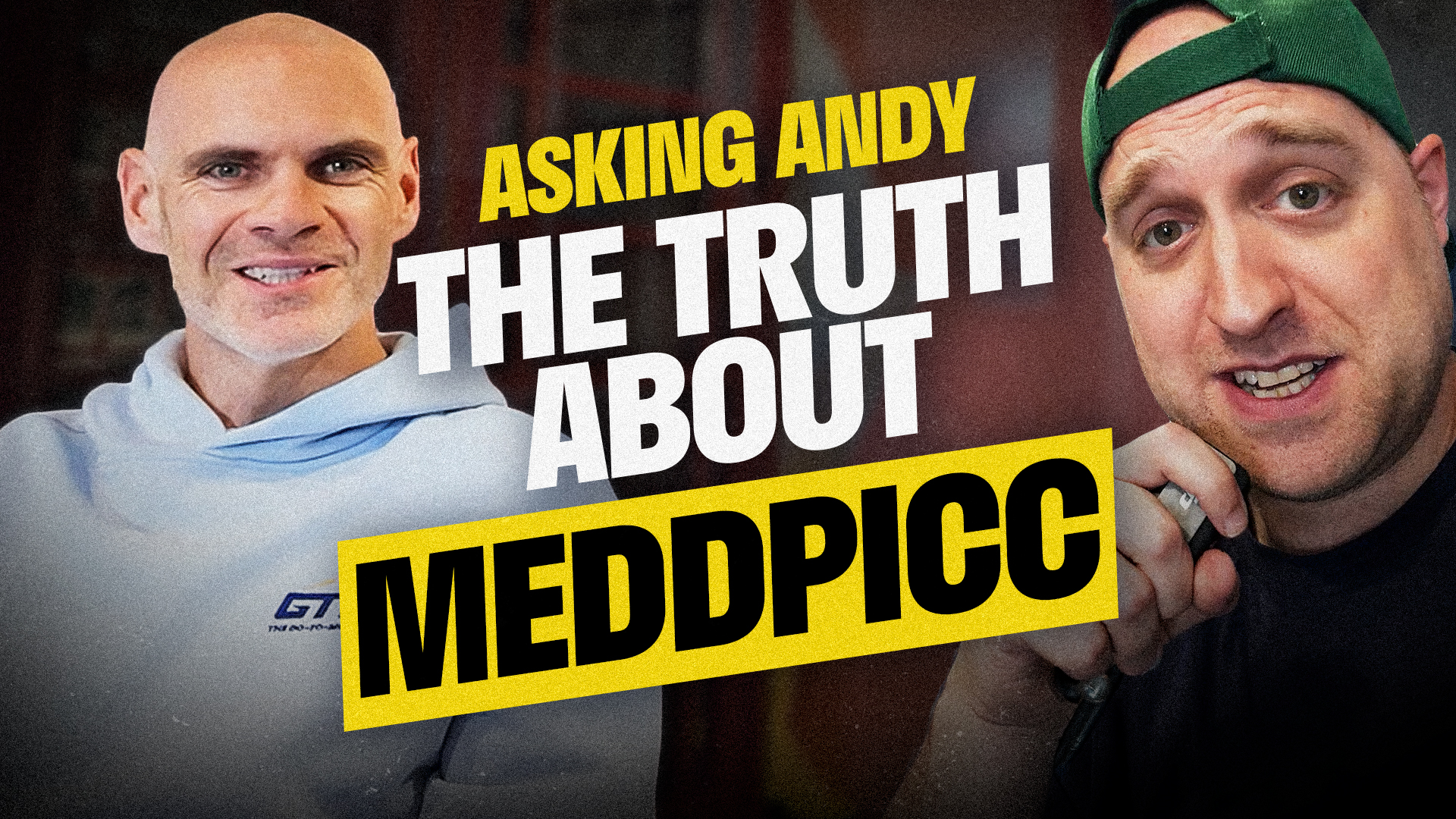
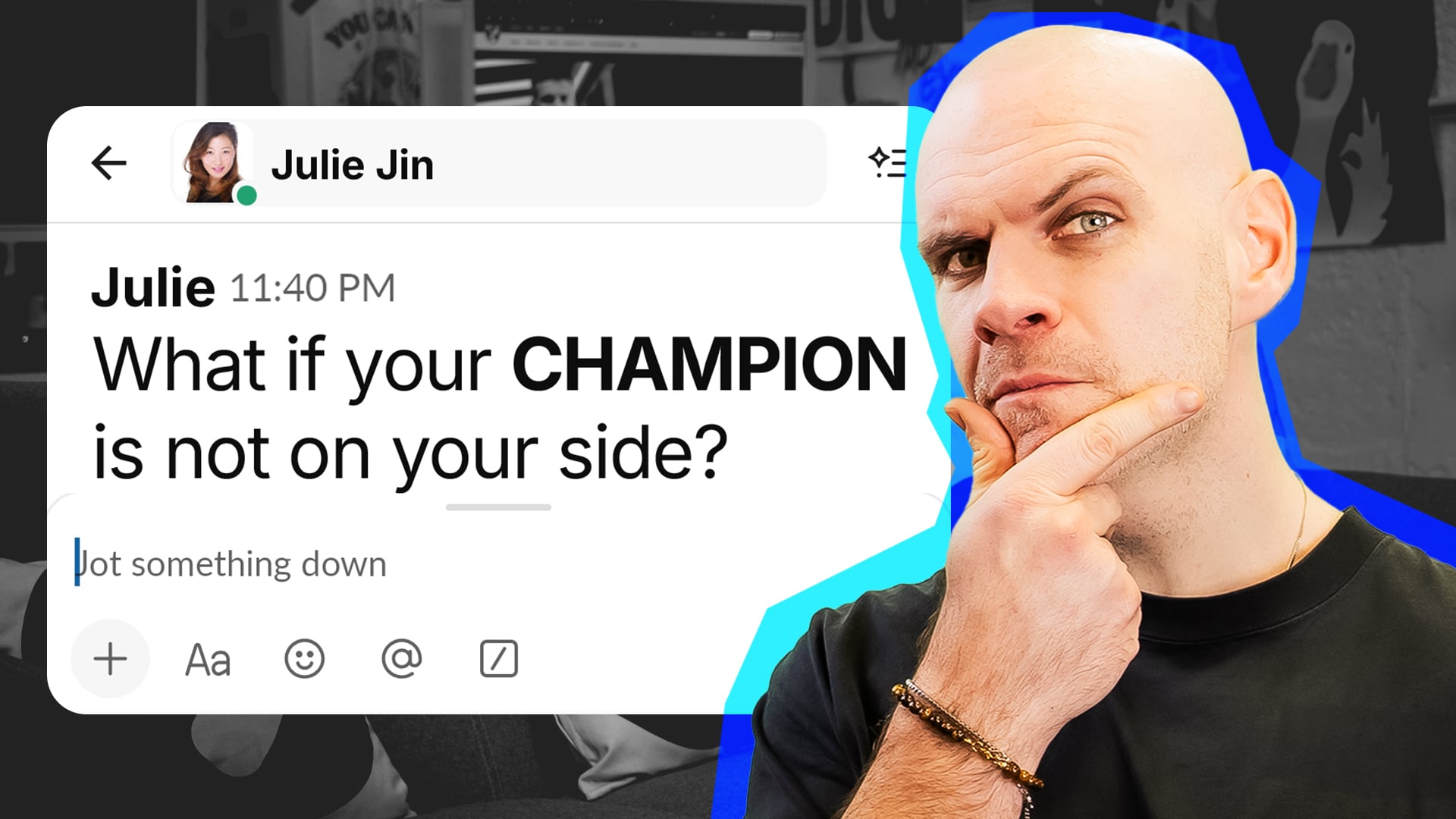
00:00 Andy Whyte: MEDDIC is never the problem. Leadership is. If you are an individual contributor complaining about MEDDIC — it's not MEDDIC's fault, it's your leadership's fault. If you're a leader complaining about MEDDIC — it's not MEDDIC's fault. It's your fault. If you're a sales coach, guru, whatever you want to call yourself, complaining about MEDDIC — chances are you've probably never used it, and you've got an ulterior motive for talking negatively about it. Normally because it just gets loads of LinkedIn likes. 00:29 Pim Roelofsen: Yeah — absolutely. From my personal experience, I've never seen MEDDIC being bad. And as you were talking there, I was thinking about eleven or twelve years ago when I first heard about MEDDIC. I was reading this article explaining what all of the elements stood for, and I thought: there's sound logic in this. If I'm using this, it's always going to be a good thing. 00:50 Andy Whyte: Yeah. Even if you take what we think is the absolute weakest use of MEDDIC — the lowest denominator of value you can get from it — which is that classic checklist mindset, the reactive mindset. Some people even boast about calling it the X-ray approach, where you're doing everything reactively — looking back after a meeting and going through: have I got a champion? Do I understand the decision criteria? Do I understand the decision process? Even in that scenario — that in itself is not bad. What's the alternative? Just flying blind? 01:24 Pim Roelofsen: Yeah — just doing none of that. And the X-ray doesn't get blamed for broken bones, does it? 01:28 Andy Whyte: Yeah. But people would blame MEDDIC for that. And for me, why I say it's leadership's fault is it comes down to a very simple situation: the best salespeople in the world — the highest performers — are good at one thing in particular. They're good at spotting gaps in their deals. They spot the problem. Because there's no such thing as a perfect deal, no matter what. No matter how good your product is, how much pain it solves for the customer, how much budget the customer has — there are always going to be challenges. The best salespeople are the ones that don't ignore those challenges. They take action on them. The best sales teams are the ones that collaboratively work together to uncover those gaps and overcome them. Fix them — and they can't always fix them. And those teams therefore qualify out and focus their time on deals they can win. 02:17 Andy Whyte: This is where the problem exists: bad sales teams, bad sales leadership, bad leadership as a whole creates a bad culture where people are basically punished for those gaps. So a salesperson will be in a deal review or a forecast call, and instead of seeing MEDDIC as this lens that's going to help identify where those gaps are so you can take positive action on them, the manager uses it as a stick. "Oh, you haven't got a champion? Well, that's a champion." Of course what that creates is an environment where people just dress things up. As a salesperson in that team, if I'm a little bit doubtful about whether I've got a champion and I know my manager is going to come down on me about it — suddenly I have a champion. And it just proliferates. You end up with a situation where it's just lies. Whether it's color coding, scoring or check boxing — everyone's trying to check all the boxes, turn everything green. And that's where MEDDIC fails. But that's not MEDDIC's fault. That's like going back to your X-ray analogy — it's like breaking the machine so it never shows broken bones. 03:22 Pim Roelofsen: Yeah, absolutely. And everyone can picture this happening in their own team. If you take a deal review and it's very much like: "Let's show everything good, even if we don't know anything" — you've probably got a little bit of this going on. Whereas the opposite — what you were talking about — where people are obsessed with what might make them lose a deal if it isn't won yet — that is the zone where you can make an impact, where you can do something creative as a team. If you have an environment where that can happen, you're probably doing well. If not, there's work to do. 04:03 Andy Whyte: Here's something for you to imagine, Pim. This is how I always look at this. Imagine the best salesperson you've ever worked with. 04:09 Pim Roelofsen: Still picturing yourself there? 04:11 Andy Whyte: OK — the second-best salesperson you've ever known. Imagine that person in a deal review — we call them deal reviews — and they're talking about a deal that's got some hope but a whole load of gaps. How does the best salesperson you've ever worked with show up to that review? 04:28 Pim Roelofsen: Well — they show up, even if it's with a little bit of a stomachache, and they start talking about the biggest issues they see with it. Immediately. 04:36 Andy Whyte: OK. Now flip it. The stereotypical worst salesperson you've worked with — how do they show up to that opportunity review? 04:42 Pim Roelofsen: They show up with a lot of fluff. Concealing weaknesses. Telling a story that isn't based on facts. 04:48 Andy Whyte: And that's it. Question time. 04:53 Pim Roelofsen: Here we go. All right — let's bring the questions in. You ready for this? 04:58 Andy Whyte: Loosen up for this. What's it going to be? 05:01 Pim Roelofsen: It looks like just one question — so it better be a good one. In question time you talked about the X-ray and the checklist being the weakest approach. But what does MEDDIC look like at its strongest? 05:15 Andy Whyte: Oh — it's so far apart. Using MEDDIC as a reactive checklist — the X-ray device, whatever you want to call it — is better than not using anything at all. That's my baseline. But the proactive approach, the common language approach — those two things are light years better than using it as a reactive checklist. And it comes down to this: using MEDDIC as a proactive common language means that you go into every single conversation — whether it's the first time you've met the customer or every meeting thereafter — and you can use MEDDIC as a framework to address those three things: value, stakeholders and process. Which stakeholder am I talking to? What value do I need to bring to this conversation? And where are we in the process to make sure I keep this moving forward and make it as efficient as possible? 05:57 Andy Whyte: And it's not just you — imagine going to a meeting together with an SE or a sales leader. Suddenly the path towards a cohesive, aligned approach becomes much more efficient. That's the common language element. We have the same way of talking about the same things, making everything very cohesive between us. But as I say, adding that proactive mindset — the fact that every time I go into any conversation, even before I've met the customer, I'm forming a point of view rich around: what value do I need to bring to which stakeholders, to move me to what part of the process I want to get to? And it's really as simple as that. 06:46 Andy Whyte: Now — it's not to say that great salespeople who don't use MEDDIC that way aren't doing those things. We know they are. Great salespeople always prepare, always have a strong point of view, are always credible, and always collaborate well with the rest of the go-to-market team. But what we're saying is: MEDDIC brings it together with a common language. That means everybody is speaking the same language. No different dialects. No one's thinking they're doing gap selling over there, or the new challenger over there. It's just very straightforward — this is how we talk about value. That is the difference. And of course, once you scale that not just across your go-to-market team but across the entire customer lifecycle, everybody is on the same page, playing the same game by the same rules, and helping their customers win the same goals. 07:30 Pim Roelofsen: And wouldn't we all love that. All right — bring the lights back up. Andy, let's summarize this. 07:36 Andy Whyte: Yeah — this is straightforward. If you have a challenge in your team with how MEDDIC is being used, it's not MEDDIC's fault. It's your leadership's fault. Simple as that. Using MEDDIC reactively is better than not using it at all. But using it proactively is how you unlock the most value from it. So think about it as a proactive common language — for your whole go-to-market team, across the entire customer lifecycle — rather than as a label you give to the bad culture in your sales team. 08:04 Pim Roelofsen: Awesome. Well — speaking of unlocking more value: we see that only 10% of the viewers on these videos are subscribed to our platform. So do your friends a favor — hit the subscribe button somewhere here, and we'll see you next time. 08:20 Andy Whyte: That was seamless, Pim. 08:21 Pim Roelofsen: Absolutely seamless. Cheers!






































.png?width=273&height=327&name=image%201%20(1).png)