






































Lucy Williams-Jones: The Formula Behind 25 Presidents Clubs | MEDDICC
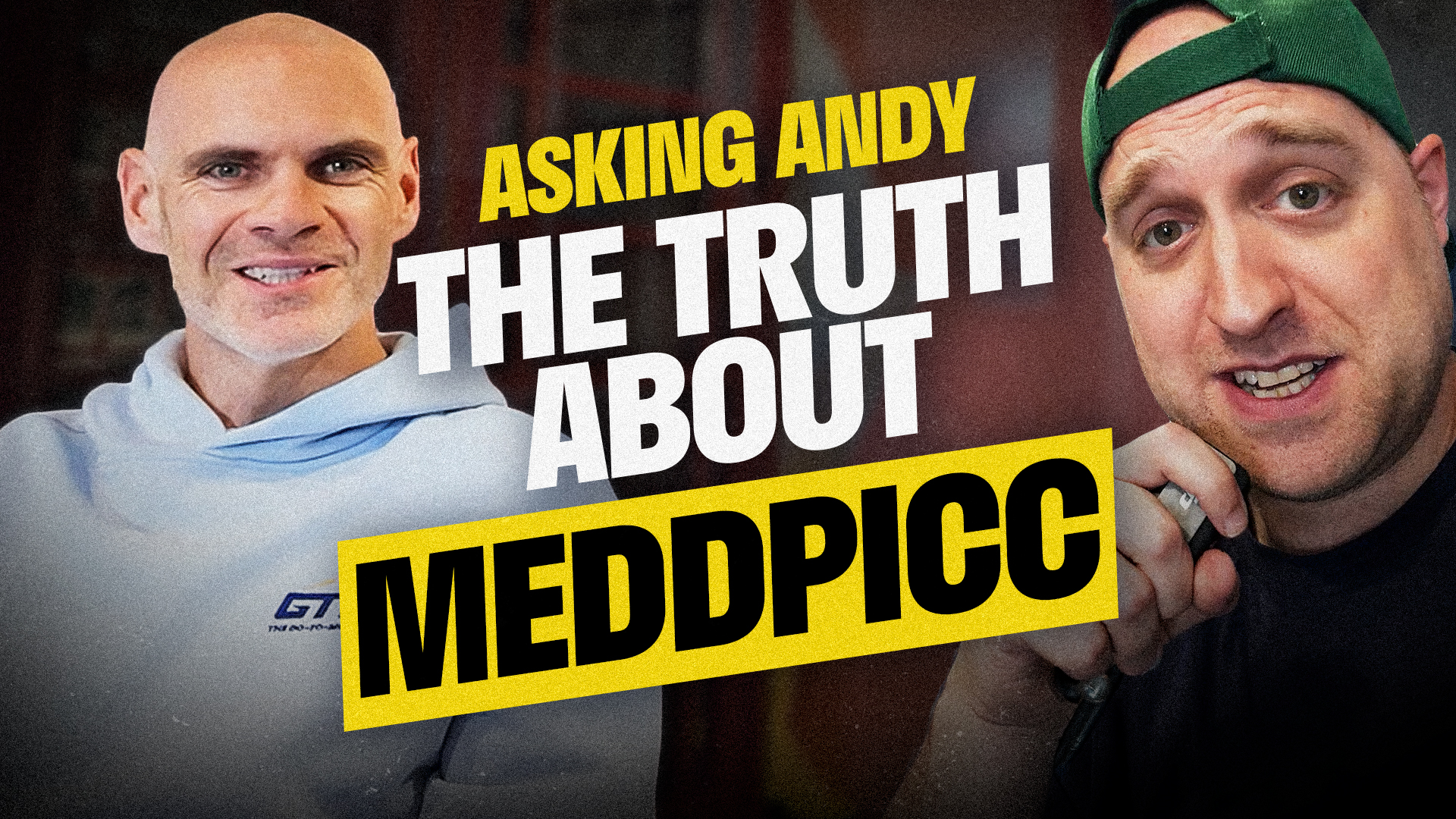
Lucy Williams-Jones joins Andy Whyte on Masters of MEDDICC to unpack 25 Presidents Club wins, the truth about champions, EB access, and how AI is making sellers lazy.
May 17, 2026
61 minutes
NOTES
GUESTS
TRANSCRIPT
KEY TAKEAWAYS
- AI is a productivity tool, not a preparation shortcut. The magic in discovery doesn't come from a ChatGPT script but from what your mind does while doing the research yourself. Sellers who skip that step arrive without a point of view, and a point of view is what earns credibility and opens doors.
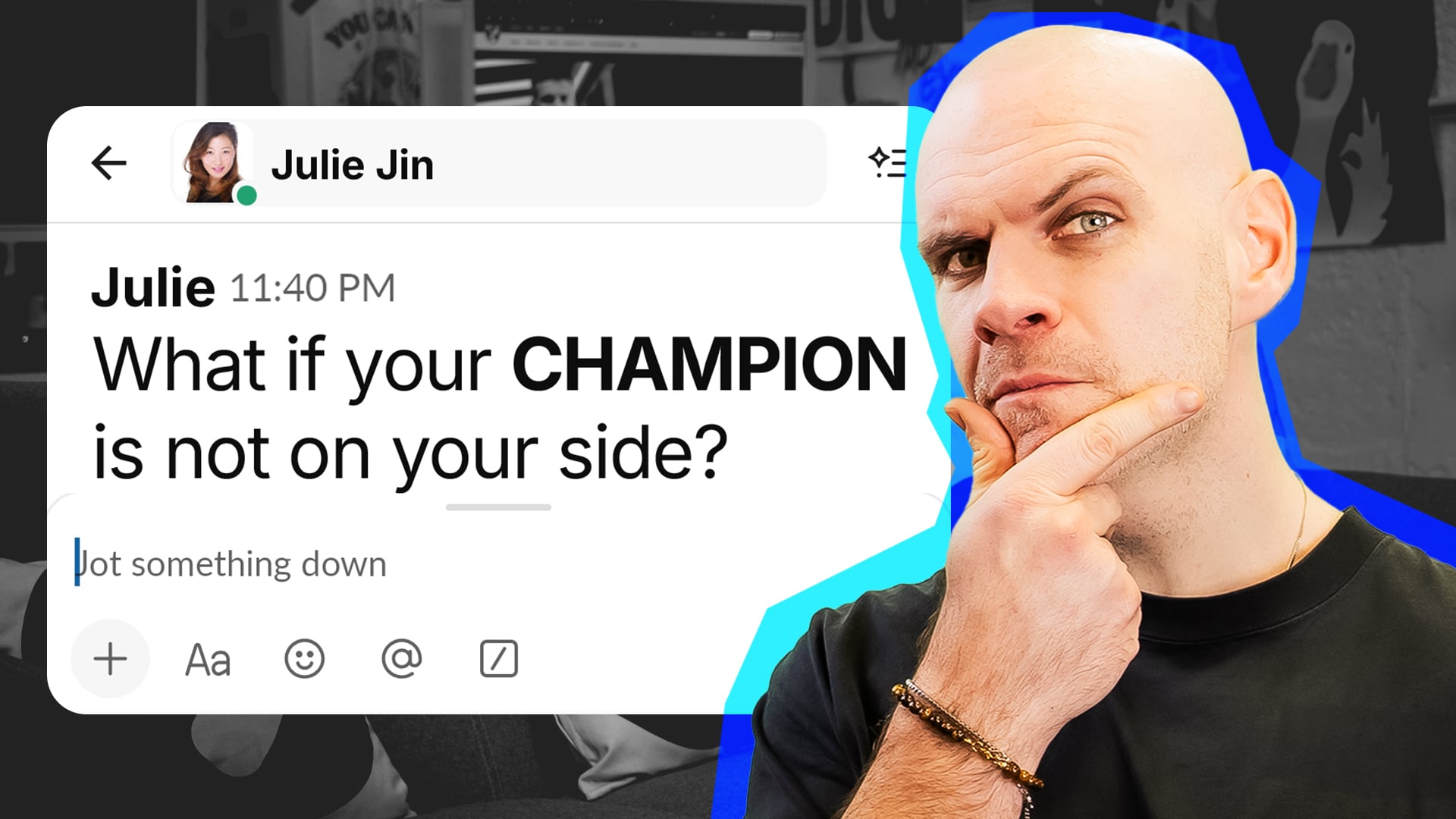
- Champions are not binary, they're a spectrum. A true champion has power, influence, and a personal win. Someone who's always available, loves a WhatsApp chat, and raves about your demo but can't get you into a room? That's a coach. Knowing the difference and having the confidence to act on it is what separates A-players from everyone else.
- Get to the economic buyer before you need them. EB engagement is not a late-stage event. The earlier you open that line, even with no ask, the better your position. If you wait until the POV is underway or a deal is going sideways, you're already on the back foot.
.png?width=273&height=327&name=image%201%20(1).png)
Andy Whyte
CEO & Founder of MEDDICC
Andy Whyte has helped companies big and small grow and prosper as both a quota-carrying Account Executive and a Revenue Leader. His passion for helping sales teams succeed led him to become founder and CEO of MEDDICC and author the five-star-rated “MEDDICC” book. Known for his mantra “Nobody ever regrets qualifying out” and his expertise on the science and art of sales. Away from the day-to-day, Andy practices many skills as a chef, sports coach, taxi, and cleaner in his most important role to date - Dad.

Lucy Williams-Jones
Director of Enterprise EMEA at Astronomer
Lucy is Director of Enterprise EMEA at Astronomer, bringing 25+ years of tech sales experience to the role. She spent seven years at Datadog, most recently as Senior Director of the Majors EMEA team, where she consistently overachieved quota and reached Presidents Club 24 times. She's a co-founder of The Female Sales Leader, an active voice in women in sales communities, and the founding co-lead of the Women of Datadog Community Guild.
Copy Full Transcript
00:00 Lucy Williams-Jones: AI is taking away so many of the tasks we would have had to do manually, making salespeople a little bit lazy. So if you're clever with the prompts on ChatGPT, it is phenomenal what it can do — it's so, so powerful. A buyer coming to you saying "I've got this problem, can you fix it? " — they're not just going to you, they're going to six other vendors. What's changed? Buying committees have just grown and grown and grown. Before, it might have been one or two people who needed to sign off on a transaction — even a solution of £100K-plus. Whereas now you're looking at buying committees of maybe ten to fifteen people. And the EB should be your champion, because if they're not your champion, they're probably the competitor's champion. They're going to have their own win. Why are they doing it? If you can find that out early — what's in it for them — you're going to be able to work with them to do something together in partnership. And if you haven't done that yourself, and ChatGPT is giving you your cool script — how are you going to adapt if the person throws a curveball at you? 00:54 Andy Whyte: That is the number of times my guest today has qualified for Presidents Club in a row. That's over two and a half decades of overachievement — and not just at any company. Some of the greatest companies in our industry: BMC, MongoDB, Datadog, and now at Astronomer. Today's episode is all about taking you from inconsistency to consistency. It's all about the difference between having a lucky career and a legendary one. Welcome back to the show, Lucy Williams-Jones. 01:20 Lucy Williams-Jones: Thank you for having me. I think the last time we did this was five years ago. It was Covid and we were on Zoom. 01:20 Andy Whyte: We were on Zoom, for a change. Yeah. We're now in a purpose-built studio — just for you. 01:20 Lucy Williams-Jones: It feels very professional. 01:20 Andy Whyte: Yeah. Thank you. 25 years. So what's changed? Where should we start? 01:40 Lucy Williams-Jones: I think let's start with context first. Take us back to the millennium — when we used to go into an office every day. We had a desktop, a phone with a headset, a notebook and pen, and a fax machine in the middle of the floor that used to ring at the end of the month — hopefully many, many times. I think the biggest change I've seen over the last 25 years is the use of AI — dare I say it. So much of what we used to do manually has really gone out the window. With tools like Groove where you can now automate your emails, ChatGPT that you can put a company report through and get all your content, have it write your emails for you, put them into MEDDIC, put them into a slide deck. AI is taking away so many of the tasks we would have had to do manually 25 years ago — and it's actually probably making salespeople a little bit lazy. 02:46 Andy Whyte: Yeah. Which makes me a little bit sad. 02:46 Lucy Williams-Jones: It is a bit sad. 02:46 Andy Whyte: Do you think it's taking that away — or if you were back on the tools as an individual contributor now, would you find yourself being lazy, or would you use AI differently? 03:06 Lucy Williams-Jones: That's a really tricky question, because I think there's a fine balance between using AI entirely and using it to be more productive and efficient. Those elements of ChatGPT that enable you to prepare yourself — yes. But there's nothing like actually doing the research yourself, in your own head, because you need to be able to adapt quickly on a call. You need to be able to change, ask the right questions. And if you haven't done that yourself, and ChatGPT is giving you your cool script, how are you going to adapt if the person throws a curveball at you? 03:26 Andy Whyte: Yeah. I have a way of looking at this. If you're a professional salesperson, you should see AI as like a junior analyst you've suddenly got working for you. They can go and do some of the softer tasks — find those reports, find where someone's been quoted in the press, pull something from an annual report that might be relevant to you. I remember the days when you'd actually write to the company and they'd send you the physical annual report, and you'd sit there with Post-it notes and a highlighter pen. Now — great, I don't have to read through all the stuff that doesn't count. I can say: "Go through this document, find me the bits you think are relevant to me. " You can even prompt it with what you're looking for. 04:08 Andy Whyte: But I'm still going to go and read those parts. I'm not going to say: "Find me the questions to ask relating to this. " Because for me, the magic happens in that moment of just being in my own mind contemplating: what does this mean? As I'm reading a goal they have, I think: "Oh, that's just like one of our customers who had that same goal — and one of the problems they had stopping them from achieving it was this, and how our solution helped them overcome it was this. " And all of a sudden, I'm forming my point of view. And that point of view is what gives me credibility in front of the customer, for them to feel comfortable opening up, and seeing me as a trustworthy partner — who they might therefore introduce to their boss, who could be the economic buyer, and so on. 04:46 Andy Whyte: For me, that's where the real magic in preparation lies. It's not just having a script of questions to ask. It's what's behind those questions — the point of view — that carries the credibility you have to have for the person you're talking to to actually want to answer them. 05:05 Lucy Williams-Jones: Yeah. And I think as well — if you think about moving from a discovery call into a new business meeting, that first big step — if you've just recorded your call, put it through ChatGPT and said "write me the new business meeting deck," you haven't actually had to think about it. And if you're clever with the prompts it's phenomenal what it can produce. But then when you're in the meeting trying to showcase to a wider audience "these are the pains you're having today, and this is why our solution can help" — you're going to fall flat on your face. So there's a fine balance between using AI to be better and quicker, and genuinely ramping up. You can use ChatGPT quite cleverly — put in your questions, set up a simulation, test yourself, see if you've got the right answers. But I think we are creating a world of laziness, where people think they don't need to put in the amount of prep they really should. 06:06 Andy Whyte: Yeah. And I also feel like customers are going to become fatigued with AI outreach. I'm already feeling it in my inbox as a buyer. I'm probably getting ten to twenty emails a day that are beating the spam filter that are basically "Dear [name]" and then the AI has inserted whatever it's pulled from our website and mapped our solution to it. It's so disappointing because I'm instantly thinking: "I'm just part of a cadence to this person. " Whereas the ones that really stand out are still the pattern disruptors — which has always been the way, whether you're cold calling or doing outbound in any form. If you take the time to show you have the credibility to earn their attention, it makes a big difference. 07:12 Lucy Williams-Jones: And I feel like MEDDIC is starting to have this AI undertone to it, where everyone's going to end up sounding like robots. Which is exactly what people have been trying not to do in sales for the longest time. It's taking the human element out of it. And if you look at, say, observability as an example — unless you're writing your ChatGPT prompts very differently, the email is actually going to be very, very similar across vendors. Because you've pulled the research on the person the same way, you've found the same thing from their annual report, and you say: "Write me an email to Mr Jones" — and it will produce basically the same email. So that person, at the beginning of a year with new budgets, is going to get the exact same email six times from six different observability vendors. 08:14 Lucy Williams-Jones: I remember we actually used to have to pick up the phone. We didn't even rely on emails 25 years ago. It was all about phone calls — making sure you had that human interaction from step one, rather than relying on LinkedIn messages or emails that just go unanswered. Cold calling seems to be a little bit dead. 08:31 Andy Whyte: Yeah. It's a question for you: you're building a team at Astronomer, you have a choice — eight A-players who use zero AI, or B-players who can use as much AI as they want. 08:31 Lucy Williams-Jones: I would take A-players using zero AI every time. 08:31 Andy Whyte: Yeah, I thought you'd say that, and I'd say exactly the same. So what I'm really getting from this conversation is: AI is a productivity tool. It's perhaps not finding anything that an A-player wouldn't have found if they'd put the time in — it can just shortcut the journey to the end result. But there's also a hazard: if the customer feels like shortcuts have been taken, it will come across — particularly if you haven't put the hard work in to be genuinely passionate and credible about the questions you're asking. And it's not just a risk of not being your best. It actually puts you on the back foot, because it knocks your credibility with the customer. 09:25 Lucy Williams-Jones: I think so. And tools like Copilot — I'm recording so you should probably use it, like if you're on Zoom and putting it through to write your follow-up email. Even that removes the human element. The emails come with bold text, strange emojis, weird spacing. And some people don't even clean up the obvious AI artefacts — sometimes there's still a watermark at the bottom. I don't know how I'd feel if I was a buyer and had invested my time in trying to find a solution, given an hour or 30 minutes on an initial call — and then was sent that as a follow-up. I actually had one last week. I'm currently buying something and at the bottom of the salesperson's email there was a prompt box: "Would you like me to put this into a slide deck or a one-pager? "10:24 Lucy Williams-Jones: You know how sometimes you get those at the bottom? They'd obviously — and in fairness, I'll give them the benefit of the doubt — they could have written the email and then copy-pasted it into ChatGPT and said "make this more punchy" or "more succinct. " Because I do that sometimes. And it would still put that bit at the bottom. So I'll give them the benefit of the doubt because they've done a good job on everything else. But it hasn't helped them. I would rather have received a scruffy email. 10:24 Andy Whyte: Yeah, I think that's exactly right. Using AI to say "make sure this is targeting the right audience" or "make it a bit softer" — my emails can sometimes be a little hard, so I use it for that reason sometimes. And I think that's a really, really good use of it. 11:19 Lucy Williams-Jones: Because you've written it, you've put the hard yards in — and then you're just asking it to tidy. You're not asking it to do your work for you. And that's the risk: we've got a lot of SDRs coming into businesses right now, at 22 or 23 years old, not learning the core skills that would make them an A-player in five or ten years' time. That's my worry — that we're just going to end up with a generation where robots could probably do the job in ten or fifteen years. 11:19 Andy Whyte: Yeah. My theory is that sales is like game theory. Someone of your experience has been through so many sales cycles that you've seen so many times what works and what doesn't. You meet a scenario and you know: last ten times this happened, I had a 90% success rate by doing this — so I'm going to do that again. 12:17 Andy Whyte: But if you're using AI to pump out more and more emails, and someone occasionally responds, you haven't been in touch with what in your own approach caught that person's attention. You've lost that chemistry of knowing what works and what doesn't. So if you're an SDR today doing big numbers just using AI to send more, more, more — you're not going to know what works. You're basically just pulling a lever, rather than sitting down and thinking: "What value can I bring to this customer? Where have I shown I've brought this value before? What might their pain be? What might their goals be? How can I show them they should be having a conversation with us now? " It's just "input here, why we're relevant" — and it's not going to resonate. 13:02 Lucy Williams-Jones: And the inverse is also true. Sellers now have a lot more data — but buyers also have so much data. They're coming to conversations already knowing probably who they want to choose. They're coming with pricing questions because they've done so much research, which wasn't readily available before. Before, you'd cold call, understand the pain, show how the solution helps, go into a new business meeting and you were both engaged at the same level all the way through. Whereas now a buyer coming to you saying "I've got this problem, can you fix it? " — they're not just going to you, they're going to six other vendors. The amount of data that's now readily available is great — but it has changed the way sales cycles work. 14:22 Andy Whyte: And here's the thing — it changes things more for B-players than A-players. The B-player sees: "Oh, the customer's turned up and they have a really strong point of view of what they need. I'd better get around quickly to answering how our solution supports those needs. " Whereas the A-player says: "Tell me a little bit more about why you think you need that. "14:40 Andy Whyte: And what they end up doing is taking the customer on a little journey — a point of view designed to introduce and inspire them towards a broader decision criteria, which of course is aligned to the A-player's strengths. So we've gone from: the customer turns up thinking they need these five things. The B-player runs down that road. The A-player goes: "Let's agree you need those five things, but let me show you these other five things you may not have considered, and why you should consider them. " All of a sudden everyone else is talking about the original five things. The A-player has ten. And five of those ten are things they're strong in, if not the best in. 15:20 Andy Whyte: And now the customer isn't only seeing the A-player as vendor of choice because they've got ten things — they trust them more, because they're seen as the person that brought more value to the table. So if we go back to the AI situation: AI is just going to accelerate how you run down the B-player path, rather than saying: "Stop. Pause. Let's just try to understand what you're actually trying to achieve here. " And the outcome of that is you get unique differentiation. You're seen as a trusted advisor. And the person you've been talking to is more likely to introduce you to other stakeholders, to make themselves look good. 16:03 Lucy Williams-Jones: And another thing that's changed in 25 years is buying committees — they've just grown and grown. Before, maybe one or two people needed to sign off on a transaction, even for a £100K-plus solution. Whereas now you're looking at buying committees of maybe ten to fifteen people. There's paperwork, roadblocks, finance, security, DPAs to get in place. None of that was a thing 25 years ago — you'd wrap-shrink the box, get the purchase order, and that was about it. So how you navigate a buying committee now is going to be really, really important for anyone trying to move into enterprise sales. Because you can't just rely on one person as your EB. And honestly — I have mixed feelings about the concept of "the ultimate EB. "16:48 Lucy Williams-Jones: How many times have I had conversations with my team of: "Well, who's the EB? " "Is it this person? " "But actually there's someone else who can say no, so the ultimate EB is actually this person. " Yeah. Now you've probably got seven or eight ultimate EBs across different lines of business and you have to make sure you're getting across all of them. 17:04 Andy Whyte: Yeah. It reminds me of the logic of computer games — you have the boss, then the final boss, then the final final boss. 17:04 Lucy Williams-Jones: Yeah, totally. 17:04 Andy Whyte: And I think this is why — if you think about MEDDIC in its classic state — it was very much like you had a single individual persona for each role. Like the EB is one person, the champion is one person. That just doesn't work anymore. 17:21 Lucy Williams-Jones: It has to be seen as an open persona. You're basically looking for the people who, in the case of champion, have the power and influence and vested interest in solving this internally for you, and have something to win. You can have — you need to have — multiple champions in different disciplines. For transformational deals in particular, you're going to need champions not just in IT. You need a champion in the business who's going to win from the value the solution brings. But then there are also things like cloud marketplaces, where someone in the business sees the marketplace as their responsibility — their win. That's a potential champion. They may not move the deal forward enormously, but they can give you insights and be in the room representing you when others aren't there. 18:24 Lucy Williams-Jones: And they can even get you access to the EB — because the people who have to accept the purchase order through the marketplace need to be on side. Imagine at the eleventh hour you've never spoken to the person with the authority to accept the marketplace order — and they've gone on holiday for two weeks. You need to make them your champion, because at the end of the day they probably have six or seven different transactions to click through before the end of the month or quarter. What makes yours get done versus someone else's? It will be the relationship. You can't overlook anyone within the sales process. And with buying committees becoming so large and convoluted, you have to triangulate and build champions out of all of them. And the EB should be your champion — because if they're not your champion, they're probably the competitor's champion. We need to figure out how to change that. 19:14 Andy Whyte: Yeah. We were talking about this earlier — about how many competitive deals are lost not at the EB level per se, but through an unforeseen angle coming from a competitor taking the deal away. 19:55 Lucy Williams-Jones: Yeah. There's a lot of movement in the industry — people do two and a half or three years and then move on to a similar or more senior role. Throughout a career as a buyer — as a CIO, CTO, Head of Infrastructure, Head of Applications — you're going to have the tools you've used, the diehard tools you've bought in every organisation. So you could have a customer that has wall-to-wall your solution. There's a change of the guard, and that new person has implemented a competitor's tool in their last three organisations. An RFP comes out. You can tell the RFP is written for the competitor — which is why you should never answer a blind RFP unless you've influenced the decision criteria. 20:41 Lucy Williams-Jones: But you just never know. So getting to those EBs early — ensuring those EBs understand the value you're bringing and how it aligns to their priorities for their new tenure — is critical. January is a great time to get back in front of your EBs to understand their priorities for the year ahead. But keeping those EBs close and making them your champion is going to make sure that any transaction gets done in a much smoother way. 21:06 Andy Whyte: Yeah. As you're talking now, thinking about our business selling MEDDICC to sales teams and go-to-market teams — I was just thinking about the number of times a customer has a new CRO joining a company who, while still on garden leave, has been texting us saying: "Hey, I've got this new gig — would love to catch up. " And it just occurred to me, in those situations we don't worry at all about the lay of the land. We don't think: "What if they use some other methodology? " In our minds it's: "Oh, great" — we almost put it straight into commit. Because that economic buyer — it's part of their playbook. The same is true with solutions at the enterprise level. The economic buyer is often someone who has made a name for themselves using certain solutions, and those solutions underpinned much of the success that even led them to get the new role they're walking into. So of course they're going to want to bring it in as part of their playbook, their stack. So it's not surprising. 22:06 Lucy Williams-Jones: It is tricky though, because everyone thinks change can sometimes be good — a new person joining could be a new champion for you. But you actually don't know what's happened in their previous organisations. So get in front of them quickly, show your worth, especially if you're the incumbent. And if you're not the incumbent and you're trying to win the business, getting to the EB as soon as possible is always key. 22:06 Andy Whyte: Let's talk a bit about your advice for that planning stage — what can people do to give themselves that EB energy, to hit the ground running and not just get access to the economic buyer, but to be able to stay in that room? 23:05 Lucy Williams-Jones: Sure. So in the first instance with an EB — whether you know who you're going after for a deal that was in flight from the previous year and fell over, or a new account you're trying to open — you're mapping your stakeholders. And you've got to start with strategic intent, not just activity. There's no point blasting a C-level, a Director, or a VP with content that's not going to be relevant to them. The first thing you need to do is actually research them: what are they trying to achieve in this fiscal? What may have gone wrong in the previous year, or if it was a deal that slipped — why did it slip? Was it deprioritised? 23:42 Lucy Williams-Jones: Really go in with a point of view around market trends, what other organisations are doing. A lot of the emails I write with my team use the SCIPAB framework — Situation, Complication, Implication, Position, Action, Benefit. The SCI always goes first — Situation, Complication, Implication — and then the PAB can be in any order depending on how you want to write it. But it always ends with an ask and a benefit. And the idea is not for the outreach to be a templated blast — it's to do the research and write a really, really strong email that gives the EB a point of view, makes clear why you're contacting them, and doesn't just say: "Hey, I want to understand what your plans are for 2026. " Give a real, considered point of view — with an action and a benefit they can say yes to. 24:44 Lucy Williams-Jones: If you've already got a relationship with them, it's going to be a little bit easier. But if you haven't, I'd really recommend finding a champion who can then introduce you to that EB. That's a great test. Take you up or across the organisation — especially if you've got multiple EBs, you're going to need multiple champions in different lines of business to get you there. 25:03 Andy Whyte: Yeah. And it's such a good test. But it's also something I think so many people miss when they think about testing their champion. A lot of people define a champion as "they will introduce me to the economic buyer. " My problem with that as a definition is it sounds so binary — and it's not really a trait of a champion. If all they're going to do is introduce you to someone else, what you're really looking for is to be seen as so valuable, such a great partner in the champion's eyes, that they want to get you in front of the economic buyer because you've found their vested interest. You've aligned your value and your solution to what they personally want to achieve. 25:57 Andy Whyte: So they're thinking: "I really, really want to work with Lucy. Because if Lucy can become a partner of ours, we can overcome this challenge. And the best way for me to accelerate that happening is for me to get Lucy in front of more people" — which is basically going out and finding their vested interest. That is where the real magic happens. That person will want to introduce the economic buyer because it's in their interest — and then they do the selling internally for you. I think so many people miss that. It's one of the risks of having the definition of a champion be "they introduce you to the economic buyer. " It's not as simple as that. 26:27 Lucy Williams-Jones: No, I don't think it is. And a champion, of course, has access and is well-respected within the organisation. But they're going to have their own personal win. Why are they doing it? If you can find that out early — what's in it for them — you're going to be able to work with them to do something in partnership. And that's when it comes alive. It could be a promotion. It could be that they're working weekends and just want their evenings back. It could be as simple as that. But what is it that's going to make them be your champion — not a competitor's champion — and be a champion that's valuable across the organisation? That's the question to answer when you're building your champion plans at the start of the year. Coming back to the earlier question: champion plans, access plans — all of these are going to form a really strong go-to-market plan that you can activate to hit the ground running. 27:35 Andy Whyte: Yeah. Totally agree. The trait of power and influence — that's the non-negotiable for a champion. It doesn't matter how strong their vested interest is, doesn't matter how much time they spend selling internally for you — if they haven't got the influence to capture the attention of the person they're trying to sell to, it's not going to go anywhere. In that case, they'd be a coach. And a coach is a great thing too. 27:35 Lucy Williams-Jones: Yes! Love a coach. 27:53 Andy Whyte: Yes. And here's another point we really try to get across to people: this idea that sales is a linear path — that if you do great discovery and research, you end up with a champion, and then if you do a great job with that champion they introduce you to the economic buyer, and so on. It's not a linear path. If it were, there would be no difference between high performers and low performers, and people wouldn't consistently be top performers. Those consistent top performers are consistent not just because they're great at finding champions — they're consistent because they're the fastest to identify things like: "I don't have a champion. I just have a coach. "28:51 Andy Whyte: They have the confidence to put their hand up and say: "I'm in a bit of bother here. I haven't got a champion, and I'm not sure I can see that person changing from where I am right now. So I've got a big decision — do I go off-piste a little to try to find someone and potentially upset this person in front of me who is a coach? Or do I qualify out? " I think that's the number one thing that differentiates A-players from B-players — this ability to have confidence in what they know are the really important parts, codified into MEDDPICC, but really just an innate understanding of selling. 29:17 Lucy Williams-Jones: Yeah. And champions are funny things, because you might think that the person who took the initial call, gives you loads of data, sets the stage in the new business meeting, raves at your demo, is really vocal — that's my champion. If they don't have access, they're not your champion. They're a coach. Which, as I said, is great. Over the last 25 years I've seen a lot of changes in champion traits, because back in the day you used to sell in the bars, in the restaurants, on the golf course. You don't do that anymore. It's a little bit more tricky, especially with a lot more women coming through into the industry. Building champions can be quite tricky for some, especially in a male-dominated environment like tech. 30:15 Lucy Williams-Jones: So I think the key traits of a strong champion, for me, are: they're not always available. If you've got someone who's always on the end of the phone or WhatsApp, I'd question whether they're busy enough to actually be a champion. Someone who just wants to go out for dinner and drinks — probably not a champion. But someone who is always thinking strategically about what the product or solution can do to help them and how they can filter that back — that's a sign of a strong champion. If you're in a broader room with a wider audience and your potential champion speaks up, takes your stance, gives feedback, and sells on your behalf — that's the sign of a really strong champion. 30:38 Andy Whyte: Yeah. I agree. The dynamics between you and your champion are interesting in ways I'd never really thought about. I actually had one instance where I had a great champion — a woman — and we got the deal done. But at some point during the process I must have said something like: "Let's talk about this over dinner. " And after the deal closed, she texted me: "So we can go out for dinner now. " And I had this moment of: "Oh — wait, no, that wasn't where I was going with that. " It opened my eyes to a dynamic that, as you say, works the other way around too. You can't necessarily just do the golf course thing if you're the opposite sex. 31:24 Lucy Williams-Jones: Right. Though I think that has changed anyway. I don't think deals are being done on the golf course, in the bars and restaurants anymore the way they were — that's something that's changed in the last 25 years. And now, because there's so much scrutiny on transactions — especially given the way the economy is — you need more than just a strong champion to get a deal done. You need value. You need benefit. You need to ensure their pain is answered. You need EB access. And EBs don't want to play golf. They don't want to go out for dinner. They want to go home to their families and have a nice evening without having to jump on the phone because something's gone wrong. 32:03 Andy Whyte: Yeah. I love what you said about champions being — almost — busy. When I think back to some of the greatest champions I've ever had, I feel almost a nervous energy around them. I want to make sure I maximise their time. I'll be almost sparing with a text, because in my mind I want them to see a message from me and think: "Andy needs something here" — not just "oh, it's Andy checking how my Monday afternoon's going. " And so I think that's almost something people should look for with a champion: do you feel like you have to deserve their time for what you're going to ask of them? Because it goes hand in hand. You don't want to waste their time, because you're eating away at the currency you have with them. Do you think it's the same? 33:16 Lucy Williams-Jones: Yeah, I think so. I look at it as like four or five gold coins. Use them sparingly — because if you're checking in every day, you're going to become a little bit annoying. Even if they are your champion and you have the best relationship in the world, there's going to come a point where if you're constantly asking and asking, it becomes a drain. So I talk to my team about having these five gold coins, and using them at the point of inflection where you know you're going to get the most benefit. Don't use them willy-nilly — and yes, I think "willy-nilly" is a perfectly good word — because the champion will soon disappear. 33:50 Andy Whyte: Yeah, I love the five coins idea. But playing devil's advocate a little — one of the problems we see far too often is that people see building a champion as almost binary: this event they have to complete, to get to the point where they think "yep, I've got a champion — identified, built, tested. " And then they put that champion on a pedestal, admire them, show them off on deal reviews. They don't actually get them executing. They don't actually ask anything of them. How does that fit with the five coins analogy? 34:25 Lucy Williams-Jones: OK. So I think the five coins come in more towards the use element — towards the back end of the cycle. You might see it in the middle when you're trying to get to EB access before a POV or something like that — that for me is a good ask. But with the building, it's a continual process. Understanding why they care about this in the first place is going to be super, super important. Is it promotion? Is it that they're getting sleepless nights because systems keep crashing? Making sure you're in constant contact — but not too much. 35:10 Lucy Williams-Jones: And I hate — well, I like WhatsApp personally, but I don't like it from a business standpoint. Because I think it gives a false sense of warmth. I've had people on my teams say: "It's all right — they're answering my WhatsApps, they're active. " It means nothing. So many people hide behind WhatsApp, especially at end of quarter. You've built this WhatsApp relationship throughout the cycle and then they just send you a message saying: "Sorry, it's not happening. " For me, I'd much rather have a call and then a follow-up email confirming what was spoken about. WhatsApp is tricky because lots of people just see it as a great sign. "Oh amazing, they WhatsApped me back. " But for me it's not a great indication of a solid champion. 35:58 Andy Whyte: Do you have rules of engagement with your champions? I've actually had it in the past where, at the point where I feel like I have a champion, I've — depending on their personality — actually told them that they're my champion. Whether I use the word "champion" or not depends on how I'm reading them. But I'd say anything from: "In my world, I need something I call a champion — and I see that person as you. What that means is: just like I'm your person on the inside of our company, you're my person on the inside of yours. " And depending on the relationship, I'd be more or less direct about it. But the point I'll always get to — whether I call them a champion or not — is to say something like: "There are going to be times when you really need to get a hold of me, and there are going to be times I need to get a hold of you. What's the best way for me to do that if it's really urgent? I promise I won't call unless I really need to. "36:57 Andy Whyte: And what I've found is: calling those things out converts it — stops what you described, where they just send you a WhatsApp at the end of the quarter saying "oh, sorry, it's not happening. " They're almost held accountable to a higher standard. Is that something you ever do? 37:13 Lucy Williams-Jones: I think it probably should be part of the champion identification and build checklist — how to work with me. We do that internally with our teams: "What works well for you? " Not everyone's the same, so you have to treat everyone differently. And perhaps that could be something we implement: how does a champion want to be engaged with? Because you don't want to annoy people. You don't want to use all your coins. And the other risk is: if you're WhatsApping them all day, it makes it acceptable for them to do the same back to you. 37:50 Andy Whyte: Yes! Because then that makes it acceptable for them to send you a WhatsApp at the end of the quarter saying it's not going to close. 37:50 Lucy Williams-Jones: I actually like the idea of setting those rules of engagement. 37:50 Andy Whyte: Yeah — feel free to steal it. And I think as well — the point you made earlier: I don't want a champion who's WhatsApping me all day. I want to feel like when I'm messaging them, I'm proofreading it, I'm checking, triple-checking — because every word matters. And if I've gone beyond that level of care, then they're probably a coach. 38:51 Lucy Williams-Jones: Yeah. I would agree. There are some instances where time zones make WhatsApp really work. And I'm not saying you should never have a WhatsApp relationship with a champion. But the level of WhatsApp activity — or the willingness to respond on WhatsApp but not be free for a proper conversation — will show through. 39:08 Andy Whyte: Sure. My point is more just: make sure you need to. Don't be too casual about it. I once worked for this awful boss — and I always remember: at end of quarter, he was pretty short-tempered at the best of times, but he would turn into some sort of monster. He would walk around the office, table to table, desk to desk, just asking for updates. And I remember literally lying to him, because it had only been two hours since he'd last asked me. What he was looking for was for me to say "I've sent another email, I've made another call. " And the customer in that instance actually got a bit annoyed at me — the last time I'd chased them, they'd said: "I'll give you an update when I have one. "40:11 Andy Whyte: And I just think that's what we're talking about here — the micro version of that. That person would have seen a correlation — not causation — between bouncing around the desks banging on tables and success. But it was probably pretty detrimental to the success. If you've got a strong champion and good EB access, you shouldn't have to be asking for updates every five minutes. It's like that scene in Fawlty Towers — did you ever watch it? The one where Sybil is in hospital? Basil is trying to put the moose head up, and every time he gets on his stepladder, the phone rings. "Have you done it? Have you got the update? Have you done this? " And every time he has to get down, answer the phone, put everything down. If he hadn't had the constant "have you done it? " — it probably would have got done a lot sooner. 40:49 Lucy Williams-Jones: That's brilliant. And exactly the right analogy. I know how frustrating it can be from a leader to a rep — I've been there when I was an individual contributor. But if you've got a good EB access and a good champion, you need to trust in them. Unless they give you reason not to — in which case, they're probably not your champion. You've got to trust in your champions completely. Then you shouldn't have to do the constant chasing. 41:21 Andy Whyte: So that's champions. When it comes to economic buyers — how does it work best? Do you like to get your teams to delegate EB engagement to someone senior, like a peer? Is that a tactic you deploy? Or do you want your AEs to be having direct EB alignment? What's your preference? 41:39 Lucy Williams-Jones: I think it depends on the organisation. In a smaller organisation, the EB could be a Director or VP. In a large bank you're probably looking at a Group CTO or CIO. So it depends. I do think there's an element of ownership — I'm the first to say to my team: if they're not getting through to someone they need to, I'll take it on. When I do PG Fridays — we have PG Fridays every Friday, and my contribution is trying to get to stakeholders my team can't reach. I will write the emails, do the research, and get them sent off. We might even go upstream further — VP of Europe, or C-level. But I do think EB access is a team effort, because not all EBs are going to want to speak to a salesperson, especially if you're not leading with value and content they find interesting. A lot of sellers fall short because they think: "I've got these great stories, I'm going to talk about features and functions. " They don't care. They care if it's going to help them release apps six times faster. 43:07 Andy Whyte: Yeah, I agree. And I'm a massive fan of finding that alignment peer-to-peer — but also making no ask, at least for the first engagement. And the important thing is to do it early. We see this so often where the deal goes sideways and everyone's in the war room going: "Oh no, what do we do? " And someone says: "OK, senior person — you reach out to the EB. " And you're on the back foot by that point. Our favourite approach is: if you're excited enough about an opportunity to be thinking about who the EB is at the early stages — just go and start making that engagement. Try to make that connection. 43:46 Lucy Williams-Jones: That's a really good point, because in a strong playbook you have EB access before the POV, right? So you've already got the EB involved before the proof of value phase — before you do the BVA readout. So it's not the eleventh hour "can you sign the paperwork? " And that's changed a lot in 25 years. Before, you'd just go at the last minute and discover they're not signing it. 43:46 Andy Whyte: One of the things about EB engagement is that people typically see it as a late-stage event. The idea is you want to build your champion, build your proposition, and then engage the economic buyer when you've got relevant things to talk about. The problem is you're often on the back foot by the time you get there — if they have other priorities, they can almost throw a spanner in the works. 44:32 Andy Whyte: We're big advocates of engaging the EB sometimes before you've even had a first meeting with the buying team. If you've got an opportunity you're excited enough about, you identify who the economic buyer is — or a likely candidate — and you find their peer in your business to reach out. Something like: "Hey, I'm really excited to hear that our teams are meeting next Thursday. I just wanted to let you know that if this project has as much value for you as we think it will, I'll be the executive sponsor. No ask right now — I just wanted to open up the line of communication. I'll follow up to let you know how it goes. " No ask. Just opening the door. 45:20 Andy Whyte: And if you're an economic buyer, and someone senior from the other business has done that — you know what's going on, and the door is open. Maybe just ajar. But you've opened up that line of communication. The first thing the EB has heard from you is not: "You should really pick us because of these reasons. " You've just warmed them up a little. 45:20 Lucy Williams-Jones: I love that idea. And sometimes, depending on the solution, your first outreach might actually be to the EB who then passes you down — you might be selling something quite technical that they need to hand to the hands-on-keys team. But getting to the EB as early as possible is the most important thing. And a lot of playbook companies have EB access before the POV as a hard step in the process — before both organisations invest time trialling the software and building value and business cases, we've met the executive buyer or budget holder to ensure they're comfortable with the process. It also enables us to ask: "Is there anything you need to see in order to be comfortable with the sign-off? " Getting that EB access can be the hardest bit of the sales cycle — because people don't want to jump above their champion. How do they get there without one? They just want to run full steam ahead and do a POV because they believe the software will sell itself. So there's always that tension in the forecast call: should we be doing this? And I believe we absolutely should — with very few exceptions. 47:12 Andy Whyte: Yeah. I'm not saying you go to the CIO of a global bank and say: "I need to speak to you before we run a POV. " But there's got to be an element of: "We are comfortable with the work we're doing in order to move forward. " Otherwise you can run a POV and it just dies there. It's one of those classic slow-down-to-speed-up situations. 47:30 Andy Whyte: One thing we find quite funny is that we're selling MEDDPICC to go-to-market organisations, and quite often the sales leader will be our champion — a CRO or VP of Sales. And we're selling the very behaviours they want their sales team to adopt. And the amount of times we find ourselves with a proposed champion who's telling us "I'm your champion, don't worry" — but they're still blocking us from engaging the economic buyer. Even with people who know how it works and know what they want their own teams to do — it still happens. It shows the point: it's not a binary, linear process. Things will happen. But where there's difficulty, there's an opportunity to be unique and be better than the other salespeople trying to sell to that organisation. 48:30 Andy Whyte: As we always say — there's no traffic on the extra mile. That's exactly it with EB engagement. The harder it is to engage the economic buyer, the better — because it means you're going to stand out. It's a very quiet place to be once you get there. So it can almost be worth going through that extra difficulty ahead of the POV. It may feel like you're losing traction, like you're slowing things down, making things uncomfortable with the champion you have. But it's well worth doing. 48:30 Lucy Williams-Jones: Totally. Slow down to speed up is key. You have to be really thoughtful and intentional about any messaging to an EB — because sometimes you only get one chance. But it will test the strength of the opportunity. If you don't skip that step, it might take three weeks to get there — but that's OK, because it shows they have intent. They showed they want to engage. 49:26 Andy Whyte: Yeah. It's like: you'd rather have a three-week delay that gives you a chance of winning, than accelerate three weeks to losing it. 49:26 Lucy Williams-Jones: Same with RFPs — I don't think answering a blind RFP is a good use of time, especially when there's an inferred decision criteria already written in. One reason I would answer a blind RFP is if we can get to the EB. That's always my first ask when a blind RFP comes in: "Great — but we want to go and meet the EB, whoever this budget is coming from. " If they say we can't engage because of the RFP rules, then we might respond. I had one very recently where they said they couldn't give us any information or engage at all outside the process. So we decided not to respond. And they said: "That's a shame. " But the fact that they're willing to say that shows where they were going to land anyway. 50:12 Andy Whyte: Yeah. You were probably on the back foot from the start — you just saved yourself a lot of time. 50:12 Lucy Williams-Jones: Yeah. And I'd rather my team be doing intentional pipeline generation solving real problems than spending six months responding to enormous spreadsheets and doing demos for people who'd rather be watching TV. 50:32 Andy Whyte: Yeah. So — EB access and building EB champions is going to be really key, especially heading into 2026. What would you advise to someone trying to join an A-company like Astronomer — let's say the 22-year-old version of Lucy trying to break in? 50:32 Lucy Williams-Jones: Sure. I think you've got to treat finding a new role like a sales process. Do your research. Understand the why behind the organisation — where they've come from, where they're going. And reach out to hiring managers in the same way you'd generate pipeline with a prospect. Whenever I interview for a role, I MEDDIC it. So I know how many people I'm up against — that's my competition. I know who my champions need to be. I know who the final decision maker is. I understand why they're hiring and what they're looking for, and what their decision criteria is — so I can make sure I'm hitting all of those. Sometimes you go through the process and realise you can't meet all the criteria — and that's fine. 51:43 Lucy Williams-Jones: And joining a new organisation in the interview process — it's as much for them to try to secure you as it is for you to test whether it's an organisation you want to be at. I'm not a serial interviewer — I know where I want to be. I always have a hit list of companies I want to work for. But I've spoken with a few over the years and decided: "Actually, we don't fit. " And that's OK too. It's really about qualifying the opportunity, the organisation, the people — and using MEDDIC to do it is a really good approach. 52:26 Andy Whyte: Yeah, I agree totally. I found myself going down a rabbit hole recently on a tech sales subreddit, absorbing what people are saying out there. And there's this rhetoric that working for startups sucks. So I dug into it. The answers were pretty consistently: bad go-to-market, bad leadership, and bad products. And I was like — well, that doesn't make sense. Every company that's a success story today started as a startup. But here's the thing: you can tell all three of those things from the outside looking in. Product — look at G2, look at their website, maybe reach out to some customers using the tech. 52:26 Lucy Williams-Jones: That's exactly what I did with Astronomer — I reached out to some of my champions from previous organisations to find out whether they were using it, how they rated it, whether they found it pivotal to their business. Across the board the answer was yes. 53:41 Andy Whyte: And I'm not surprised — if you look at your career, you've had great tenures at great companies. Datadog at employee number 800 or so in 2019 was by no means a sure thing, especially coming from a great organisation like MongoDB. So that approach really, really works. GTM you can see from the outside in — compare them to their peers, get a feel for how they go to market. And leadership — if you're joining a true startup, I would want to meet the leadership team. Because the moral of the story is: when you're going for a new role and want to get into an A-company, be intentional about it. Do your research. Build your networks. Ask champions from your previous organisations what they think. And then when you're ready to reach out to the hiring manager — or even the C-level directly, depending on the size of the organisation — if you're that intent on working there, there's nothing bolder than reaching out and saying: "I really want to work with you, and here's why. " Treat it like a sales process all the way through. 55:01 Lucy Williams-Jones: And use MEDDIC — whenever I'm going for a role, I'll have it on a framework sheet. I'll make sure I understand exactly what they're looking for, what the KPIs are, who my champions should be. 55:01 Andy Whyte: Yeah. And we just filled two positions on our team — on LinkedIn alone we had close to a thousand applications. So in the job description — and people get very upset about this, but I'm going to go with it — it says: "Sales is all about attention. It's all about standing out. It's all about capturing someone's attention and keeping it. So please don't hit the Easy Apply button, because easy applications will be ignored. "56:16 Andy Whyte: The percentage of people who don't do that is less than 2%. Of those thousand-odd, probably 900 and something hit Easy Apply. Let's say maybe 20 people did something different. Fewer than five contacted me directly. And I really feel like — in most scenarios you might not reach out to the CEO — but there's never going to be a situation where that's seen poorly as long as your messaging is right. In my case, I'm a pretty public face of the company. We're not a big company. I'm not in some ivory tower. It's actually very surprising to me that the bar is so low. Because if I was applying for jobs right now, I would absolutely do that. I'd really want to stand out. So one thing — for anyone watching or listening — there's a book they should probably read. 57:08 Lucy Williams-Jones: So we released The Female Sales Leader to tie in with International Women's Day. Penny, Marina, and I spent two years creating a book built with the intention of helping more women get into tech but also to reach their dreams of being future CROs. In the book there's a practical guide around interviewing, lots of stories about finding your niche, a lot around A-players and A-companies who are hiring right now. I'd definitely, 100%, have a look at it. It's not just for women — it's written from three female leaders' perspectives, but it is definitely for everyone to read in order to get themselves into one of those A-companies. 58:01 Andy Whyte: Yeah, for sure. One of the things I'm hearing a lot right now is people trying to get into tech sales and struggling to get that first step into the field. And we hired Lisa on our team — she came from an SDR role and took her first AE role with us. That's quite a step for any company — you're basically taking someone who hasn't done the job before and backing them to do it. Yes, there are transferable skills after a year as an SDR. But it's not a clean evolution. And just to prove the point about going the extra mile and going deeper: Lisa not only did a great job of engaging with multiple stakeholders — including me — but she actually got one of her mentors to reach out to me on her behalf. Almost like she championed herself. Absolutely brilliant. 58:56 Andy Whyte: And I think without that, Lisa would still have got the job because she'd done such a good job through the process. But by the later stages of an interview, the company genuinely wants you to win — they want you to show up and be brilliant. So if you can do anything else to enhance that, why wouldn't you? 58:56 Lucy Williams-Jones: We want everyone coming through to succeed. Probably over-sharing a bit — but if people ask me questions about the next stage, I'll answer them. I don't think there's any point in trying to trick people or not being open and transparent about what I'm looking for. As long as they're curious and they ask the questions. And especially with hiring managers — if it's my team, it's ultimately my final decision, but there are other people who could potentially say no. You've got the champion, the EB, and the ultimate EB. It's the same with hiring — it's a committee in a way. And the best thing you can do is make the hiring manager your champion, because they're the one who's going to be selling internally — arguing for the right package, the right benefits, making the cross-functional case. I would encourage anyone looking for a new role to really do your research on that person and genuinely get them on your side. Just because they're the hiring manager doesn't mean they can't be a champion. 60:32 Andy Whyte: So hopefully now — anyone who is thinking of exploring the opportunities at Astronomer should have at least watched this episode. Read the book. And one more thing I don't want to miss — we're going to be recording some team episodes with Lucy. And you're only the first repeat guest we've had on the show, so I'm really excited about that. And so if you've enjoyed hearing from Lucy, and you want to subscribe to the secrets of 25 consecutive Presidents Club wins at great companies — be sure to check out those upcoming episodes as well. Thank you very much, Lucy.
No transcript sections match your search.
This is a lightly edited transcript. Some sections have been condensed for readability.
ABOUT THIS EPISODE
SHOW
MASTERS OF MEDDICC
EPISODE
S2 | EP2
DURATION
61 mins
PUBLISHED
2026
Video
Masters of MEDDICC
Masters of MEDDICC - Season 2
CHAPTERS
01:40
25 Years of Change - AI, Laziness, and What's Been Lost
03:26
The Point of View Problem
06:06
AI Outreach Fatigue and the Pattern Disruptors
13:02
A-Players vs B-Players in the Informed Buyer Era
16:03
Buying Committees and the End of the Single EB
27:53
What a Real Champion Looks Like
33:16
The Five Gold Coins - Using Your Champion Wisely
35:58
Rules of Engagement - Making the Champion Relationship Explicit
43:46
Engaging the EB Early, No Ask Required
49:26
Never Answer a Blind RFP Without EB Access
50:59
Treat the Job Search Like a Sales Process
57:08
The Female Sales Leader and Championing Yourself
GET MORE MEDDICC IN YOUR INBOX