




































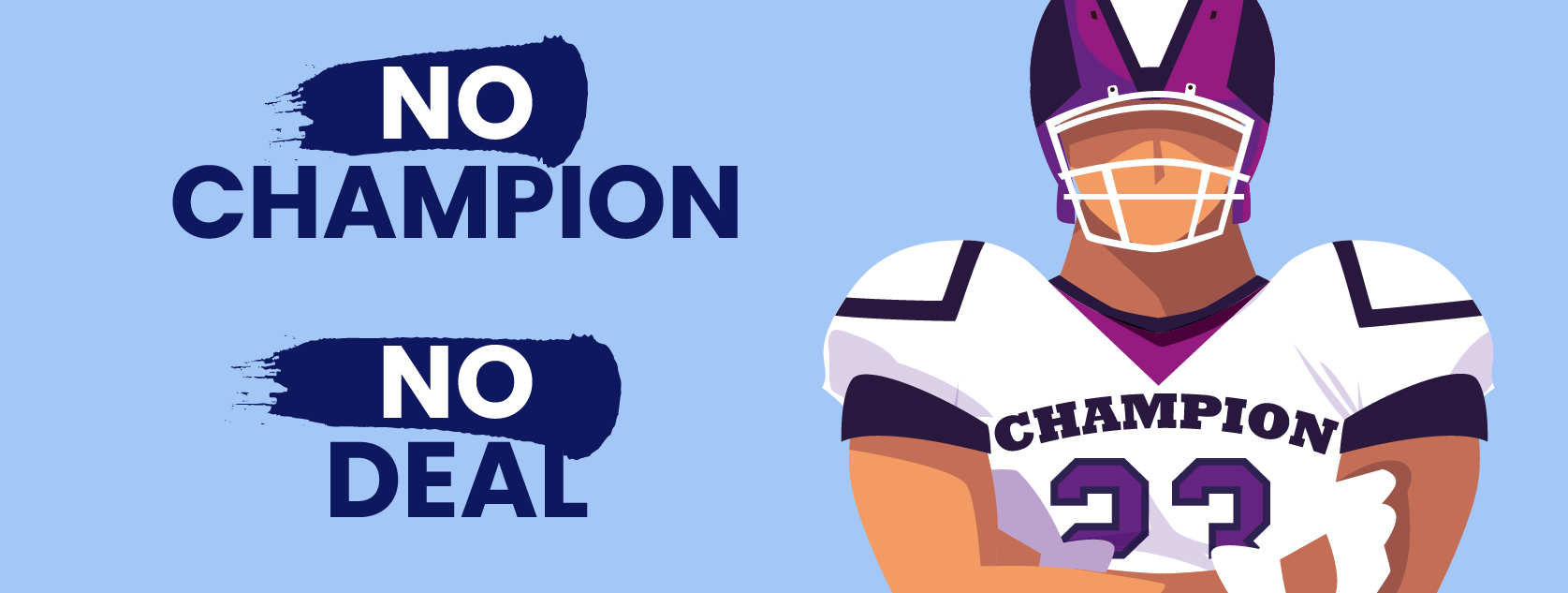
Going into a deal without a Champion is like an NFL coach going into a game without a quarterback. You might get lucky, and occasionally you'll find yourself in a gimme situation. But it's not sustainable, and the best sellers don't rely on luck.
What makes MEDDIC the framework of choice for top sellers is its repeatability. It's a game plan, not a gut feel. And within that game plan, the Champion is the most important player on the field.
What Makes a Champion?
A Champion is someone on the customer's side who holds real influence and power, has a stake in the outcome, and is willing to put their neck on the line for your solution. Critically, they're not just an internal supporter, they actively sell on your behalf behind closed doors.
A few things worth noting:
-
A Champion doesn't have to be a C-suite executive. Anyone from an SDR to a team leader can fill the role, as long as they meet the criteria.
-
It doesn't have to be one person. A group of individuals can collectively play the Champion role.
-
You should have no doubt that your Champion wants you to win. If you're questioning their commitment, they probably aren't your Champion.
Identification is only half the job, qualification matters just as much. A bad Champion can be as damaging to a deal as having no Champion at all.
The Importance of a Champion
A true Champion lays the foundation for your deal from the inside. They'll help you understand how your solution addresses pain within their business, support you in building the value case, and guide you toward the Economic Buyer and Decision Criteria as the deal progresses.
Think of the great NFL quarterbacks: Montana, Brady, Elway, Rodgers. They didn't just execute plays; they elevated everyone around them. A strong Champion does the same for you: they lead from the customer's side of the field and show up when it matters most.
Champion vs. Coach — Know the Difference
Mistaking a coach for a Champion is one of the most common and costly errors in a deal. A coach can be valuable; they give you time, access, and information. But they lack the influence and internal power that a Champion carries. Without a true Champion, you're operating without your most important asset.
The bigger mistake, though, is staying in that situation once you recognize it. Always be willing to pivot. Keep testing, keep qualifying, and don't let comfort with a contact stop you from finding the right person for the role.
Can You Develop a Champion?
Not every Champion arrives ready-made. Tom Brady was the 199th pick in the NFL Draft, hardly an obvious number one. Aaron Rodgers spent years developing behind Brett Favre before leading the Packers to a Super Bowl. The potential was always there; it just needed time and the right conditions to emerge.
The same is true in sales. You're rarely handed a Champion on a silver platter, you build one. It takes investment in the relationship, attention to the small things, and consistency over time. The work you put into that relationship directly correlates with how much your Champion shows up for you when the deal gets difficult. Brady led 44 fourth-quarter comebacks in his career. Your Champion can be that kind of closer, but only if you've done the work to develop them.
You are as Good as Your Champion
Ultimately, the Champion of your deal can be a huge predictor of your success.
Are you willing to put a backup in the most important position in your deal, or are you going to develop your identification and qualification skills to make sure you have an all-star leading the drive when you put your deal into play?