

































- Most value selling frameworks (also called value-based selling) cover the same ideas under different names: the problem, what it costs, what better looks like, how to measure it and who needs to believe it.
- They fall into four types: workshop-led, question-led, insight-led and software. Most put their weight before signature.
- Choose on six things: lifecycle coverage, team reach, language, measurement, improvement and process fit. MEDDICC Value is built around all six.
Pick up any two value selling frameworks and you’ll find the same ideas in different clothes. One calls it the current state, another the problem, a third the before scenario, and the cost of doing nothing goes by at least five names. None of that makes one approach better than another, but it does make them hard to compare, and harder to roll out when your team already has words for most of these things.
This guide strips the vocabulary back to the ideas underneath, shows where each type puts its weight, and ends with a checklist for choosing one.
What is a value selling framework?
A value selling framework, sometimes called value-based selling, is a structured way to connect what you sell to the outcomes a buyer cares about, so the conversation is about their business rather than your product. Most cover the same ground: the problem the buyer has today, what it costs them, what better looks like, how to measure the difference and who needs to believe it.
What do value selling frameworks have in common?
Here are the concepts most value approaches share, in plain terms, alongside what MEDDICC Value calls each one. MEDDICC Value uses the MEDDPICC common language, so if your team already qualifies with MEDDPICC, they know most of these words already. MEDDPICC is a sales methodology for qualifying and winning complex B2B deals, built on eight elements: Metrics, Economic Buyer, Decision Criteria, Decision Process, Paper Process, Implicate the Pain, Champion and Competition.
| The idea | What MEDDICC Value calls it |
| The problem the buyer has today | Pain |
| What that problem costs them | Implications of Pain |
| What better looks like | Gain |
| What better is means to the business | Implications of Gain |
| How you measure the value gained | Metrics |
| What are the requirements of the solution | Decision Criteria |
| The senior person who signs off | Economic Buyer |
| The internal advocate who sells for you | Champion |
| Why you and not the alternatives | Competition |
| Proof that you've done it before | M1: the proof point |
| The case for this specific buyer | M2: the personalized case |
| The value actually delivered | M3: the mutual goal |
The point isn't that one set of words is right. It's that every new set of words is something your team has to learn, translate and keep consistent across Marketing, Sales and Customer Success.
Value selling examples: the four types of framework
Value selling examples fall into four types: workshop-led messaging programs, question-led discovery approaches, insight-led approaches and value selling software. Many providers blend more than one. Each is strong at something different, and each stops at a different point in the deal.
| Type | Examples | Strong at | Where it stops |
| Workshop-led messaging programs | Command of the Message | Forcing clarity on what you sell and why it matters | The output is usually a document that ages after the workshop, and it rarely reaches teams beyond Sales |
| Question-led discovery approaches | SPIN Selling, ValueSelling Framework | Better discovery conversations and buyers who reach their own conclusions | Focused on the sales conversation, with less on positioning before the first call or proving value after signature |
| Insight-led approaches | Challenger, Corporate Visions | Creating urgency and standing out early in the cycle | The weight sits at the front of the deal, and turning the insight into a measurable case and a delivered outcome is left to the team |
| Value selling software | DecisionLink, Mediafly | Quantifying value and producing consistent business cases at scale | Needs a methodology behind it, and without a common language feeding it, the output is a number nobody repeats |
Why do value selling frameworks stop at signature?
Across all four types, the weight usually sits before signature: positioning, discovery and the business case. That makes sense, because that’s where deals are won. It’s also where many customers start to lose sight of the value they bought. Once the contract is signed, attention moves to paperwork and implementation, the Champion moves on to their next project and nobody owns the outcome that was promised.
A customer can get real value from your product and still not credit you for it at renewal. That's why MEDDICC Value carries the same story past signature: every deal ends with a mutual goal (M3) that has a measurable target, an owner on the customer's side and a date. Read more in The Danger Zone: why customers who get value still churn.
Value selling workshops vs. built-in methodology
The other big difference is how a value approach arrives in your business. Many teams get theirs from a workshop, and plenty of the consultants who run them are excellent. But a framework built in a room can fade once it meets the CRM, because nobody owns keeping it current.
| Typical workshop | Built in |
| A few days in a room with your leadership team | Built with your team, then refined in every deal |
| Peaks in the workshop | Keeps improving with use |
| Lives in a deck | Lives in a library of Ms your team uses daily |
| Built for Sales | Built for the whole GTM team |
| Covers the sales cycle | Covers positioning, selling and delivering |
| A new vocabulary to learn | The language your team already speaks |
| Refreshed every couple of years | Refreshed every deal |
How to choose a value selling approach
Whichever type you're looking at, these six questions will tell you whether it will still be in use a year from now:
- Does it cover the whole customer lifecycle? Positioning, selling and delivering, not only the sales cycle.
- Does it work for the whole GTM team? Product, Marketing, Sales, Channel and Customer Success should all be able to use the same story.
- Does it use language your team already speaks? Every new term is something to learn, translate and keep consistent.
- Can you measure it at every stage? You should be able to see which value stories get used, which convert into deals and which get delivered.
- Does it get better with use? Each win should make the next deal easier, rather than leaving the framework where it started.
- Is it built into your process? If it lives in a deck, that's where it will stay.
How MEDDICC Value fits
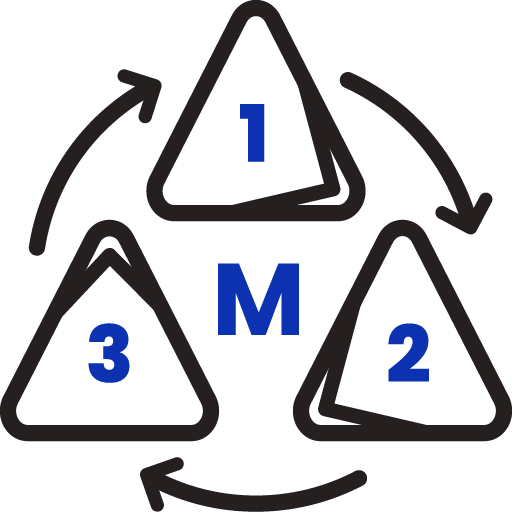
MEDDICC Value is a value methodology built on the MEDDPICC common language. It gives each stage of the lifecycle its own M: the proof point (M1) for positioning, the personalized case (M2) for selling and the mutual goal (M3) for delivering. When an M3 is achieved, it becomes a confirmed M1 that the next seller can start from, so the methodology gets stronger every time you win.
For the full breakdown, read M1s, M2s and M3s explained, or explore the MEDDICC Value Program, which is included in MEDDICC Membership.
Comparing specific methodologies?
FAQs
What's the difference between a sales methodology and a value selling framework?
A sales methodology covers how you qualify and run a deal, while a value selling framework focuses on connecting what you sell to the buyer's outcomes. MEDDICC Value builds the second on top of the first, using the MEDDPICC common language for both.
What are examples of value selling frameworks?
Most value selling frameworks fall into one of four types: workshop-led messaging programs, question-led discovery approaches, insight-led approaches and value selling software such as ROI calculators and business case builders. Many providers blend more than one, and each type puts its weight on a different part of the deal.
How do you implement a value selling framework?
Start with language your team already uses, so there's less to learn and translate. Build the framework into your CRM and deal process rather than a standalone deck, and make sure Product, Marketing, Sales and Customer Success all work from the same story. Then refine it with every deal so it improves with use.
Which value selling framework is best for B2B sales?
The best framework is the one your team is still using a year from now. Look for one that covers positioning, selling and delivering, works for the whole GTM team, uses familiar language, can be measured at every stage and is built into your process rather than living in a deck.
How do you measure whether value selling is working?
Track it at every stage of the lifecycle: which value stories sellers use, which of those convert into closed deals and which outcomes customers actually achieve after signature. The last measure matters most, because value that's delivered but never confirmed with the customer rarely gets credited at renewal.
Does MEDDICC Value replace MEDDPICC?
No. MEDDICC Value is built on the MEDDPICC common language and adds a value layer on top of it. Teams that already qualify with MEDDPICC keep the same terms, such as Pain, Metrics, Economic Buyer and Champion, and use them to position, sell and deliver value across the whole customer lifecycle.
Do I need a separate value framework if I already use MEDDPICC?
Not necessarily. MEDDPICC already includes Pain, Metrics and Decision Criteria, which are the building blocks of value. MEDDICC Value adds the structure to position, sell and deliver that value without introducing new terms.