






































The Danger Zone is the stretch after signature when a customer’s perception of value drops, even while the product is working.
Customers can still churn at renewal because nobody on their side connects the result to you. It starts when attention, people and ownership move on from the business case.
A mutual goal (M3) fixes it: a measurable goal, a named owner on the customer’s side and a date.
They logged in every day, the adoption dashboard was green and the product did exactly what you said it would. Then, at renewal, they left anyway.
That’s customer churn after a successful rollout, and it happens in what we call the Danger Zone, the stretch after signature when perceived value drops. It’s hard to diagnose because nothing obviously went wrong. The value was real; what went missing was the customer’s sense that you were the reason they got it. Every renewal lost this way also pulls down net revenue retention (NRR), even though usage looked healthy.
What is the Danger Zone?
The Danger Zone is the stretch after signature when a customer’s perception of value often drops, even while the product is working. It’s where most value stories go quiet: the business case has done its job, the deal is closed and nobody has been asked to keep telling the story.
The slide usually follows the same pattern. First there’s the kickoff, then there’s no second meeting, then inertia sets in, and by the time renewal comes around, the customer can’t remember why they bought you.
Why do customers churn after signature?
Customers churn after signature when the story behind the purchase stops being told, even though the product keeps working. Four things usually cause it:
- Attention moves to paperwork and implementation. The conversation shifts from outcomes to timelines, integrations and training, and the business case gets filed away.
- The people change. The Champion who fought for the deal moves on to their next project, or leaves the business, and the Economic Buyer who signed off stops hearing about it.
- Nobody owns the outcome. The AE has moved to the next deal, and Customer Success inherits an account without the promises that won it.
- Value becomes invisible. Once a gain becomes normal, it stops feeling like a gain. A faster ramp quietly becomes “how things are”, and nobody remembers how slow it used to be.
Why does the customer success handover fail?
A customer success handover fails because a deck and a call rarely carry what matters most: what the customer was promised, in their own numbers, and who on their side cares whether it happens.
Without that, CS starts from product adoption rather than business outcomes. Adoption is exactly the metric that looks fine right up until renewal, because a customer can use your product every day without anyone connecting that usage to the result they bought it for. Value selling frameworks compared covers why most frameworks put their weight before signature.
How do you stop post-sale churn?
Stop post-sale churn by ending every deal with a goal, an owner and a date the customer agrees to track.
MEDDICC Value is a value methodology built on the MEDDPICC common language. MEDDPICC is a sales methodology for qualifying and winning complex B2B deals, built on eight elements: Metrics, Economic Buyer, Decision Criteria, Decision Process, Paper Process, Implicate the Pain, Champion and Competition.
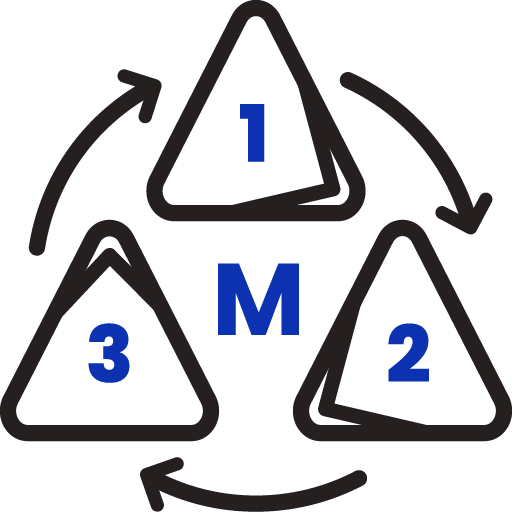
In MEDDICC Value, that goal is the mutual goal (M3): the personalized case (M2) the customer agreed to during the evaluation, turned into something you both track after signature. Every M3 has three parts:
| Component | What it means | Example |
| Goal | Measurable, and tied to a specific M2 | New hires fully ramped in six months |
| Owner | On the customer’s side, by name | Their VP of Sales |
| Date | Time-bound, reviewed and updated | Reviewed at three and six months |
Take a simple, illustrative example. During the evaluation, the M2 showed that cutting new rep ramp from nine months to six would give the customer’s 20 new hires three more selling months each. After signature, that becomes the M3 in the table above.
The owner matters most. A goal owned on your side is a forecast you hope comes true, while a goal owned on theirs is a commitment someone in their business will talk about in meetings you’re not in. That’s what turns a handover into the one your CS team has always wanted: the goals agreed during the deal, in the customer’s words, with a name next to each.
Microlise runs this in practice. Four of its customers are live with a Proof of Value, each contractually backed by an M3, so both sides work toward agreed, measurable outcomes. Customer Success validates M3 delivery as part of a standardized customer journey that starts at pre-sales scoping. Read the Microlise story.
How does Customer Success use mutual goals from kickoff to renewal?
Customer Success is one of several GTM teams working from the same value story. Value isn’t just a sales thing covers the rest.
- Kickoff: start from the M3s, not the product tour. Confirm each goal, owner and date with the customer in the first meeting so nothing gets lost between signature and go-live.
- QBRs: report progress against the M3s, using the customer's Metrics and their voice, so the owner can repeat the story to their own leadership.
- When people change: if the owner or your Champion moves on, re-confirm the M3 with whoever replaces them. That's the moment value goes missing most often.
- Renewal: by the time it comes up, the customer has heard the value story at every review, from someone on their own side, so the renewal conversation starts from results rather than price.
Turning delivered value into the next deal
An achieved M3 does more than protect the renewal. It becomes a confirmed proof point (M1) with the customer's name on it, which Marketing, SDRs and Sales can use with the next buyer who looks like them.
Because M1s work for existing customers too, CS can also use them to introduce the next use case. Expansion stops being an upsell pitch and becomes the same research-led conversation that won the first deal, which is how renewals and expansion both feed net revenue retention. For more on how the three Ms connect, read M1s, M2s and M3s explained.
How do you find your own Danger Zone?
Pick one account that renewed or churned in the last year and ask two questions. Could anyone on the customer's side name the goal they bought you for? And did anyone own it? If the answer to either is no, you've found your Danger Zone.
The MEDDICC Value Program shows your whole GTM team how to build mutual goals into every deal, and it's included in MEDDICC Membership.
FAQs
Why do customers churn even when they get value?
Because getting value and crediting you for it are different things. After signature, the Champion often moves on, nobody owns the promised outcome and the gain starts to feel normal. By renewal, the customer is using the product but can’t connect the result to the reason they bought.
What should a Sales to Customer Success handover include?
The promises that won the deal, in the customer’s own numbers, and the person on their side who cares whether they happen. A summary deck and a call usually carry the account details but not those two things. In MEDDICC Value, the M3 packages both.
Who should own a customer’s goals after signature?
A named person on the customer’s side. Customer Success tracks progress with them, but the commitment has to sit in the customer’s business, not yours, so it gets discussed in rooms you’re not in and doesn’t depend on one Champion.
How do you reduce churn after onboarding?
Start from the goals, not the product tour. Confirm each M3 at kickoff, report against it at every QBR using the customer’s own Metrics and re-confirm it whenever the owner or Champion changes. Renewal then starts from results the customer has already heard.