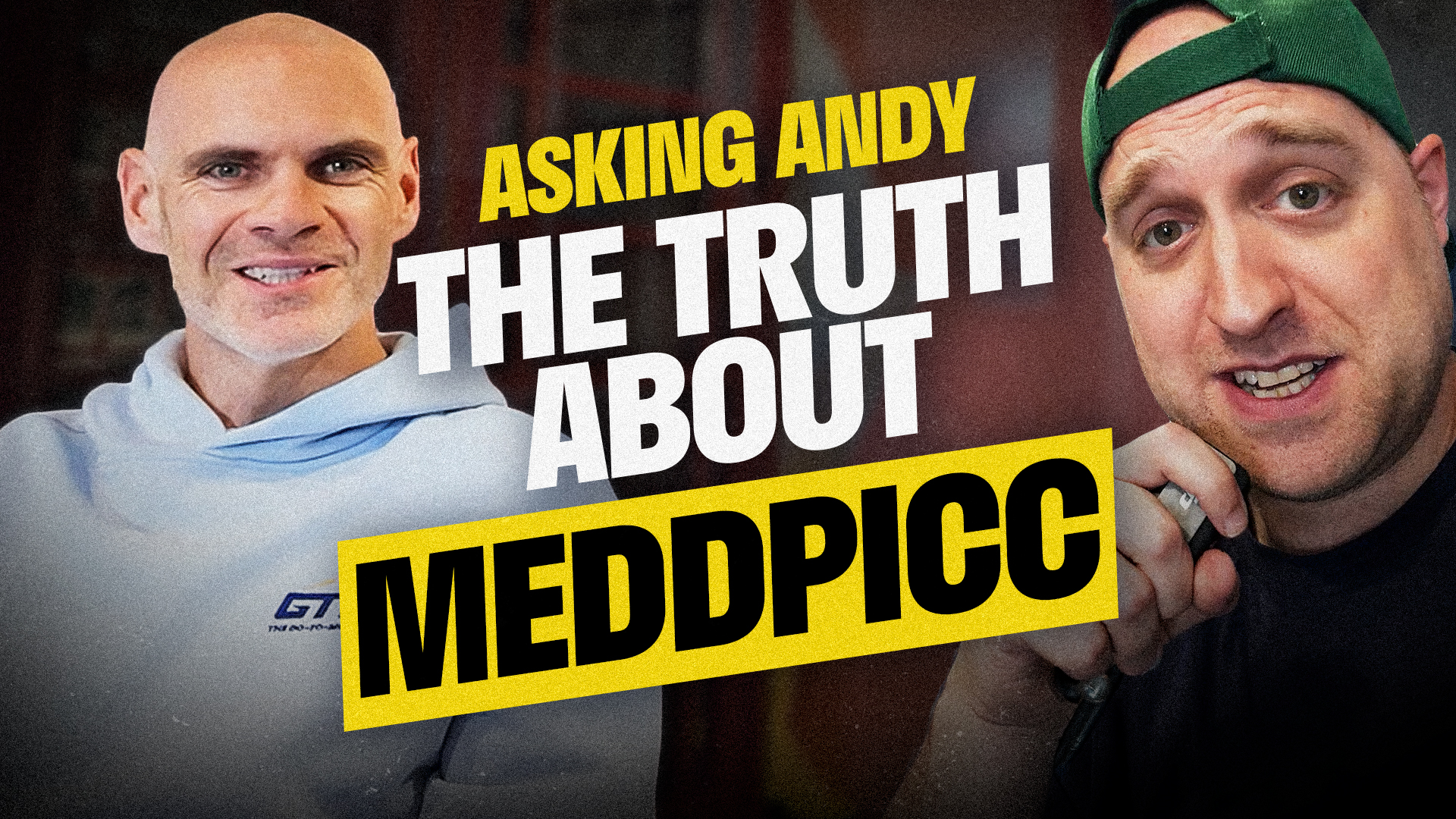
00:03 Andy Whyte: Hey, Cliff, thank you so much for joining me on Masters of MEDDICC. It is an absolute pleasure to have you on the show. Looking at your resume and your experience — it's mind-blowing. For someone like myself, earlier in my career, when I look at what you've built, it's one of those things I genuinely aspire to. So to have you on the show and get to talk to you is brilliant. Perhaps for the people listening and watching — if you could introduce yourself, tell us a little about yourself and how you got into this wonderful world. 00:23 Cliff Dorsey: Happy to do it, and thanks for having me. So I'm currently Chief Revenue Officer at NewsCred — which has now been renamed Welcome Software. I've been in sales and sales leadership for over 20 years. I'm a mechanical engineer by education, and an Army officer by first profession — which I think we can get into a little bit. It certainly laid a foundation for training, development, and discipline, which I think has been a core part of my playbook and success when it comes to building growth-oriented teams. I was very fortunate to be hired early in my career — actually my very first technology sales job, about three years out of the Army — by Parametric Technology Corporation. So back in the late '90s, this was a very, very transformative period for me. The things I learned — the discipline, both as a seller and as a sales leader — I did a few different stints with PTC, about four years in total with that organisation. From there I stayed in sales leadership — places like LivePerson and now Welcome. Very happy to be here. MEDDIC is certainly one of the fundamental components of what I bring to our sales team and what they execute against. Really excited to get into this topic. 02:19 Andy Whyte: Thank you. The bit about the US Army — being a captain in the US Army — is fascinating to me. I've certainly seen in the UK a number of people in sales who came through the Army and went on to have tremendous sales careers. I've seen other sales leaders almost try to replicate that — thinking, "Right, we need to go find people leaving the military and hire them, because they make great salespeople." Do you agree with that? And if so, why? 02:49 Cliff Dorsey: It's interesting you say that because at the time with PTC — selling engineering CAD software — athletes, military, and, because I was a mechanical engineer, I was somewhat the ideal profile for what they were looking for at the time. I think the combination of being given so much responsibility at such a young age — as a 22-year-old responsible for the lives of 40 people and tens of millions of dollars' worth of equipment — that's unusual. It matures you pretty quickly as a leader. And there aren't many organisations where, if you're not at war, you're training. I was in during a period of peace, so you become an expert in how to train, develop, and build high-performing teams. Those methodologies and processes translate well to sales training, which has a lot of parallels. 04:02 Andy Whyte: That's one of the things that's sort of famous about the PTC sales team — the level of, I suppose "enthusiasm" is the polite word for it; some would say aggression. How did you find it, coming from a very structured, disciplined organisation like the US Army, into a sales environment full of, you know, red-blooded, steak-eating salespeople? 04:32 Cliff Dorsey: Very true. But I found a lot of similarities. The standards were very, very high. The expectations were very, very high. And if you didn't meet them, you weren't going to last long. I remember very clearly, in my first sales leadership role, the expectation was clear — because it was very easy to get sent home from training. You would literally show up to training and might get sent home on day one. The person who got sent home was in some trouble, but it was the sales leader who was really at risk. The level of accountability I found there was — wow — intense, but very important to the success of that organisation. 05:25 Andy Whyte: One of the things I've heard from other leaders is that when you join PTC — as was often the case with their hiring approach — it was your first sales role. And PTC salespeople say they didn't realise how lucky they were to land there first, because they've never learned as much anywhere since. 05:46 Cliff Dorsey: Very true. I had no idea at the time. I was actually in medical sales before this — nothing related to technology. And the thing about sales leaders is that one of the most important jobs is getting the very best people and talent on your team. I'll never forget the day Mark Teagarden from PTC cold-called me, tracked me down, and told me about the opportunity. I'm very fortunate that I listened. 06:07 Andy Whyte: I love that. And obviously, looking at your resume, I can see you've followed a path of working at companies well known for using MEDDIC — which version do you prefer? 06:35 Cliff Dorsey: I prefer just plain MEDDIC. The Paper process isn't something I find essential — I think it lives quite comfortably within the Decision Process, and I think adding it loses something aesthetically. So I leave it that way. 06:35 Andy Whyte: That makes sense. And when you were joining new organisations — let's take LivePerson as an example, looking at your resume — they were quite early-stage relative to the size they'd reach when you left. When you joined, did they already have MEDDIC, or did you bring it with you? 07:12 Cliff Dorsey: Interestingly, it's much more ubiquitous among technology organisations now than it was then. But as you might imagine, not only was I there — there was actually an ecosystem of people who had also come from PTC. So it was something we pretty quickly collaborated on and implemented as a standard for the organisation. Wasn't a very hard sell. 07:39 Andy Whyte: Interesting. Do you find — because I've personally implemented MEDDIC a couple of times to augment sales organisations that haven't used it — that there are different stages of adoption? I've never met a salesperson I've explained the concept to who hasn't said, "Yeah, that's good." No one has ever put up a disagreement or argument against it. People are generally open-minded and think, "Yes, I can see that — it's very logical." But then I see different stages of adoption, which depends very much on the culture of the sales organisation and, to a degree, the experience of the sellers themselves. Do you find there's a best practice for how you should implement MEDDIC? What are some of the key learnings you'd share around that? 08:36 Cliff Dorsey: Yeah, a few things come to mind. First: in the organisations I've led, I have three fundamental pillars — non-negotiables in a sales organisation. One is best practices and discipline around pipeline generation — PG. One is value-based selling, primarily through frameworks like Command of the Message. And the third non-negotiable is MEDDIC. When I meet with a new seller in their very first week, that's established from day one. And as you say, there's not much pushback on it. The other best practice is that it's not just a sales organisation methodology. If you were to speak to my CEO, we all speak the same language. In a forecast review, he's asking equally interesting questions — "What gaps do we have?" or "Help me understand the personality of this champion" — just as I am. That consistency of language across the executive team and client services is very important. And then finally — to your point — if you only use it as a somewhat static qualification tool, a simple yes or no, you're very limited. It requires more training and process to really get it to tell you what you need to do, what's missing, and how to proactively change the facts on the ground. To me, that's the most important element of it. 10:37 Andy Whyte: I love that. And what you mentioned — Command of the Message, from Force Management — I'd love to know: if those three pillars are your playbook — pipeline generation, value-based selling, and MEDDIC — do you feel that when you go to a new organisation as a CRO, your playbook stays mostly the same regardless of the company you're working for? Is there a percentage you think changes? How much of it is the same? 11:23 Cliff Dorsey: For me, it largely stays the same as long as the type of sale stays the same. I've tended to enjoy and stay in organisations where it's large, transformational, complex software sales. So the motion and those pillars are largely consistent. If it's a slightly less complex sale, the emphasis on a full value framework might be a little less critical — though I still think it's important. By and large, I've found these fundamentals haven't changed much. Their application and emphasis can vary a little. 12:20 Andy Whyte: That's interesting. I agree, and I have a theory for why — which is that if you look at the nucleus of how MEDDIC was created, by examining why PTC were winning and losing deals, you're essentially answering the question: why have people ever bought, or not? And therefore what MEDDIC does is sit very naturally over the top as a buying framework, not necessarily a selling process. And if you look through time — even though it's been 25, almost 30 years now — people still fundamentally buy the same way. Of course, technology has changed — from perpetual licences to SaaS, business models have shifted. But underneath it all, the fundamentals remain. There may be more consensus and more stakeholders involved, but I think that's less about how people buy and more about who's involved. What I mean is: when you were selling at PTC, you were selling a solution that went in and the engineers used it. If you're selling something like the last three or four technologies I've been at, it goes here, but it has to connect here and here, it needs to be in the cloud, it has to meet security and infrastructure requirements — and all of a sudden it's a much wider sale with many more stakeholders. 13:41 Andy Whyte: That becomes more of a consensus purchase by its very nature. So it's interesting to hear you say your playbook stays the same — and I think that's because your playbook maps less to what you're selling, and more to who you're selling to. 13:59 Cliff Dorsey: Yeah, very true. Back to MEDDIC — the way I describe it when people ask me what it is, I call it sales physics. It's immutable. It doesn't change over time. It tells you the characteristics of what's happening in your opportunity. You have to have the courage to be honest with yourself about those characteristics. But it doesn't change. That said, I do think certain types of buying have evolved — consensus buying in particular. In some of these large transformational initiatives, your economic buyer might effectively be three or four people. Which is very challenging. What that's pushed me to do is really advance my thinking around champions and champion-building specifically — and The Challenger Customer is probably what got me thinking along those lines. Their research shows that 5.6 key stakeholders are involved in each enterprise decision. And what we struggled with was finding this unicorn — one person who possessed all the characteristics we needed. And then further to that, so many different personality types. When you look at the concept of a mobiliser — which speaks to their ability to sell on your behalf within the organisation — it changes greatly depending on that person's motivations. 16:05 Cliff Dorsey: So concepts like breaking a champion down into: what kind of champion are they? What kind of mobiliser? Are they a teacher or a go-getter? That allows you to better speak to their personal wins. Those wins aren't always about a promotion. If you're a teacher type, these people get their recognition through accomplishments and their ability to grow an organisation. So I think you have to continually mature these approaches based on your specific sale and where buyers are today. 16:34 Andy Whyte: That is fascinating. I think that's the first time I've heard someone overlay The Challenger Customer so elegantly on top of MEDDIC, particularly around the champion. Earlier, when you were talking about how you engage with other C-level people in your organisation — in a forecast environment — you were talking about the personality of the champion. Is that what you're referring to? So even your CEO uses the same language — asking you what kind of personality the champion is in a given deal? 17:04 Cliff Dorsey: Yeah, absolutely. And not only the MEDDIC language, but the value-based selling language too — all of it being consistent. That helps us move faster and have more consistency in how we think about opportunities. And it gets everyone in the organisation pulling in the same direction to help move deals forward.17:27 Andy Whyte: I love that. With that in mind — this idea of different mobiliser personas — when you're working with your sales team, are you going a layer below the standard champion identification? Are you actively identifying the type of mobiliser within a deal, and if so, are you capturing that somewhere? How do you manage that? 18:14 Cliff Dorsey: Yeah. Specifically on the champion piece — at the basic level, you're talking about: what does it mean? Will they sell for you? Do they have a personal win? Do they have power and influence? Those key criteria. At the next level up, you're teaching: how do we develop these? How do we test them? At the advanced level, you start to understand that their personal wins might be very different based on their personality type. And this is where The Challenger Customer's mobiliser framework really helped me see a more refined approach to that. And then applying that in how you mirror those clients, how you develop those champions, how you build those relationships. It also helps in situations where you might need three or four different contacts — my CEO might be responsible for developing the relationship with one person, I'm responsible for another. It's a multi-stakeholder, multi-champion development exercise. 19:36 Andy Whyte: For the folks listening and watching who haven't read The Challenger Customer — you referenced the mobiliser. What would you say is the key thing that differentiates a mobiliser from a standard champion? What's the tell — the thing you see or hear that makes you think, "That could be a potential mobiliser"? 20:04 Cliff Dorsey: I think the main difference is that in the mobiliser types, you can take the profiles and divide them into those that are more like coaches versus those that are more applicable as champions. They all possess the characteristics of having power and influence based on what they've done. They all have personal wins — but they're different gradients of that, different ways of thinking about it. A go-getter, for example — which is what you might expect — is someone interested in promotion, in growing the organisation. That's very different from a teacher type, who maybe is happy where they are. That's not really what drives them. And I think understanding that really helps when you're developing personal wins and building relationships with them. 21:03 Andy Whyte: I think one of the things that stood out when I read the book — and sometimes the best, most thought-provoking frameworks are the ones that don't quite fit your initial expectation — is the idea of the mobiliser being not necessarily a champion of you or your company, but more a champion of the idea or the value you're delivering. So they don't care whether you've got blue buttons or green buttons, or what your category is called. They care about themselves and their organisation. I know that's something we talk about a lot in value-based selling. But when it comes to the champion, I find people very rarely connect the champion to business outcomes. They tend to think the champion is the person who likes your logo — who likes you — rather than someone who's invested in what you represent and the specific value you deliver. Which can be dangerous, right? Because if your champion is not acting in the best interest of the company, that's a problem — and it will cause you challenges. So to me, what has to come first is demonstrating the value to that champion — that you can affect the organisation in a way that genuinely helps them. If you achieve that first, then what follows is the "why you" and "why your organisation" conversation. 22:48 Cliff Dorsey: And I think you're right. The converse is equally true — how many of our sellers have been fooled by someone they thought was a champion, but who was really just a champion of doing something for the organisation, not necessarily of doing it with us? They hadn't attached to us yet. It's a critical thread you have to maintain. 23:15 Andy Whyte: And I see a real challenge in competitive technology sectors where you find your mobiliser champion, get them excited about the possibility of what you can bring — and then because of their agnostic nature, your competitor shows up and says, "Oh yeah, we do that too." And suddenly you're in a three-way comparison, and it's all about price. 24:07 Cliff Dorsey: This is why value-based selling is so important within that triad. Because if your team isn't expert in not only diagnosing the problems and pains, but also in setting the required capabilities within the decision criteria to favour you — and it has to be genuine, not manipulative — but if you haven't set the required capabilities so that you have a structural advantage against the competition, then the champion isn't thinking "they're all the same — let's just pick the cheapest" — they're thinking, "This is really the only one that can accomplish what we're trying to do." 24:52 Andy Whyte: Right. And when you're talking about required capabilities, you're referring to Command of the Message — and that element of things, which I always think works very naturally alongside the Decision Process. Would you say they sit together well? And specifically the Decision Criteria — very analogous to required capabilities — whether those are financial, or the more technical decision criteria around: here's where you are today, here's the pain, here's the future state you're trying to reach. What are the specific things you're missing? 25:30 Cliff Dorsey: And once you get the customer to agree on that, it's a matter of explaining and selling how you're uniquely positioned to meet those criteria. 25:54 Andy Whyte: I really like that. One of the challenges I've seen over time with this is the idea of identifying the required capabilities and then trying to make them stick — so they become differentiators not just in your eyes, but in the customer's eyes, so that they become the technical criteria the customer believes they need. But one thing I often see sellers struggle with is how to get those required capabilities agreed in writing, not just verbally. Any tips on how you get there? 26:41 Cliff Dorsey: Ideally, yes. I'm a firm believer that in competitive battles, it's all about who ends up defining the decision criteria. And the discovery and solidification of those happens throughout the sales process. A best practice we employ is that every single call, we reset upfront: here's what we understand, here's the problem, here are the required capabilities you've described — let's verify that. We actually have slides that state what we understand. The required capabilities are in writing and we're talking through them. Because it's not uncommon for a new stakeholder — or even an economic buyer who hasn't been involved yet — to come in at that point. And you really want to cement those so that come decision time, they're not lost. 27:39 Andy Whyte: I love that. And what you're touching on is something I find really interesting — and I think in Europe we're a bit shy about it. I don't know whether it's the same in the US, but this idea that if customers knew what we were doing with MEDDIC and Command of the Message — if they realised, "Oh, you asked that question to uncover pain," or "You're trying to identify the economic buyer" — if a genuinely interested customer understood what we were doing, they'd buy into it. They wouldn't feel manipulated. 28:27 Cliff Dorsey: 100%. What I tell my team is that the way we sell is itself value-adding and differentiating to the customer — it is the product, in a way. We're the doctors. We're the ones helping uncover and diagnose the problem and prescribe a solution. We see this every day — these clients may have never tackled these problems before. When you do it right, and do it genuinely, there's no better way to sell. 28:51 Andy Whyte: And here's what I find in Europe — we're almost shy of that. It's almost like we don't want to call it out. But what you're saying — putting the required capabilities on a slide — I love that. I think we should name it clearly: "This is the criteria we're making the decision on. Have I got this right?" The worst that can happen is the customer says, "Well, no, you've missed something" or "That's not actually important to us." But that's a good thing. 29:28 Cliff Dorsey: Exactly — the worst that can happen is finding out you're wrong. Which is actually the best thing, because you don't want to be wrong and not know about it. Right. It's uncomfortable territory, but you have to get comfortable being uncomfortable in this mode — while maintaining the conviction that you're honestly doing what's best for them, and doing what's best for your champion by getting to the heart of exactly what they need. 30:21 Andy Whyte: Yeah. And you're touching on something here that really fascinates me. In sales we talk so often about EQ — emotional intelligence. The best definition I've ever heard — and I wish I could remember who said it so I could credit them — is that if you have high EQ, you're very well aware of the impact your actions have on other people's emotions. It doesn't necessarily mean you make everyone feel happy. It just means you're aware of how your behaviour lands. I think that's a really important distinction. Because in selling, we so often feel we need to constantly make our prospective customers feel good. But for me, there are a couple of situations where we have to forget about that and almost do the complete opposite. One of them is in discovery — when we're trying to surface pain and implicate the customer in it. To bring real pain to the surface, you have to make the customer uncomfortable. 31:24 Andy Whyte: Like you said, sometimes when we're presenting the value proposition and making the commitments we need to get, the questions we have to ask are uncomfortable too. It's a real challenge for sellers — because if you're a good seller, you have high EQ, and you're hyper-conscious that you're making the customer uncomfortable. It becomes a balancing act: how far can you push, and how uncomfortable can you allow things to get? 32:11 Cliff Dorsey: Go too far, and the discomfort isn't worth the pain you surface. And you know, that discomfort might be linked to how deep you need to dig — and the awareness to know, "I'm in a full room, they're expecting a presentation," and calibrating accordingly. It is a little tricky. But I find the best sellers are able to push it a little — to find that bleeding edge — where ultimately the benefit is that you're helping the organisation truly see the severity of the problem. 33:02 Andy Whyte: And I think that comes back to what you were saying about The Challenger Customer — the age-old "tell me what's keeping you up at night" — which, if you said that to a mobiliser type, they'd roll their eyes. Whereas what we're actually trying to do is tell the customer what's keeping them up at night. And I think, clichéd as that sounds, it really is the difference between modern discovery and old-school discovery that doesn't work. I had an instance recently with a relatively new seller who came to me and said, "I thought the customer was super well qualified — they really should love what we do. But after the first meeting, we didn't get a second one. I can't understand it." We had the luxury of watching the call back — because everything's recorded these days, whether it's Gong, Chorus, or any of those conversation intelligence tools. And I could instantly see it wasn't real discovery — it wasn't two-sided. The kind where, as much as I'm learning about your problems, challenges, and goals, you're also surfacing them yourself, making them feel relevant and real. It was just an interrogation.34:23 Cliff Dorsey: And you use the word "two-sided" — discovery that adds value in both directions. That's what I'd call lazy discovery, and that's what happens when it's absent. Don't ask me what keeps me up at night. Show me you've done your homework. Know what challenges my organisation faces and ask me thought-provoking questions that lead me to believe you might actually be able to help. 34:48 Andy Whyte: And I think that's where you can bring Metrics to the table early in an opportunity. One of the things I've seen happen a lot is that people think about Metrics as something that only becomes relevant further into the opportunity. At the start, unless you're doing an outside-in view via an annual report, you're unlikely to have company-specific metrics. But I almost see it as two different curves. The first curve is where you bring in evidence from your existing customers in similar industries — you start with those, and they carry you forward until the actual customer-specific metrics can come in. And I think for people who are new to MEDDIC and to value-based selling, leading with metrics from past experiences in similar situations is a way of keeping the conversation on track. 35:47 Cliff Dorsey: 100%. The way you've described it is very similar to how I think about it. Metrics in particular — how you use and define them — are dynamic over the course of the sales cycle. Up front, it's about proof points and benchmarks you can discuss. Then it might be a preliminary order-of-magnitude impact estimate. All the way to the very end of the cycle, where maybe the CFO is the economic buyer and you're doing a very hard ROI analysis. So yes — very dynamic. 36:49 Andy Whyte: That's interesting. One thing I hear more and more is that the economic buyer is becoming more of a group than a single individual. And I do think there are probably more people who meet the criteria of the economic buyer in large organisations. But I'm not fully convinced there isn't still one overall economic buyer we should be prioritising. I'd love your thoughts on that. 37:18 Cliff Dorsey: Yeah, certainly in the type of solutions where you might have three or four different departments all pooling budget to accomplish something together — if you're selling something more departmental, it's a little easier to diagnose. But I think you're right — ultimately, there probably is an economic buyer sitting above all of them. The challenge is: do you have a realistic shot of engaging with and directly interacting with that person? That can become very difficult. 38:13 Andy Whyte: It's a funny one, isn't it? We had a deal earlier this year — a TV network, where the technology we were selling solved a problem across three departments: the product team, the marketing team, and the performance marketing team. They genuinely agreed to split the budget three ways, a third each. We didn't win that deal. To be fair, it would be easy to say we didn't lose it to a competitor — it was very much a budget challenge due to the economic climate at the time. But on reflection — and this is why I bring it up — even if you took that out of the equation, I think there was still one economic buyer. Even though there were effectively three senior people, heads of those different departments, who each met the definition. Because in any single isolated deal with just one of those departments, their departmental head would have comfortably qualified as the economic buyer. But because there were three of them, we almost needed to go up a level — not because of deal size, but because of the multi-department nature of it. And it was interesting — you used the word "dynamic" earlier to describe Metrics. I think the economic buyer is equally dynamic to the circumstances of the deal. 40:05 Cliff Dorsey: Yeah, I think you're right. When we review opportunities like this, I always challenge the team: once we think we've identified the economic buyer or cluster of economic buyers, ask — who cares about this above them? Keep understanding the organisation and its dynamics. Because to your point, maybe you could have gotten that deal done under different circumstances treating those three as economic buyers. But in that specific circumstance, maybe the only way to get it done was to appeal to someone who owned a much higher-level objective. 40:37 Andy Whyte: Yeah, I agree. And the beautiful thing about sales is you're always learning. That could have been a learning I never got. But it's so interesting — and it kind of comes back to what you said right at the start: from being in the military and constantly training, you're never done. 40:58 Cliff Dorsey: I love what you said about that. That's the beauty of what we do. There are things I learned just a couple of weeks ago that were almost a head-in-hands moment — "Why wasn't I aware of this sooner?" And yeah, the beautiful thing about this industry is you can never settle. You always have to challenge your thinking, push yourself to change your approach. That's what keeps you improving. 41:15 Andy Whyte: You've got time for one more question, and I'm excited to ask it. You've been in sales leadership for 20-plus years. You've seen a lot. What's the one thing you'd tell yourself when you were just starting out? If you had a time machine. 41:39 Cliff Dorsey: So I'm getting in the time machine and going back. What's the advice? I would say: buy into the process. And we touched a little on discomfort — push yourself into modes where you feel uncomfortable, because you have a support structure around you. There are very few selling environments today where there aren't people to help you. So continually pushing yourself, continually trying new things — that's how you get better. 42:27 Andy Whyte: I love that. That fits so neatly into what I define as the difference between an order-taker and an elite seller. The elite seller does things for the good of the customer and the deal that don't necessarily feel comfortable in the moment — they're very different from what the customer might assume is good for them. And I think that trusting in the process, embracing — I'm going to kick myself for not remembering who said this first — it might have been a Mike Logun thing — "embracing the suck."43:18 Cliff Dorsey: That's an old Ranger School adage. 43:18 Andy Whyte: Yeah, okay! Get comfortable with being uncomfortable. 43:18 Cliff Dorsey: Exactly. And you know, what surrounds those three sales pillars — PG, value-based selling, and MEDDIC — are the core characteristics you really need to develop as a seller: discipline, expertise, the ability to work within a process — and then, that last one: courage. The ability to really push yourself. 43:41 Andy Whyte: I love it, Cliff. This has been phenomenal. Thank you so much for giving up a good hour of your time today. 44:09 Cliff Dorsey: Enjoyed doing it. Enjoyed speaking with you. It's been awesome. 44:09 Andy Whyte: Thank you so much — and I cannot wait to get this one out, because I think it's going to be a really, really good episode. 44:09 Cliff Dorsey: Outstanding. Thanks so much, and we'll talk soon.







































.png?width=273&height=327&name=image%201%20(1).png)
.png?width=2000&height=2000&name=Untitled%20design%20(7).png)