




































Masters of MEDDICC: Travis Patterson
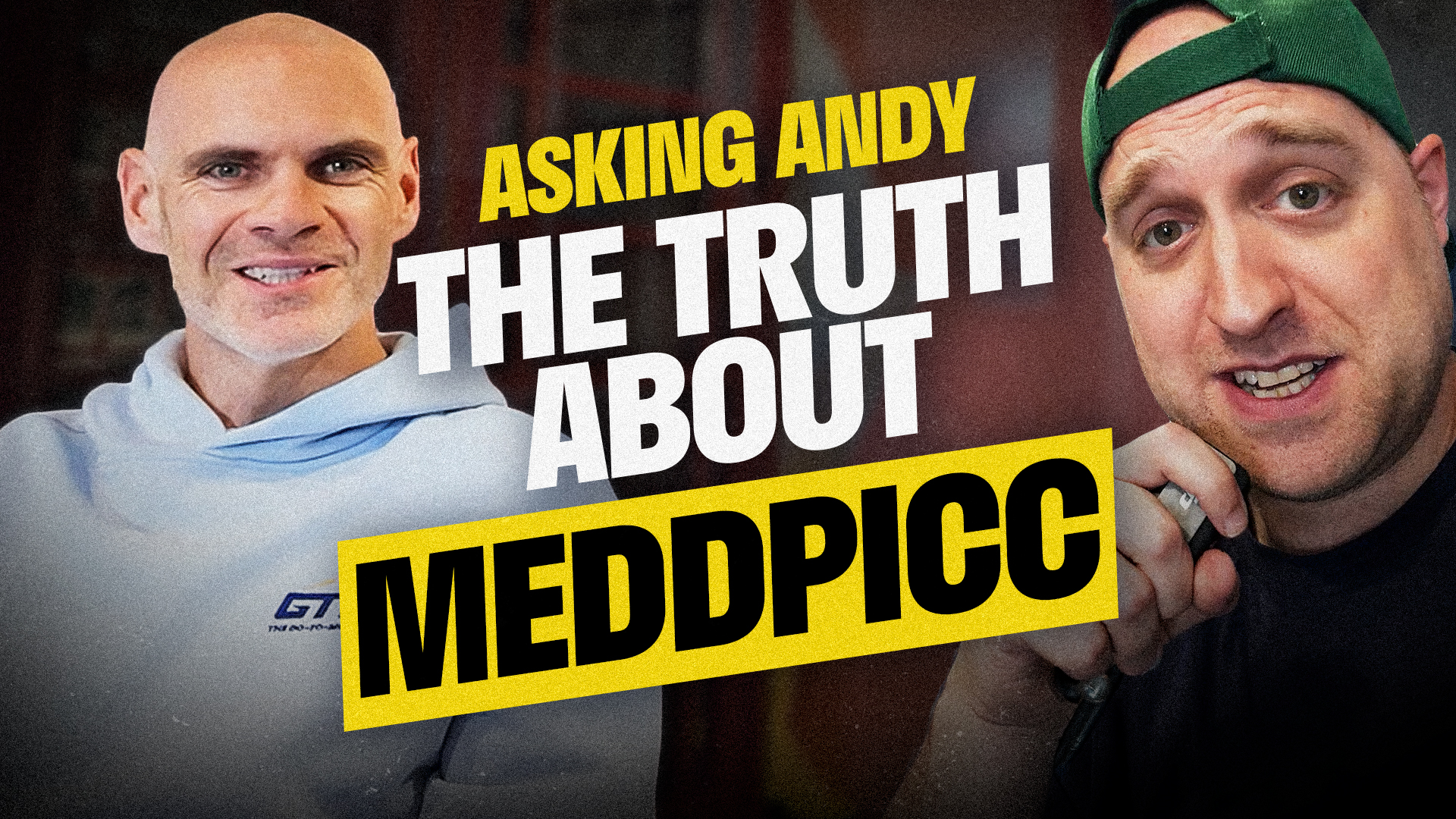
Travis Patterson joins Andy Whyte on Masters of MEDDICC on what makes sellers succeed, how B2C skills transfer to enterprise, and why recruiting is a verb.
January 05, 2024
minutes
KEY TAKEAWAYS
GUESTS
TRANSCRIPT
KEY TAKEAWAYS
- The fundamentals of sales success haven't changed. Intelligence, work ethic, and coachability made sellers great in the mid-90s and still do. B2C skills like cold calling, handling objections, and persistence transfer directly into enterprise selling.
- Recruiting is a verb. Building a great team isn't passive hiring; it takes constant, focused effort and works both ways. The best salespeople have options, so you have to sell them on the opportunity.
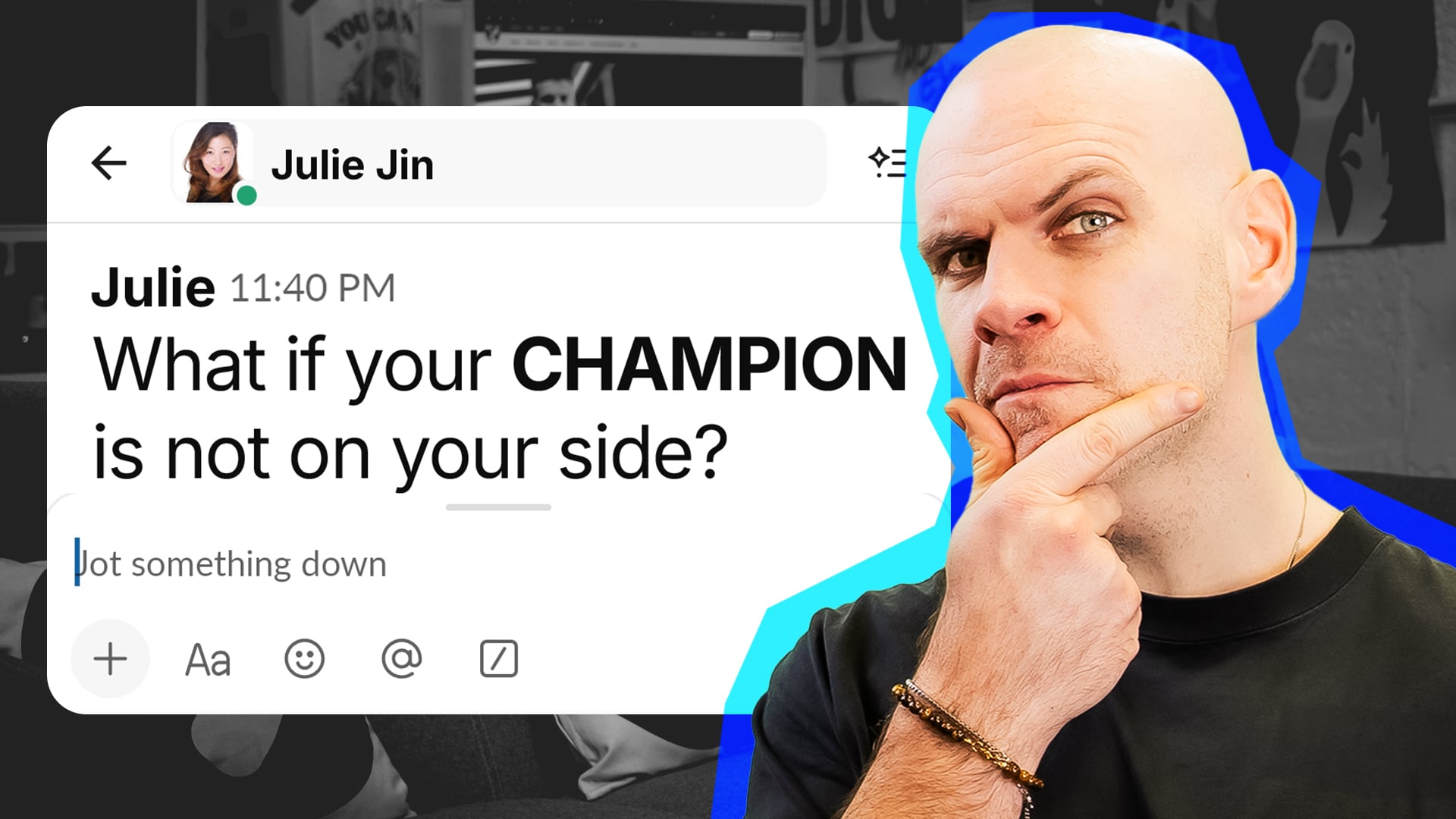
- The Champion is the most important element of MEDDIC. The best reps don't just find a Champion, they develop one, getting direct about expectations and role-playing the meetings they won't be in the room for.
.png?width=273&height=327&name=image%201%20(1).png)
Andy Whyte
CEO & Founder of MEDDICC
Andy Whyte has helped companies big and small grow and prosper as both a quota-carrying Account Executive and a Revenue Leader. His passion for helping sales teams succeed led him to become founder and CEO of MEDDICC and author the five-star-rated “MEDDICC” book. Known for his mantra “Nobody ever regrets qualifying out” and his expertise on the science and art of sales. Away from the day-to-day, Andy practices many skills as a chef, sports coach, taxi, and cleaner in his most important role to date - Dad.
.png?width=2000&height=2000&name=Untitled%20design%20(8).png)
Travis Patterson
CRO
Travis started his career selling medical supplies before joining PTC in 1996, where he spent seven years and first learned MEDDIC. He's since held CRO and SVP roles across a string of high-growth companies including BladeLogic, Opsware (acquired by HP for $1.65B), SignalFx (acquired by Splunk for $1.05B), and Imply. He's now CRO at Merge, building the integration and agentic infrastructure trusted by OpenAI, Ramp, and Perplexity.
Copy Full Transcript
00:05 Andy Whyte: Hey, Travis. Welcome to Masters of MEDDICC. It is an absolute pleasure to have you on the show. I was blown away when you agreed to talk to me today because, looking at your resume, your background, your experience in the world of sales — it speaks for itself. So thank you, first and foremost, for taking the time to talk to me and the audience. Perhaps we can start, as we always do, with you telling us a little about yourself and how you came into this wonderful world of enterprise sales. 00:36 Travis Patterson: Well, first of all, thanks for having me, Andy. Really appreciate it. Looking forward to spending some time with you this morning. So yeah — like most people out of college, I just looked at a lot of different things to figure out what to do. I lived in Dallas, Texas, went to graduate school there, got a bit bored, and started looking at different roles and going on interviews while I was still in school, figuring out what fit best. And I came across a company — this was in the early '90s — called Physician Sales and Service. They were selling medical supplies to doctors' offices. I joined, got a territory in East Texas, moved to Tyler, Texas of all places, for two years, and sold medical supplies to doctors all across East Texas. Which was — at first, East Texas was not where I wanted to be — but over time I really came to love the people and the opportunity there. Got an opportunity to go into management pretty early. Moved to Phoenix for a year, and then moved — still in medical sales — to the Bay Area in the mid-'90s, leading a team up in Northern California. Had never been to the Bay Area, never been to San Francisco, never planned to be there. 02:06 Travis Patterson: But it doesn't take long in the Bay, meeting different people in the sales world, to decide that medical sales is probably not the right place to be. I actually met a guy named Carlos Delatorre — a lot of people watching this will know Carlos. He's had a great career and is a fantastic sales leader. He was at PTC and he said, "Hey, you should come interview with us." And that was it. That's how I got into enterprise sales — through Carlos and an interview at PTC in 1995. The ever-famous PTC — ground zero for quality sales leadership talent. That goes without saying. 02:51 Andy Whyte: Fascinating. And one of the things I've come to know about PTC at that time is that a lot of the people I've spoken to who started their careers in enterprise technology sales — PTC wasn't just where they started technology sales. It was where they started sales, full stop. Do you think that was part of the strategy at PTC — to find talent from other sales industries and bring them in? 03:17 Travis Patterson: Yeah, certainly. At the time, if you wanted to be in technology sales, there weren't that many options. PTC hired essentially alpha males from lots of different backgrounds. A lot of folks came from selling printers, copiers — myself from the medical side — and you didn't have to have a technology degree. At the time, most people who sold technology had a tech background — computer science or electrical engineering — and then kind of moved into sales. PTC was one of the first to say, "Look, we're going to go hire young, aggressive, smart salespeople. We'll train them how to sell technology." "We will invest in their development on the technology sales side, but we want aggressive salespeople." And so the place was just packed with hyper-aggressive, alpha types who obviously went on to do some really cool things. 04:28 Andy Whyte: Fascinating. Do you think a similar strategy — hiring those types of characters — would work in today's world? 04:28 Travis Patterson: Of course it works in today's world. We do the same thing right now. We hire SDRs straight out of college, and we look for a lot of the same attributes that made someone successful at PTC in the mid-'90s. Those same attributes are exactly what we want today. We're not hiring computer science majors. Even though we sell a fairly technical product, we're hiring young, smart, aggressive people who want to pursue a career in sales. Maybe they waited tables. Maybe they sold door to door. I just talked to an SDR candidate who's graduating in December. He's got a statistics degree, but he spent the last two summers selling pest control in suburban Las Vegas — knocking on doors, 12 hours a day. And he found that he loves it. He'd rather pursue a career in sales than go and be a data scientist. So yes, the things that worked in the mid-'90s work today. And if you look at a lot of the successful sales organisations, that's exactly what's happening. 05:57 Andy Whyte: Fascinating. And taking that example of the SDR candidate — how did you find him? How are you finding these candidates with that kind of experience? 05:57 Travis Patterson: So there are recruiters that specialise in that. If you're here in the Bay Area, you probably know Betts Recruiting — they're essentially the go-to for recruiting SDR candidates, young people straight out of college. In this particular case, it came from a referral — actually a referral from Mark Ranney. Small world. But Mark introduced me to this candidate. He didn't have a space for him on his team and said, "Hey, you might want to take a look at this guy. I think he'd be a good fit." 06:36 Andy Whyte: Yeah, that's a pretty good endorsement to get. It's funny — my own entry into the world of sales was a bit similar. I was doing commission-only, door-to-door sales as my first ever sales job. And when I wanted to get into B2B sales, I ran into the classic catch-22 of: "We like your background, we like your approach — can you come back when you've got some B2B experience?" Which is a catch-22 in itself. But what I've always said since is that there were things I learned in that job that I've never had the opportunity to learn in B2B sales — things that have actually driven my success in B2B. Funny things like: if you're knocking on doors and it's 8pm and there's one house separated from the others, you're going to have a conversation with yourself. Your car's back that way. You can go home. It's cold, it's wet. And one thing you learn is that if you make that positive call — to go knock on that door — you're 100% going to get something. In my case, I was always at least booking an appointment to go back. 07:53 Andy Whyte: I might not get the deal, but I'd always get that person's name and a time in the diary to go back and see them. And if you take the mental approach that comes with that — the mind-over-matter, the positive conviction — those are things you don't often get to develop in B2B sales. 08:16 Travis Patterson: Yeah, certainly. I love seeing candidates with that kind of background — knocking on doors, selling knives, selling encyclopedias, or pest control in this case. There are also the LDS missionaries who go on two-year missions to South America to convert people to their faith. That's hard. Really tough. Once you've done that and you understand the work ethic involved, the ability to communicate, the ability to have empathy, to listen, the value of cold calling — knocking on that last door when it's easy to go home — those are early lessons that become really valuable when you embark on an enterprise sales career. We love finding candidates with that kind of background. 09:12 Andy Whyte: And I think there's one other thing that experience gives you — particularly in my case — which is that you get multiple, compressed sales cycles in a very short space of time. I would do three or four sales cycles a day — book the meeting, go do the demo, the pitch, the value prop, try to close. In enterprise sales, you might do one deal a month. So it's not just about relevant B2B experience — it's about understanding emotional reactions, how to provoke a response, how to read a room. 09:50 Travis Patterson: Yeah, I'd say that too. So what were you selling when you were knocking on doors? 10:00 Andy Whyte: For people listening in the UK, this is going to sound very clichéd — it was double glazing. I saw a show on Netflix about guys in the UK selling double glazing. 10:08 Travis Patterson: White Gold? White Gold! That's a great one — very '80s, very clichéd. 10:12 Andy Whyte: Yeah. 10:13 Andy Whyte: So whether it's double-glazed windows, tongue depressors in East Texas, pest control services, or — the one I never did but you hear about — running around big buildings getting chased by security trying to make copier sales — you learn things that are absolutely transferable into enterprise sales. It's still a maths game. You still have to make the cold calls. If you show the product, you will sell the product. You learn to listen and handle objections on the fly, and the repetition of doing that in a B2C context early in your career — those skills absolutely carry over into whatever software you're selling later. Yeah. So going back to PTC — you came in from medical sales and went into what is, you know, widely regarded as probably one of the best places to learn enterprise sales. How different did you find going from medical sales to technology sales? 11:18 Travis Patterson: A lot different. You went from being in your car all day — literally driving to someone's location and knocking on their door — to being in an office, on the phone. Back in the day, in order to find leads you had to get the San Jose Mercury News and go through the help-wanted ads to figure out which company in your territory was hiring mechanical engineers. Then you'd start dialling and trying to get meetings. All of this pre-email. Then email came along and that obviously became a way to do outreach. But it was a pretty big transition in terms of how you spent your day. And yet the same skill sets applied — the cold calls, getting demos, showing the product. It was a very visual technology. In the mid-'90s at PTC, it was all about getting the product in front of the customer. We had a better product, so we'd drive everyone to a proof of concept — a validation event — and then try to close. That was the sales process. And that same sales process, with variations, is essentially what we still use today. 13:05 Andy Whyte: That in itself is always fascinating when I speak to sales leaders like yourself — the fact that regardless of what you're selling, the industry, the technology, the playbook remains very similar. 13:10 Travis Patterson: That's what you're saying — your playbook stays the same. In broad strokes, yes. Absolutely. The big structural blocks have stayed the same. What has changed is the tech stack, and how you work the market — SaaS has obviously changed things quite a bit. But showing the product still matters. Cold calls still matter. Driving the customer to a validation event, qualifying that event effectively, getting to the economic buyer and making sure the deal is properly qualified — all of those key pieces are absolutely transferable from the mid-'90s to today. 14:24 Andy Whyte: Yeah. It's fascinating to me that that's been the case. Do you think it's because, fundamentally, the way organisations buy hasn't really changed? There are differences in business models — perpetual licences to SaaS and all of that — but underneath, the way organisations make decisions has stayed similar. 14:50 Travis Patterson: Well, it's certainly shifted from top-down decision making to a more democratised, bottoms-up model in certain industries. You know, Okta and some of these other tools might still involve a CIO-level decision. But for most of what I've been selling — DevOps tools, data tools — a lot of the decision making has been pushed down. And that's been the case on the West Coast for a long time. Tech companies have tried to push technical decision making as far down the org chart as they can. So you still have to win hearts and minds — that hasn't changed. You've got to go show the product, win over the technical decision maker. You need to understand the key players in middle management and what they care about, and sell at that level. And you need an executive sales strategy. Being able to sell at all three levels — the user level, the VP/Director level, and the C-suite — and understanding your value pyramid for each of those levels, is really important. How you validate and move through a sales process is similar, but being able to sell at all three levels — and aligning your technology's critical capabilities into that value pyramid — that changes with the product, but is consistent across products. 16:17 Travis Patterson: The company that probably did that better than anyone was AppDynamics. They sold APM solutions. I never worked there, but I've hired a lot of people who did. They were absolutely expert at delivering that value pyramid message and aligning their critical capabilities with customer outcomes. Those are some of the techniques we've adopted — things that maybe have evolved quite a bit from the old PTC days, but are really valuable in today's selling environment and in how customers buy. 16:55 Andy Whyte: And where do you think that shift happened? You mentioned it changed a little from the PTC days. You've had a wonderful career — which we can come back to in a moment — but was there another role where, just like at PTC, there was a similar kind of shift in learning or approach? 17:18 Travis Patterson: I don't know if there's been anything quite as earthshaking. I think mostly about the leaders I've worked for and the things you pick up along the way — whether it's a CEO you can watch and learn from in terms of how they operate, or a sales leader whose approach to customer engagement or process you absorb. Really, throughout your career you're trying to over-index for learning. You want to be in situations where you're not the smartest person in the room — where you're sitting in a meeting learning from your peers and your leaders. You're trying to pick up key pieces and turn them into what works for you. There's not one single thing that's been as transformative as going from medical sales into PTC. Certainly, going from a small company to a big company — and I've been through a couple of acquisitions, which can be pretty rocky — or going from a large company into a small company. But mostly it's about trying to pick up best practices from everywhere. Even from individual sales reps — I've seen reps who do champion-building better than I could ever do it. 18:34 Travis Patterson: Like, we were just doing a win review on a deal we closed, and the SE was talking about how he built SE champions — technical champions — within that customer. Some of the work these people do is phenomenal. As a leader, you're just trying to ask: what can I learn from each of these situations? How can I bring that into my toolkit? 18:55 Andy Whyte: I love that. You touched on champions there — I have to ask the question I ask everyone: for you, what is the most important element of MEDDIC? 19:17 Travis Patterson: There's only one answer: the champion. Having a champion, building a champion, developing a champion. And it's a little of both — do you find them or build them? You have to find someone who's capable of being your champion, and then you've got to develop them. When I say I've seen salespeople do a really good job of this, it's their ability to not only find but then really cultivate a champion. Having that champion conversation — pulling them aside and genuinely understanding what they're trying to accomplish in their career, what matters to them, their family, their goals. And then asking very direct questions: "Here's what I need from you as my champion. You're going to go into this meeting I won't be invited to. Can we role-play it? Let's talk through the questions you're going to get asked. Are you capable and willing to step up and act as a champion in that meeting?" The best sales reps are not afraid to have that conversation — to be really direct with their champion, or the person they're hoping will become their champion, and ask tough questions to make sure they're ready when it counts. 20:26 Travis Patterson: Because there's always that one meeting — the one you don't get invited to as a seller, where the customer is sitting down and deciding which way to go. You've got to have a champion who's willing to stand up in that room and pound the table for you. And you want to get in front of that. You want to pull that person aside and say, "You're going to go into this meeting. You're going to get these questions. Are you ready for them? Can we role-play them? Are you willing to stand up and fight for us?" The best sellers are really good at doing that. 21:15 Andy Whyte: I couldn't agree more. And I do find that some sellers have an almost instinctive apprehension about that approach. I put it down to something that's crept into sales culture over the last decade or so — this activity of trying to hide the fact that you're a salesperson. You see it in LinkedIn job titles: "Value Consultant" and the like. And I think it leads to problems, because if you obscure your intent, you're not being a Trojan horse — you're just causing yourself problems. I want the customer to know I'm there to ask for their business. What better way to qualify your time than that? 21:58 Travis Patterson: Right. But I love hearing the stories of sellers who make the champion's role absolutely clear. And for me — with MEDDIC specifically — I always think about this: if you sat down with your champion and said, "By the way, I use this framework called MEDDIC — let me walk you through it," and you literally took them through a MEDDIC review together — I'm pretty sure they'd say, "OK, so you're approaching this exactly the right way." And I'd love us as an industry to lean more into that — not necessarily naming MEDDIC, but being more bold about what we're there to do. 22:46 Travis Patterson: Yeah, certainly. A couple of thoughts on that. One of the things we talk a lot about is the custom value proposition for the customer — and that has a lot of MEDDIC built into it. What are the initiatives you're driving? What are the strategic objectives for the company? And how do our capabilities support those initiatives in a way that's going to make you successful? So when we're doing a POC wrap-up, for example, or having a deeper conversation with the customer, we work a lot on that messaging — and it has a lot of MEDDIC in it. Understanding the customer's pain — the I in MEDDIC — or the decision process and decision criteria certainly. As it relates to a salesperson being a little reticent to be upfront about their goals with the customer, you definitely see that. And you see it particularly with younger sellers who may be a little timid or reluctant to be as direct. And so one of the things that came up — you sent me a note about Andy Sadler — well, part of our job as leaders is to hire people like Andy. If the seller is timid and reluctant for whatever reason, and they've gotten the deal to a certain point but aren't willing to have that direct conversation — 24:11 Travis Patterson: that's what Andy's there for. That's what I'm there for. So we tell these sellers: "Look, bring your manager. This is a team sport." I don't expect the seller to be perfect. But I do expect them to bring their manager in. And if the seller is missing that piece, that's what Andy's there for. That's what I'm there for. That's what the other leaders are there for. You want to hire leaders who can see the blind spots a sales rep has and be able to cover them. 24:50 Andy Whyte: I love that — makes a lot of sense. And that brings you back to something you were saying earlier about never wanting to be the smartest person in the room, and following the good people around. And when I look at your resume, you can almost trace the success — see how it's moved forward, particularly with Andreessen Horowitz, who clearly valued the work you did at Opsware enormously, if I'm reading that right? 25:23 Travis Patterson: Yeah. Just for clarity — what I meant to say, if I wasn't clear, is you don't want to be the smartest guy in the room. That's exactly the wrong place to be. If you walk into a room and you're the smartest one there, you're probably in a situation where you're not growing, not developing. You want to surround yourself with people where, when they talk, when they articulate what they're trying to accomplish, you're thinking, "Wow, I'm learning here." So yes — at Andreessen Horowitz, you're going to be hard-pressed to be the smartest person in the room. They've done a great job of collecting extremely high-calibre talent. But I can certainly speak to that. Without any question — Ben Horowitz and Mark Cranney have been better to me in my career than I've deserved. They've done an unbelievable job of helping me get the next role and making sure I was put in the right position. They've been incredibly supportive — from a reference perspective, from a career perspective — probably way more than I deserved. A huge shout-out to both of them. And then Martin Casado, who sits on our board — there's a phenomenal team over there that I've really enjoyed working with. 27:00 Andy Whyte: And many people listening — like me — will probably know Andreessen Horowitz partly from the book that made them semi-famous: The Hard Thing About Hard Things. Have you read it? 27:12 Travis Patterson: I've got it in the bookcase right here. Of course — and I was in a few of those scenes. I didn't get any ink — all the ink went elsewhere — but there were a few moments where I was reading and thought, "I remember that conversation." Which is pretty cool.27:33 Andy Whyte: That would be very cool. And I imagine the theme of the book itself — which is, essentially, the hard thing about hard things is they weren't easy — captures what it was really like. You guys were up against it, and somehow came out on top. That's what makes it such a compelling read. 28:18 Travis Patterson: Yeah. Maybe there are situations where it feels easy — where the product is flying and the purchase orders are coming in. But I almost never feel that way when you're in it. Whether it was Opsware, BladeLogic, even PTC, or SignalFx — which is our most recent good outcome — when you're in it, working day to day, quarter to quarter, it never feels easy. It always feels hard. It always feels like you're one quarter, one month, one deal away from blowing the whole thing up. It only feels like a fun experience once it's over and you get to read the book. When you're doing it, it's a lot of work, a lot of stress, a lot of focus. And then you look back and go, "OK, that was actually fun and interesting." But in the moment? It's just a ton of work. 29:18 Andy Whyte: Yeah, I hear that, I feel that very much. After PTC, you went to BladeLogic — and I know a handful of people, to say the least, went from PTC to BladeLogic. There seemed to be a talent pipeline forming. Was it John McMahon you followed over? 29:39 Travis Patterson: No, actually — I went there in '03. I was really early at BladeLogic. I think I was the second person there. A gentleman named Mike Nakamura — he's an SE leader over at Splunk now, great guy — he was an AE at the time, and they didn't have anyone on the West Coast in a sales function. Great story. I got a phone call from the BladeLogic folks — they were in Boston, I was on the West Coast. They said, "Look, we actually have a sales call happening in San Francisco. We've got an SE going, but we don't have a sales rep, manager, or anything. Can you go to the call? Get a sense of the product and the customer. That'll be your interview — or at least one of your interviews." I said sure, I'll go. I was looking at different opportunities at the time, so I went. Mike did the demo, and the customer just absolutely came unglued. They stood up in their chairs. They went and got their management. The room filled up. They kept saying, "Show it again. Show it again." 30:47 Travis Patterson: I didn't know the first thing about systems management or selling systems management. Honestly, I didn't even really know what I was looking at. But I could read the room, and they were excited. And when I saw the customer get excited, I got excited. I thought: "Let's make this work." That's how I ended up at BladeLogic. I was there for a couple of years, and actually left to go to Opsware before John started. John came in, I think, three to six months after I'd already left. I never really overlapped with John, unfortunately — he came in as the leader post my departure. 31:23 Andy Whyte: What a brilliant story. If I were you, in that situation, being asked to step into what was effectively an interview — I would have found it very, very hard to play it cool. 31:45 Travis Patterson: I wasn't cool at all! I sat there with Mike and said, "Look, I'm a candidate for the sales role here. I'm more here as a spectator than anything else." Mike did all the work — he did the demo. I didn't even pitch. I was mostly there to watch. And I saw the customer reaction and thought: "I don't have to know systems management to know this thing is hot." And they obviously had a great outcome. I'm a huge fan of what they accomplished. It was great to be there, and then great to compete with them later too. I got to see both sides — I knew both products pretty well. It was a fun time. 32:28 Andy Whyte: And was Mark your first time working together at Opsware? 32:33 Travis Patterson: I knew him at PTC. I worked for him at PTC — I ran a region, he ran Major Accounts. I ran a high-tech region for Mark. We had had some success — not as much as we'd wanted, but some success. This was in the later days — the '02/'03 era — when PTC was transitioning from selling mechanical CAD to selling Windchill. Mark ran, I think, all of the major accounts — global 2000 essentially — and I ran a region for him. So I knew Mark well. And yeah, he ultimately said, "Look, I have an opportunity for you to come run the West." I had wanted to get back into management from my PTC days, and this was the opportunity — at Opsware, before John arrived. That's why I switched jerseys and went over — to run the West for him. We had success pretty quickly — a couple of quarters in and things started to click. Mark's a fantastic leader. He'd already been there about nine months by that point, getting the go-to-market and sales process put together, building the team. So by the time I got to Opsware, he'd done a lot of the foundational work. I just plugged into the West and started cranking. 34:03 Andy Whyte: And from BladeLogic — looking at your resume — the next time you worked with Mark... I'm not sure if I'm saying this right: is it Mesosphere? 34:15 Travis Patterson: No, after Opsware, Mark did one smaller thing and then ended up on the venture side — at Andreessen Horowitz. He built their commercial go-to-market team from scratch, and pretty much revolutionised how venture firms engage their portfolio companies commercially. He built that entire commercial team at a16z. I didn't work at Andreessen Horowitz, but I stayed in touch with Mark. Both CipherCloud and Mesosphere were Andreessen Horowitz-funded companies, and I was introduced to both of them through Mark, Ben, and the crew. As I said — they've been great to me. 35:14 Andy Whyte: Yeah, and I think you're being very modest there. Someone with Mark's network doesn't tap you on the shoulder just because he likes you — the results have to be there, with a guy like him. But that's one of my favourite things about this industry — seeing these teams of people work together time and time again. From my experience, only good people stick together long-term. 35:39 Travis Patterson: That's a good way to think of it. And certainly — I'm sure I'm not alone in this — when I'm considering an opportunity, I want to see within the leadership team that example of where someone's gone first and someone else has followed, or they've gone together. It's almost like a package deal. 36:00 Andy Whyte: The best example of that here is you going from SignalFx to Imply — where Andy Sadler, who was running EMEA at SignalFx, is now doing the same at Imply. When you were looking to build out the EMEA team, was there any doubt in your mind that Andy was your guy? 37:06 Travis Patterson: None. Andy and I started talking before I even started at Imply. We were in dialogue about me joining SignalFx and having Andy come in to run EMEA even before I'd started. I think he came on board a couple of weeks after — we had an offer letter ready for Andy the day I started. He was a no-brainer, and still is. He does a great job. I think it's like — in American football, we talk about the coaching tree. I'm sure there are coaching trees in Europe too, in the Premier League. You've got your Parcells, your Walshs, and then you look at all their assistant coaches — offensive and defensive coordinators — who've gone on to do great things. We think about that a lot. Part of the pride in getting to a certain point in your career is having worked with a lot of really good people and being able to help further their careers as well. McMahon has a great coaching tree. There are some fantastic trees out there. I was watching an interview with — I forget his name, the CEO who ran Snowflake — but he talked about the fact that when he came to Snowflake, he brought twelve people with him. He calls it "my team." And it's not just a sales team — it's finance and others too. 38:28 Travis Patterson: It's always a great sign when you've got people who've worked with you before and are willing to come work with you again. But the other side of that is timing — you can't always get all the right people available at once. 38:46 Andy Whyte: So then you have to go to market and recruit. And one thing I knew from talking to you about SignalFx, was that the approach you guys took to hiring was like nothing I'd ever seen before — the thoroughness of it was world class. And I know hiring talent is very high on your priority list. I'd love to hear your mantra or how you think about it. 39:08 Travis Patterson: Well, as a CRO or any sales leader, you've got to make it a priority. You learn that early in management at PTC — you had to hire. There was no other choice. And it's stuck with me ever since. I watched Mark do it. I've seen how others run recruiting. Recruiting is a verb. You have to actively do it. It's not just "hiring." Hiring is easy. Recruiting is what you have to go do. It has to be a priority. You have to spend the right amount of time on it. We talk a lot about recruiting on my staff calls — probably half the call is on recruiting. We go through: how many open headcount positions do you have? Who's in process? Where are they in the process? We look at candidates on their LinkedIn profiles. We dissect where they went to university and what roles they've had. And we talk a lot about recruiting. And it takes two — meaning we can recruit all we want, but the really great salespeople we want to hire have to want to work with us. 40:28 Travis Patterson: So you've got to be able to pitch the opportunity — the comp plan, the space, the opportunity to learn and grow. That's something Andy and I talk about a lot. And it's something that many of the leaders who work for me now, and the ones I've worked with in the past, are genuinely good at — spending time on it, being very good at recruiting as a verb. Bringing people in who want to work for them. And timing doesn't always work out — like I said, the team we have now has a handful of people I've worked with before, but most of them I've never worked with. They may be one degree removed from someone I know, but you still have to go convince them this is the best place to be. And the best ones always have plenty of other options. 41:20 Andy Whyte: So it's a competitive process. For those coming through your recruiting process for the first time — whether they came via a recruiter or your own outreach — are there words of wisdom, things you've learned over the years, not necessarily "weed-out" interview questions, but signals you look for throughout the process that point to someone being successful? 41:37 Travis Patterson: Yeah, absolutely. And look — this probably works whether you're hiring an accountant, a computer scientist, or a salesperson. You're looking for a few fundamental things. Intelligence is one — really, really important. Intelligence allows you to be creative. When you're faced with a challenge, it allows you to think through problems. It's something you can't fix as a leader. If the person you hired doesn't have it, there's not much you can impart on someone who — for whatever reason — just doesn't have the capacity to succeed. Work ethic is another one high on the list. You talked about it earlier — knocking on that last door when it's easy to go home. It's hard to have that work ethic. And people get it from different places — from watching their parents, from a sibling with a phenomenal work ethic. Some people it just seems to be in their DNA — they're absolutely focused on making that last phone call or knocking on that last door. So you really want to index for people who have that. 43:32 Travis Patterson: We also talk a lot about coachability. If you're smart and you work hard, but you don't take feedback, it's going to be hard to grow in the way we need. And coachability is something you can actually see through the recruiting and interview process. You can see if someone is taking feedback as they move through the stages. You can also look at their history. If they played a team sport, any coaching I'm going to give them is going to pale in comparison to what their coach gave them in a competitive environment. So they're not going to hang their head and cry on their keyboard — they're going to take it and ask, "OK, how do I get better?" That ability to take feedback is hugely important, and something we try to index for in hiring. I could go on, but those are three of the big ones. The coachability one is huge — because if someone is very coachable, they can get where you need them to be even if they don't have all the experience yet. Whereas the reverse — someone with the experience but who can't absorb your approach or learn your product — is never going to work. 44:40 Andy Whyte: That's right. And it can be genuinely frustrating to watch someone make the same mistake over and over because they're just not taking the coaching. Whereas someone who actively seeks it out — "The call's over. How could I have done better? How do we prep better next time?" — that's what you're really looking for. And how do you look for that in the interview process? 45:11 Travis Patterson: Right, so a couple of things. One is a background in team sports, because any coaching I give is going to pale in comparison to what they got from their coach in a competitive environment. And team is important — if you were a highly competitive swimmer or golfer, that doesn't mean you won't be a great salesperson, don't get me wrong. But you're looking for someone who understands that sales is a team sport — that being part of a team means working with others in the organisation toward a collective goal. Those people tend to know how to operate in a team environment. And then coachability through the process itself. So if you give someone feedback and say, "Before I introduce you to the next stage and to my manager, here are three things I want you to go read, learn, or present" — and they actually go do that, that's a positive sign. So those are some things you can do to tease it out. 46:30 Andy Whyte: I love that. It actually reminded me of one of my favourite sayings, which I picked up from one of my SDR managers. I'm not even sure whether it was something he coined or picked up elsewhere — but it relates to culture: you want everyone on your team to want to be number one in sales. That's the spirit you need. But when he was answering a question in an interview for an AE candidate who asked about culture, he explained it was competitive — all the right things you want to hear. And then he said this one thing that's stuck with me ever since, and that I've tried to capture in every team I've built: everyone wants to be number one, but they want whoever's in second place to be just one dollar behind them. And I love that — especially in environments where so much of your success as an individual contributor depends on the success of the people around you, to build those reference customers and that go-to-market flywheel effect. 48:20 Travis Patterson: I absolutely love that. I should find out where he got it from so I can credit him properly. Yeah — "I want to be number one, and I want number two to be a dollar behind me, and number three to be two dollars behind." I never thought of it that way, but that's great. When you're performing as a leader — taking your whole team to President's Club — those are the memories you hold onto. 48:50 Andy Whyte: Yeah, exactly. So listen, Travis — this has been incredible. Thank you so much for your time. I'm really excited to get this one out. Talking about recruiting and hiring is something that elite sales leaders spend so much time on — but unless you get the pleasure of working directly with someone like you, you never get to see how it's actually done. So giving up an hour to share this insight, especially on the recruiting side, is going to be incredibly valuable.49:14 Andy Whyte: Thank you so, so much for your time. 49:20 Travis Patterson: Awesome. And thank you — thanks for having me. Good luck with everything, and I appreciate the questions. It was a good use of the hour, for sure.
No transcript sections match your search.
This is a lightly edited transcript. Some sections have been condensed for readability.
ABOUT THIS EPISODE
SHOW
MASTERS OF MEDDICC
EPISODE
S1 | EP3
DURATION
49 mins
PUBLISHED
MEDDICC
Video
Masters of MEDDICC
Masters of MEDDICC - Season 1
CHAPTERS
0:00
Intro: meet Travis Patterson
0:36
From medical sales to PTC
3:17
Why PTC hired salespeople, not engineers
5:57
Door-to-door roots and the value of B2C selling
11:18
Medical sales vs tech sales: what changed
14:50
How buying changed and selling the value pyramid
19:17
The most important element of MEDDIC: Champion
36:15
Coaching trees and bringing your team with you
39:08
Recruiting is a verb
41:20
What he looks for: intelligence, work ethic, coachability
GET MORE MEDDICC IN YOUR INBOX