




































Masters of MEDDICC: Eric Marterella
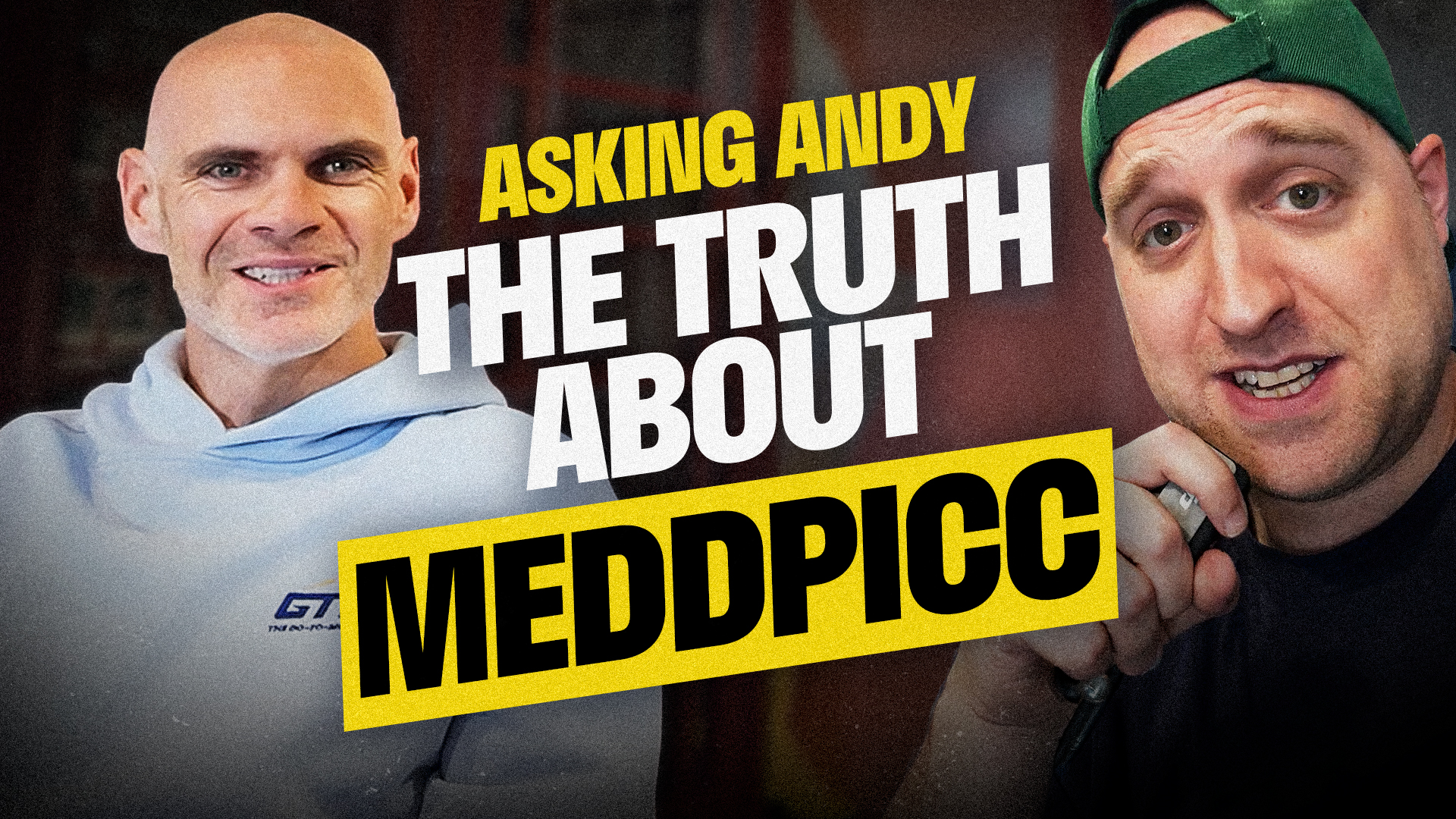
Eric Marterella joins Andy Whyte on Masters of MEDDICC on building winning teams, creating genuine Champions and brand advocates, and leading with discipline.
September 04, 2022
53 minutes
NOTES
GUESTS
TRANSCRIPT
KEY TAKEAWAYS
- Build winning teams with purpose. Recruit people who share your belief in the mission and product. High performers follow leaders who show conviction and credibility.
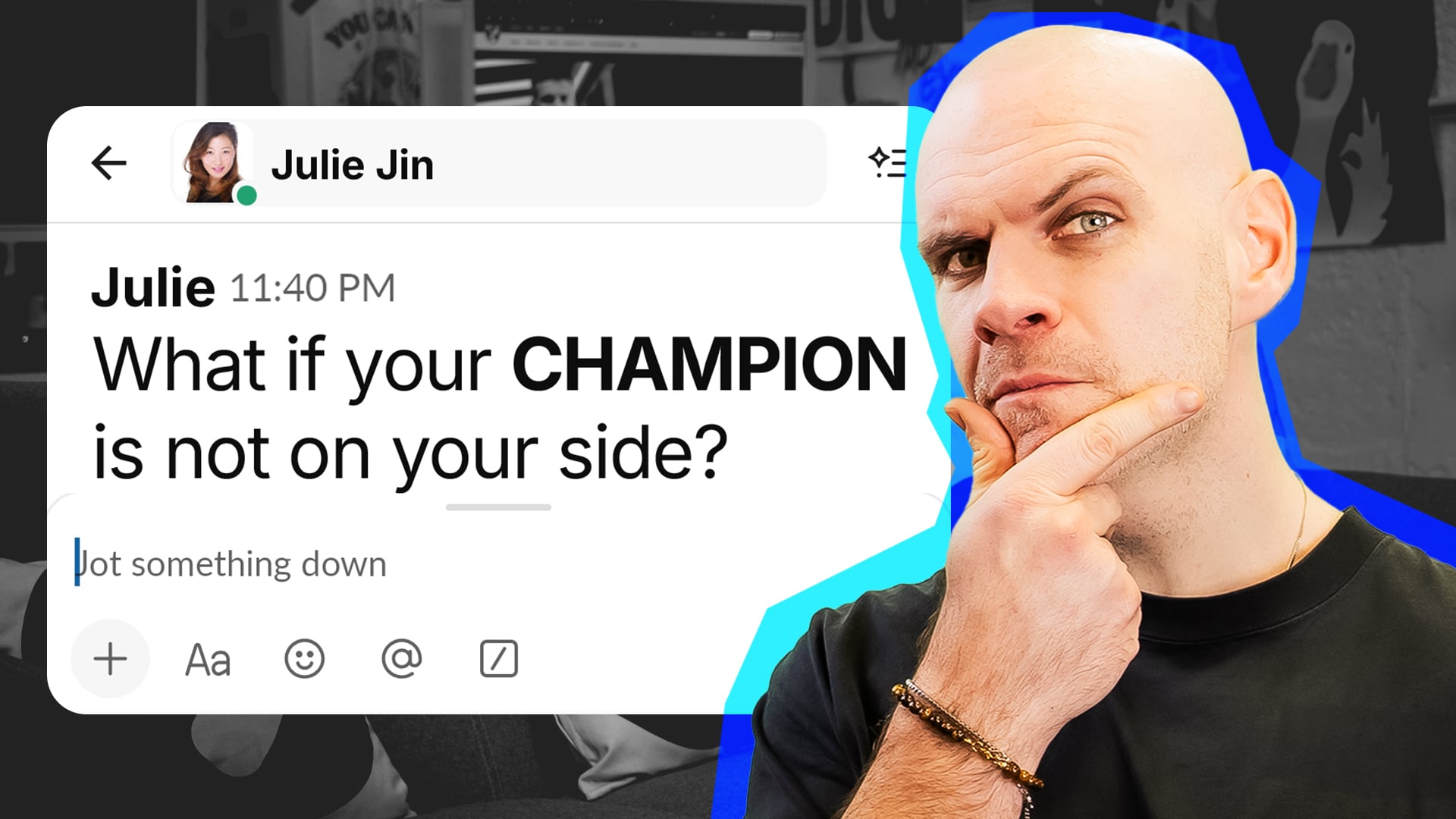
- Foster cross-functional trust and advocacy. Collaborate openly with marketing, product, and partners to create genuine Champions and brand advocates who drive long-term growth.
- Lead with discipline and preparation. Use structured methodologies like MEDDIC, respect every meeting by coming prepared, and focus only on opportunities that truly move the needle.
.png?width=273&height=327&name=image%201%20(1).png)
Andy Whyte
CEO & Founder of MEDDICC
Andy Whyte has helped companies big and small grow and prosper as both a quota-carrying Account Executive and a Revenue Leader. His passion for helping sales teams succeed led him to become founder and CEO of MEDDICC and author the five-star-rated “MEDDICC” book. Known for his mantra “Nobody ever regrets qualifying out” and his expertise on the science and art of sales. Away from the day-to-day, Andy practices many skills as a chef, sports coach, taxi, and cleaner in his most important role to date - Dad.
.png?width=2000&height=2000&name=Untitled%20design%20(12).png)
Eric Marterella
3-time CRO
Eric has spent 27 years operating at the intersection of early-stage hypergrowth and enterprise scale. He joined Sprinklr when it was ten people and $1M ARR, and helped scale it to $85M ARR and a $1.8B valuation ahead of its NYSE IPO. Since then he's served as CRO at multiple companies including Safeguard Cyber, Lotame, and Quantive, scaling one from Series A to Series C and a $115M raise. Today he runs Swarm Venture Partners and advises founders on the GTM discipline that turns early traction into durable revenue.
Copy Full Transcript
00:04 Andy Whyte: Hello, Mr Eric Marterella — how are you? Welcome to the Masters of MEDDICC podcast. It's great to have you on. How are you doing? It's Friday, three or four days from the end of the quarter. 00:04 Eric Marterella: Yeah, I'll start with a yes. Good afternoon to you. It's great to be with you again. Thank you very much, and welcome to the show. 00:21 Andy Whyte: You and I have had the pleasure of working together in the past at the wonderful and very topical Sprinklr — who, as we know, IPO'd this week. I'm not sure when this will go out — probably a couple of weeks' time. I can see you've got a smile on your face. You're very, very happy about that. But maybe for those who don't know you, Eric — perhaps you could give a little introduction about who you are and how you came into this wonderful world of sales. 00:38 Eric Marterella: Well, thanks again for having me. I tend to introduce myself without a lot of formality other than to say: I'm a lifelong learner. I'm a father of four beautiful boys. My wife of 20 years — I took her to junior prom, and I converted that deal. I would say that's the biggest deal I've ever closed in sales. But I've been working vocationally since I was 15, with a work permit, and started with Marriott International. Had a blast doing it — just have an extreme appreciation for hospitality. My heart goes out to everyone still recovering in that sector from the pandemic. I tend to operate in a way that's been roughly split: the first ten years were more focused on larger corporate environments, and then I became obsessed with helping early-stage companies get off the ground — particularly in SaaS. The coverage I prefer is market-transitional software, typically involving lines of business collaboration. I have lots of friends in IT as well, having spent many years working across various points of the network. The most recent ten years have been intoxicating — raising a family, learning how to be a better partner to my spouse, and before the pandemic, travelling about 200 days a year for around ten years. Love travel. And lastly, food. You've got to have at least one great meal every day. 02:22 Andy Whyte: Yeah, I like that. That's a great goal to have. I feel like I'm letting myself down on that one — something I need to get better at, given how much I enjoy food. Cool. Thank you for that intro. Very useful. Well, one thing you touched on was the amount of travelling you used to do — being a three-time Chief Revenue Officer and working in global roles, that was obviously a lot of travelling, not just around the US but around the world. And with the pandemic and everything that's happened — I can remember a time when I was still leading a sales team through it, and it occurred to me that our entire pipeline had never been met in person. That, for me, was a real shock moment. I remember thinking: if I'd been told six months or a year earlier that I wouldn't have the chance to meet any of my prospects in person, I wouldn't have believed it. And if I had believed it, I would have thought our chances of success were hugely diminished. I wouldn't have thought you could close deals successfully that way. How do you think about that? How have you adapted your teams and your approach to compensate for the inability to build in-person relationships?. 03:27 Eric Marterella: Great question — and honestly, I'm still figuring it out. First of all, to address your point: currently I am the CRO at GTM Hub. I don't know who came up with that title, but I'll give whoever it was an award. It feels as if we've been trying to make sales leadership roles bigger and bigger — a seat at the table — and actually, I still operate hands-on, now in my third run at this, and I'm better at it now than I was in my first run. I have to thank Andy Manfredi for that first opportunity. But I've had a blast leading and building teams — particularly multinational teams. My curiosity about how we operate as a team, especially coming out of the pandemic, is that I think it's going to produce the best case studies of what we all thought we were doing efficiently — which is working cross-functionally and observing everyone's differences in culture. But I love being on the ground. So when I got off that plane in March of 2020 and it became apparent I wasn't going to be travelling for a while, I struggled with it. But my adaptive response was to start making calls to people like yourself — and so many people have reinforced in hindsight what a special time that was in terms of the connections made. 04:15 Eric Marterella: I always knew the day would come when I'd be able to get back out and move around. Because as I've built teams, I obsess over being more efficient and outcome-driven, having better strategy and playbooks. But my belief is that a lot of us have the same playbooks, and it comes down to execution. And executing at the field level is what I've found to be one of my X factors. I put a heavy weight on the interpersonal skills and connections you can make over a meal or a quick conversation in a city that may have taken you 12 hours to get to — but the ROI was met the moment you got off the plane, shook a hand, gave a hug, and met somebody on their home turf. Specifically, the contextual information you pick up in the Uber on the way over, or the drive back to the airport, has often given me the best insights to make decisions. 05:37 Andy Whyte: Yeah, I agree — this is a very interesting topic. I was actually talking to a previous guest, Thibaut Ceyrolle from Snowflake — who set up and ran EMEA for them — and we touched on this. What I think you're describing, what we defined as trust, is such an important element in interpersonal relationships. And I think it's such an undervalued, underappreciated element. We know it needs to exist, but we don't talk about it enough. And it goes for customer relationships and peer relationships alike. I always think we don't mention it enough. 06:21 Eric Marterella: Well, I think we mentioned it a lot in the last year and a half, and it was very apparent. If we pick on one of my favourite channels for engaging and supporting one another — LinkedIn — I urge anyone listening: use LinkedIn. I often say if I can connect you to someone in my network, I will, if it makes sense. But I saw a lot of people over-rotating on this topic of wanting to appear human and trustworthy. And I believe you can see it very clearly — the authenticity is visible in the content, the prose, what the conversation is actually about, even when you're forced to do it in limited characters. In the case of LinkedIn you have plenty of opportunity to use video too. But it was very apparent this was going to be a popular thing to talk about. And I felt some aversion to contributing to the conversation. Why? Because I think people will often know, when they meet you, whether you're sincere. And no matter how much you invest in performing sincerity, you will often fail if it isn't felt. So I've had this give-and-take with how I contribute back to the community. I love to observe. I'm more of a voyeur when it comes to social media. 07:46 Eric Marterella: Of course, we had some time together at Sprinklr — I spent around seven years there — and I remain fascinated by how that industry is evolving and what's possible in the customer journey and experience space. But I'm obsessing more these days over learning how to be outcome-focused and effective, versus just productive. 08:04 Andy Whyte: Yeah. And I think what you're reflecting on is your own self-awareness about how you come across. And I think self-aware people with high EQ tend to be very conscious of whether they're adding value to a conversation or just contributing noise. Credibility comes into play there too. If you're always chipping in, people become aware of that. It's not necessarily a bad thing, but there's something to be said for the person who rarely speaks — when they do, you sit up and take notice. Having something meaningful to say — like, "Oh, I haven't seen a post from him in a while and here he is — I'm going to make sure I read this." There's something in that. So, you mentioned CRO at GTM Hub — I was looking and noticed that there's a serious amount of talent that's gone with you. People I remember as some of the best I worked with at Sprinklr. Some of your former colleagues who are now still your colleagues. How does that happen? Because a lot of people try to replicate it, but it's very rarely seen — certainly at the scale of talent you've brought together over at GTM Hub. 09:02 Eric Marterella: Well, it's pretty decisive: best team wins. You want to be in a position where you can call someone in that A-plus category, and the believability — the trust — to bring them in is there. I've been on some missions where I've had pause doing that. In this role — even before I joined — I didn't have one shred of doubt that this was bigger than the S-word. It's bigger than Sprinklr. And it carries all the risk that Sprinklr had for me when I left a very strong position at Cisco, where I was managing a very large relationship — Amazon and Marriott — and took a shot, believed in an entrepreneur, and believed in the growing addressable market, and more importantly, vibed with what the mission was. It's very akin to that. And in early-stage building, you have to get some of the band back together. And oftentimes it doesn't work. In this case, I've taken a run at some of the folks I've always wanted to work with again, and I've been successful about half the time — I'm not batting 100%. And I think if I close my career in early-stage, I might move into a later-stage role if I'm batting .500 — which, to use a North American sports reference, will get you into the Hall of Fame as a baseball player. 11:04 Eric Marterella: But this has been an easy conversation to have. And to go back to the other point about self-awareness as a sales leader: I cannot produce the results and put smiles on my clients' faces — the product has to be amazing. I can't give them any amount of discount or great experience and process that they'll appreciate if they don't drive results and metrics. So I obsess over that. So when I'm recruiting and building teams, I'm trying to understand what they want out of the journey — and in some cases it may take five to ten years to get there. But my believability index is very high because I spend a lot of time with the CEO. I'll also share that I purchased the software and went through the entire buying journey myself — without any preference, without even a call about a recruiting opportunity to join the company. I selected the software for a client I was advising, saw the impact, the results, understood where we needed to improve, and then spent several hours with the CEO and others in the review process, including the VCs. I couldn't say no. Most folks I've called haven't been able to say no either. But I'm also cognitively aware that you can never force someone to do anything. 13:08 Eric Marterella: And I never aim to. But it is called recruiting — not just interviewing and onboarding. So I'm pretty aggressive, as I am in my selling pursuits. 14:10 Andy Whyte: Yeah, I love that. One of the things you were alluding to was the overall lifecycle of a deal and a customer, and how important it is to have a strong product to back up your go-to-market. And go-to-market is interesting to me — not only because GTM Hub shares the same acronym, which I imagine generates some interesting inbound. But because you have, for me, one of if not the greatest SaaS marketers I've ever been part of a team with: Uri Epstein. He's fantastic. And I know I've been calling him Jeremy — I always get it wrong. I didn't want to say it. 14:27 Eric Marterella: He actually goes by Uri, and does not want to be confused with the other Jeremy. 14:27 Andy Whyte: Got it. 14:49 Eric Marterella: You're not wrong. He was probably one of the reasons, but not the reason I joined. In fact, I independently went through the review process without even speaking to him. Because I've seen people make mistakes following leaders or following people they once built something great with — and it didn't work out. I was very conscious of that coming in, because I'd learned that lesson before. But without question — one of the top community marketers on the planet. A great friend, and someone I always enjoy sparring with through all the struggles that go into the intersection of sales and marketing. That's probably an interesting thread to pull on in our conversation — happy to expand if you have a question to tee it up, or I'll just give you a story or two. 15:29 Andy Whyte: I'd love to hear more. I was actually going to try to steer the conversation that way, because marketing is such an important part of success as part of the broader revenue team — the top-of-funnel work, driving traction through that funnel — it's huge. So I'd love to hear more. 15:52 Eric Marterella: Well, there's this constant push and pull. The Hard Thing About Hard Things says I should be fighting more with the product and engineering team — and Rado, Jordan, and Ivan are all co-founders, all product and engineering. So that's probably not a great adage to follow, especially when one of them is your boss. But I have no problem with conflict. I think there's beauty in it. In fact, there are a lot of things you should establish on day one — especially in early stage — that are the ground rules. There's a lot of operating rhythm you impart when you transition from an inbound to an outbound motion, which is one of the things I was doing. And consequently, marketing has to change. And it's 2021. So I'll share a quick story about one of our first encounters. Uri came over here and sat in this very small space, and we had a reckoning within the first half hour. The reckoning was: the things we'd done before — building to a double unicorn and all the other accolades — that doesn't mean anything now. We have to look forward and recognise it's 2021. We have to embrace new process, new technology, new ways of working, and most importantly, observe the new opportunities in talent acquisition. 17:02 Eric Marterella: So we have built a team together very differently than we ever have before. Credit to Uri — he is always innovative in terms of where talent is located. We have people in nine countries in his team, so he builds differently, and in a great way. Because through that you get diversity of thought, alignment to cultural views, and customer perspectives. We've taken a very hard run at this and are building in a way unlike anything I've done before. And my lean towards technology is that I'm fascinated by companies like 6sense and other opportunities in that space. When you federate it as an architecture, I believe that for the first time I'm seeing sales and marketing truly come together at the table to create genuine sales enablement — but thinking about it as inclusive of marketing as well. It's not easy, and you will have conflict. But when you fight through it, do the hard things, plan it out, and execute — my belief is you will see a much better process. And most importantly, thinking about our customers beyond the direct commercial relationship — our sales leaders, our sales teams — they're happier, more efficient in what they do, and better knowledge workers when it comes to executing against the goals you've set them up for. 18:50 Andy Whyte: Yes indeed. One of the things I always found really strong about the way Uri did marketing when we were at Sprinklr was that he was fantastic at fuelling and giving you both the collateral and the backing to build champions inside your deals and your customers. You touched on that with the community piece. What do you think makes him so effective at that?. 19:16 Eric Marterella: I believe we share the same mindset. And you wrote a book about it — calling out the champion, one particular chapter that's one of my favourites, especially at quarter end, when we talk about testing your champions and creating opportunities for the next play. Being a champion is really about being an advocate of the brand. And as a proficient enterprise seller — and anyone listening will have had one or two customers who know what I mean — when your badge gets you into a corporate headquarters, and you're interchangeable with the internal team, then it's natural. You will be more effective from everything you're aiming to do in terms of your execution. So when Uri and I spend time and energy creating an ecosystem of advocates and champions for our brand — they may not even be part of our commercial business at all. And in some ways that's the magic, which is hard to prescribe and is probably a book he could write. But it's something I have a particular passion for — because as I've gotten a bit older in this, going back to that earlier topic of what being trustworthy and authentic really means: it's not so forced when you have great relationships, and people don't see — whether digitally or at a physical event — a transparent layer of advocacy that's clearly manufactured and transactional. 21:36 Eric Marterella: Sometimes we risk losing potential advocates — people who could genuinely shout from the rafters — because we've made it feel contrived. I'm not dismissing analyst coverage — that's a different motion entirely, and well worth the investment for that type of voice and quadrant placement. But when you build an authentic community, it's almost like an alliance channel firing on all cylinders — it sort of sells itself. And you can only hope to make it more efficient by having really disciplined operating rhythm and process in place. Like MEDDIC, right?. 22:04 Andy Whyte: Yeah, like MEDDIC. Indeed. And you touched on the partner ecosystem — alliances — and how that's a pretty significant motion at GTM Hub, given you're working in such a business-led, and in many ways consulting-led, space. How are you building the alliance business there? How important is it to you? How do you work with partners in enterprise sales?. 22:29 Eric Marterella: Well, I've been a raving fan of partnerships for a long time — I have to credit John Chambers and the team, and Carlos Dominguez, who is one of my great friends and mentors and who really taught me this. John is more of a level-five relationship — we're not quite on first-name terms yet — but he is a level five, and I'll define those briefly: the net is, I have never achieved any great amount of success in a sales function — whether as an individual contributor or a leader — without a partner ecosystem. A great product. Great solution consultants and sales engineers — Dan Woodward, Felipe, Drew, Jeff — I'm naming them because Rachel Waters from Cisco — when I've exited those journeys, in the case of Rachel, I think we were actually tearful. Because they drive so much of the process for you through the teaming aspect and their proficiency. Now, back to partners. If you look at Cisco as an example — achieving 99% of revenue through an indirect channel — I believe that's what great looks like. You take the operating costs down, you have a better experience in terms of coverage, and you potentially gain disciplines you could never build at scale yourself, especially in an early stage. 24:12 Eric Marterella: And lastly — experience matters. What I want is for our customers and prospects to be served throughout the lifecycle. While I have a customer success team alongside the ride, there are certain things we just won't address at depth. And partners fill that gap, creating a much stickier relationship by virtue of their expertise. With GTM Hub, we are in the early days of a broader planetary shift — organisations moving away from an industrial-economy, productivity-oriented mindset and towards a knowledge economy: outcomes, how we measure effectiveness, what I shouldn't be doing when I wake up versus what missions actually matter. And I'll make a closing point on that: the technology part is relatively straightforward. The change management — the behaviours that have to shift inside a business — that's the tough stuff. Fortunately, I've always had great partner relationships that have helped me cross the chasm when the challenge wasn't about the technology or the SaaS product itself, but about all the preparation and continued refinement in how teams actually execute. 26:10 Andy Whyte: That's an interesting topic in itself. I think there's a real divide in enterprise sales that doesn't get defined clearly or often enough — and that's the difference between having a category-creating product and proposition, versus being version 2.0 of something that already exists, or 3.0 if you're talking about something like email marketing. There's a real difference in how you approach the opportunity, how you engage with the customer, the tactics — everything from go-to-market, to in-person strategy, to the things you're focusing on to differentiate. With a proposition like GTM Hub — which, for those who don't know it, and you'll probably hate the way I articulate this — it's software to help organisations enable their revenue teams. Is that how you'd describe it?. 26:55 Eric Marterella: I was going to offer you a marketing role. Simple is a better way to describe it — which you just did. To give you a frame of reference: before I was looking at GTM Hub as a potential solution, the problem statement for me — for those who are fans of Command of the Message out there — was this: most organisations, whether a Fortune 500 that's 50-plus years old or a Series A company just getting started with 15 or 20 people, obsess over the same things. Going faster. Creating effectiveness by measuring what matters. A book was written on it. Google was cited as one of the early adopters of OKRs. But the problem today is: when you do all of that in a spreadsheet and get a team together, you don't necessarily get the lift after the meeting. To quote Ragy Thomas — after our first kickoff, on a weekend in 2012, he came up to me and put his arms on my shoulders and said: "Make sure this wasn't a movie." I've used that line again and again since. But I knew what he meant. He was saying: I don't just care about what was on that whiteboard — I care about what sticks. 27:53 Eric Marterella: Make sure that we follow through on what we just planned with Mike Logan and the early-stage team. That was a riveting moment for me. I understood what he meant — similar to a sales rep getting off a call and forgetting to update the notes and inform the cross-functional team of next steps. Those are the moments of truth where you know data leakage is a real, significant challenge. So working with early-stage or late-stage companies and helping them use software to drive focus, alignment, and transparency — in a dynamic way, because it's not just about OKRs or the framework, it's about how we orchestrate results. This is results orchestration, fed by data and inputs. We're just getting started. A lot of people are spending time with us because they've been doing this in spreadsheets, using SMART goals and basic goal-tracking tools. But they're starting to understand that it's not just about the company's top-line goals. Everybody wants to see what everyone else is doing. But most importantly — if you can help contribute to somebody else's initiative for a particular quarter when they have an OKR set, and have the visibility to go in and do something to actively improve that metric — that's what great looks like for me. 30:33 Eric Marterella: As we take customers on that journey, we're seeing a real spectrum: from people wanting 20 integrations on day one, to people who just want to get out of a spreadsheet and into a system of record so they can see each other's focus, alignment, and priorities. One of my clients was running a weekly call with the C-suite where it was just ten PowerPoint slides, collated into one deck, and they essentially read the news to each other. That way of working still works. But what if that meeting ended and you could still maintain a transparent, ongoing conversation — so it wasn't a complete pause between one Monday call and the next? That's what we do. 31:17 Andy Whyte: I like that. And I've been in that position — updating OKR slides in PowerPoint, not even on Google Slides, so you'd end up with multiple versions floating around. Nightmare. So that's a million miles from the utopia state you're describing. 31:39 Eric Marterella: It is. And from an ICP perspective — my brothers and sisters in revenue leadership listening, I'm not necessarily calling on Chief Revenue Officers specifically, but I will say they are great champions and often great coaches. I haven't found a saboteur yet, because they obsess over understanding what's happening in marketing, in engineering, how finance is performing — because it all impacts your decision making. The ability to self-serve is an interesting attribute to what we do. And I just want to raise it as an early observation — not a point of contention — from when I first looked at this. We now have a bit of history together in this space, and we had a competitor with a self-service model. I perceive that as a flywheel, and actually as a big benefit to our business — our business is fuelled by our customers. If a prospect can log in for a free trial and experience the software, they're not going to have the same experience as going through a considered sales process. But does it matter? Can they use it? Do they see value? Do they mention it to a peer and say "hey, I think this could solve your problem"?. 32:50 Eric Marterella: The genesis of that other company was actually as a data company — right place, right play — but it also evolved into a self-service platform. So we offer both. We believe growth can be achieved through ubiquity. I am agnostic — I want people to leverage this platform. I'm passionate about them evolving the way they work, whether they're a solopreneur or managing a division of 15,000 people. But it has to be simple. And I guess I'm still up for the difficult stuff — I wouldn't be in the market-transitional software space if I weren't. But what I'm not up for is complicated. 33:47 Andy Why. 33:47 Andy Whyte: Well, you touch on something I'm very interested in — product-led growth, where you've got your self-serve model, and inbound from all sizes of company. Because I think traditionally when we talk about self-serve, it gets badged as SMB — companies you've never heard of. But in the modern self-serve model, you can have someone from a global manufacturer pop up and start using it in their internal team with the aim to roll it out further. And if you look at some of the greatest software companies right now — Slack, Notion, Airtable — these are all doing self-serve. And on the more mature end like Slack, but also companies like Miro, Figma — I'm sure they're being used inside your organisation right now, and 95% of the time started through self-serve. But as they proliferate around the organisation and start to rise up — that for me is really exciting. It's a whole new channel of sales. And all the signs have been there for so long: customers doing their own research, those data points around buyers coming to you 70% informed, really just trying to nail the final 30%. 35:33 Eric Marterella: Well, in a lot of cases now it's more than 70% — they've basically made the decision. They're coming to you and now your job as a revenue team is: first, what's the product team delivering in terms of the experience that makes them want to stay and keep using it? And then once they're using it, I can imagine — if we were in person and you were at your office — you'd have like a bell rigged up: if an email address from your top-100 target list signs up self-serve, everyone's in the war room. "How can we make this customer successful?". 35:50 Andy Whyte: Do you see much of that self-serve inbound? And how do you approach it?. 35:50 Eric Marterella: We approach them the way they want to be approached. If someone at a university, for example, is using GTM Hub because it helps them — and in a sense it's personal for me too, because I've had coaching from mentors who've observed how I build and execute, and received feedback that I need to be more disciplined in maintaining line of sight on strategy and the plan on paper. And it's like the hardest thing sometimes — you're flying the plane, raising money, adapting to a new team, aligning culturally. And how does that change from a Series A to a Series D? I know every stage felt different — and I've done a couple since that were later stage, but also A to B — and it's just different. But if I could work on myself — and I could — it would be to be more disciplined in that way. So when somebody is taking the time and energy to work with our software in a self-serve mode, we are very self-aware and allow them to do it. We of course leverage technology and have the ability, through CRM integrations and various signals, to pay attention. But we have a very deliberate approach around allowing them to explore and truly reach their own conclusion. 37:22 Eric Marterella: Because there are people using our software in philanthropic spaces — we just closed a deal with United Way. We actually give our software away to nonprofits and great causes. I'm working with a good friend to do a segment around how our software has helped advance cures. This isn't a GTM Hub commercial — but these are things that matter deeply to me after doing this for a long time. It's really important to be working with software that could change the way a society lives, works, and operates. And it's not easy as a sales leader to hear the feedback loop from your team — they don't want to be competing against the self-service model. But I heard that same conversation in 2007 when I was supporting Amazon — specifically the AWS team. That's how that company started. In fact, they didn't even write a contract, at least that I'm aware of, until 2009. People were just expensing it on their Amex cards. Look no further than Andy Jassy and Jeff Bezos, striving to create modules that people could just use. 38:13 Andy Whyte: Brilliant. Yeah, lots of efficiencies. I love that. So — changing gears a little — one of the things I really wanted to dig into was: you know I always think about how I first met you. I was onboarding in New York at Sprinklr at what they call Splash. I'm sure they still do it — and there are probably a few more people there now than when I was there. But thinking about it — the number of people from my Splash cohort who are still at Sprinklr is quite remarkable, six or seven years later. That's kudos to Sprinklr for retaining such talented people. But you were describing — I can't remember the exact topic — but I remember how you were introduced, which was that they'd been trying hard to lure you over to Sprinklr for some time. You came in and had a great tenure there. How many years were you at Sprinklr?. 39:20 Eric Marterella: Five. 39:20 Andy Whyte: Five years. Incredible. And then stepping into the global VP Sales role, then stepping out into Lotame as Chief Revenue Officer, and then a number of other roles since, to where you are now. So a lot of sales leadership experience across very different organisations. How much does your playbook differ based on the product, the proposition, the sector you're selling into?. 39:44 Eric Marterella: It's always different, because I learn from every one of those journeys. And I'll be self-effacing here, Andy — because this was one of the first conversations we had when I was in that role at Lotame — and I was genuinely aiming to bring the discipline and operating rhythm that was lacking at the time, which was sales qualification. I have some core tenets I'm unwavering on. I think John Kaplan said it best — and maybe it was Brian Walsh in one of the trainings when we went through Command of the Message, maybe the fourth time at Sprinklr — the point was: "You can do a lot of other things, you're right. But you cannot not do these three. So if you don't want to, you're just not on my team. And that's OK." I think that was Brian Walsh. Big fan. Great trainer, brilliant mind, lots of great Xerox references. And I think we can learn a whole lot from those playbooks — going back to those early-era men and women driving around demoing. It's activity-driven. And value framework — how you have a conversation. Because when I buy software — and I've bought nine different elements of a sales tech stack so far — I want it to be a great experience. 41:22 Eric Marterella: I want it to be about me. So there are things I am absolutely wedded to, because I haven't seen anything better. But every day I'm open to a better way to delight a customer, move a sales stage forward faster, or just honestly help an employee feel like they're contributing beyond just hitting a number. That's super important to me — because the vocational path, and why we make that choice to go from individual contributor to leader, is still right at the front of my mind. I've had some really great sales leaders, and I've had some really bad ones. And the bad ones I can only characterise as having lacked — maybe 52 minutes back in self-awareness — of knowing when they were too much. So I'm constantly testing my own self-awareness, because we all think we're self-aware, and 98% of us aren't. Actually, my wife may have cited that figure at last Friday night's glass of wine and I'm feeling very confident — but the point is: be very conscious of what's too much, especially in early stage. Adapting to where you need to be — I can't be more pointed than that in terms of what matters right now in this journey. I'm meeting smart people — in some cases much smarter than me — so I have to be aware that I can't put everything out there at once. 43:36 Eric Marterella: Playbooks come down to execution. I hope my competitors are listening — and welcome, competition in the results orchestration space — we want a crowded quadrant. We're just going to be in the top right, if you're OK with that. But I think we all have the same playbooks, and we all read the books. Bringing it back to what you've given us through your words — practical examples are really fascinating to me. I recently learned more about how my own brain works, and I'm pretty sure I'd have been diagnosed with ADHD as a kid if I'd grown up in the US. I never got the diagnosis, but I'm 99% sure I have tendencies. And it comes back to how I digest information — and by contrast, how I won't digest information. Things will go completely over my head unless they come with a metaphor, an analogy, a creative way of describing something. That's where examples come in so much. And maybe an overlooked element of experience is not just having the knowledge to know the playbook — if this, then that — but being able to say: "Follow me on this path, because I've got an anecdote here that's going to explain exactly why. If this, then that — and here's the next example from my experience." That's something that's so often missed. So that's a really interesting one. 44:20 Andy Whyte: One final question — I just want to say I've never met anyone proficient at sales who hasn't had some clinical, and I have no problem admitting it — whether formally diagnosed or not — a bit of ADHD. 45:12 Eric Marterella: Yeah. I think "Seller's Deficit Disorder" has been coined somewhere. I don't think it's been officially branded, but I think it's one of the more brilliant observations. And the fact that you focused and wrote a book — to me, even if you had tendencies of ADHD, it's actually probably helped you more than it's held you back, because of your grit, your fight, and the discipline you've imposed on yourself to actually take the time to orchestrate something like this conversation. Yeah, it feels easy — but it takes energy and effort and discipline to actually do it. And that's what you struggle with at times in the field or as a sales leader. You could occupy 24 hours of a day because there's an excess of opportunity. There is. And if you get out there, you'll see it. If you stay inside and hit refresh on Salesforce at end of quarter — you're not doing your job. 46:35 Andy Whyte: That's a good point. Excess of opportunity — maybe a good way to wrap up, with my favourite final question. Excess of opportunity is one thing. Especially when you've got so many compelling propositions today — by the time people like yourself get involved, it has to be a good proposition. So your team will always have something compelling for a customer to listen to. So how do you ensure time is being spent in the right places? How do you keep your team outcome-driven and focused on opportunities that are genuinely progressing — not just ones where everyone's happy to keep talking? What tools and what in your playbook address that?. 47:27 Eric Marterella: Yeah. You want to dig into my playbook? I can't give away all the secret sauce, but here it is: it's the discipline. Every great sales leader listening — and it took me a while to learn and become genuinely proficient at this — is that when you're spending time with your teams in one-on-ones or frontline leadership discussions, you've done your homework. You have the ability — with technology to advance things — and you leverage qualification methodologies. You write about it with MEDDIC, or MEDDPICC, or other variants — just saying. And there's more than one MEDDIC book for you now too. But my point is that the ability to also identify what's important and what isn't — my team leverages GTM Hub to set their own OKRs, and they go beyond the metrics you can already see in Salesforce. So my closing point on that is: when you're bringing people together, if you're just having them read the news or you've done nothing in the way of preparation — my permission is for you, as a seller or for my team bidirectionally: end the call. We've had some abrupt endings since I've adopted this approach. We just end the call — because it's disrespectful. If you think about the opportunity to show from the outset how you're going to help someone be more effective in their role, you need to first start by respecting the individual. 48:56 Eric Marterella: The people who perform servant leadership as charlatans — who talk the talk, then go and have a QBR and sit there with arms crossed, having done nothing in the way of pre-work — that's offensive. And I've made that mistake, by the way, several times. The only reason I get triggered by it is because as a seller it bothered me the most. And when I've made the mistake, I know it's held us back. But beyond that, there's lots of technology that can create signals and drive productivity — one of which is GTM Hub. 49:26 Andy Whyte: Indeed. Well, thank you very much. I think we've just about used up all our time — which is a shame, because I feel like we could go on for hours. But where can people find you? LinkedIn?. 49:53 Eric Marterella: That's the best channel for sure. I welcome you to reach out — and I will, of course, facilitate introductions. But Andy, thank you for having me. It's a bit cathartic to have a great host just ask a few questions. I always learn things going through this, but I continue to learn through you. And I encourage everyone spending time reading your book, or listening weekly to your podcast releases, to keep doing so — because it's better. To be candid, I probably played it at double speed, but it's become a habit. And I've been genuinely intrigued by some of the guests and the candour you bring to the questions you ask. I didn't enter this conversation trying to do anything other than get to know you and this audience a little better. 50:31 Andy Whyte: Yeah, thank you. It's been super, super good. And thank you for those kind words — I'll put those on the playlist for bad days, alongside John McMahon calling me the MEDDIC guy, which I've got at the top of the list. And I bet you could play a John McMahon podcast at triple speed and still not want to. 50:31 Eric Marterella: But I can't believe we went a whole hour without referencing John McMahon — though I just have to say: that guy profoundly changed my life in many ways. Not because we were on the phone constantly, but he taught me a lot — particularly around recruiting. And also, when you make the decision to voluntarily leave a post where you have a whole lot of sentimental reasons to stay but maybe not many business reasons — he was the one person who actually coached me through that change management in my own head. So for that — yes, John McMahon, thank you. 52:03 Andy Whyte: Yeah, indeed. And the guy has — as I think everyone listening knows, and if you've been living under a rock, he's got a book out: The Qualified Sales Leader. It is tremendous. Everyone I speak to says the same thing: "Yeah, I got that, I read it." And there's something about the story — the way it's written — that pulls you in. I can't speak highly enough about it. So for anyone who hasn't picked it up, and who's wondering about all these people in the John McMahon CRO network — just read the book. There's no other sales book quite like it. What a way to finish. Thanks very much, Eric. 52:29 Eric Marterella: You're quite welcome, Andy. All the best, and I look forward to speaking with you soon. 52:29 Andy Whyte: Thank you, sir.
No transcript sections match your search.
This is a lightly edited transcript. Some sections have been condensed for readability.
ABOUT THIS EPISODE
SHOW
MASTERS OF MEDDICC
EPISODE
S1 | EP7
DURATION
53 mins
PUBLISHED
MEDDICC
Video
Masters of MEDDICC
Masters of MEDDICC - Season 1
CHAPTERS
0:00
Intro: meet Eric Marterella
2:22
Selling through the pandemic without meeting anyone
5:37
Trust as the undervalued X factor
8:32
Best team wins: bringing talent with you
14:27
The push and pull of sales and marketing
19:16
Building champions and brand advocates
22:04
Why partner ecosystems matter
31:17
Product-led growth and the self-serve flywheel
38:35
How the playbook changes across companies
46:35
Discipline, respect, and ending the call
GET MORE MEDDICC IN YOUR INBOX