
































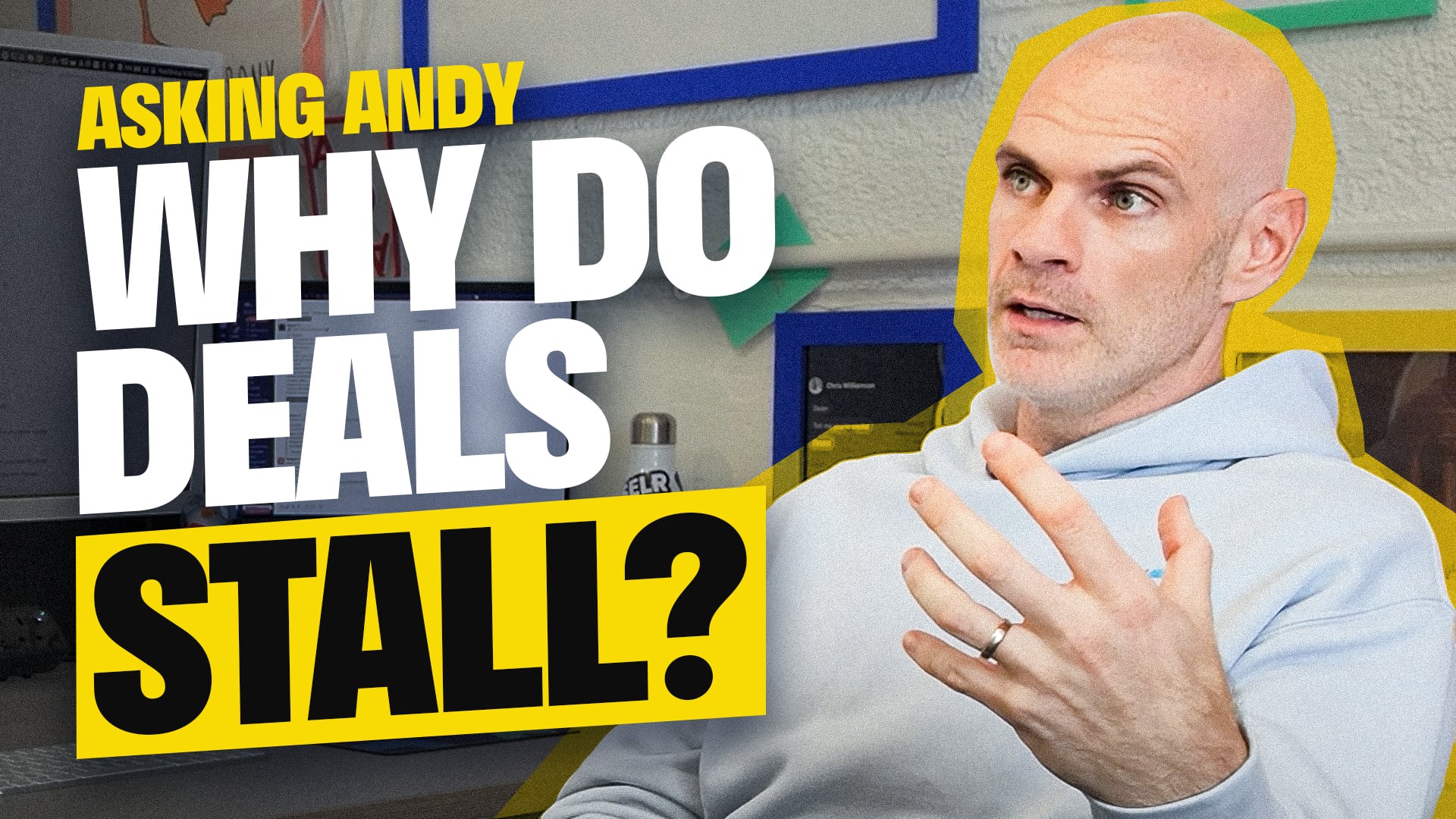
Richard Dufty on Gaining Authenticity & Trust | Masters of MEDDICC
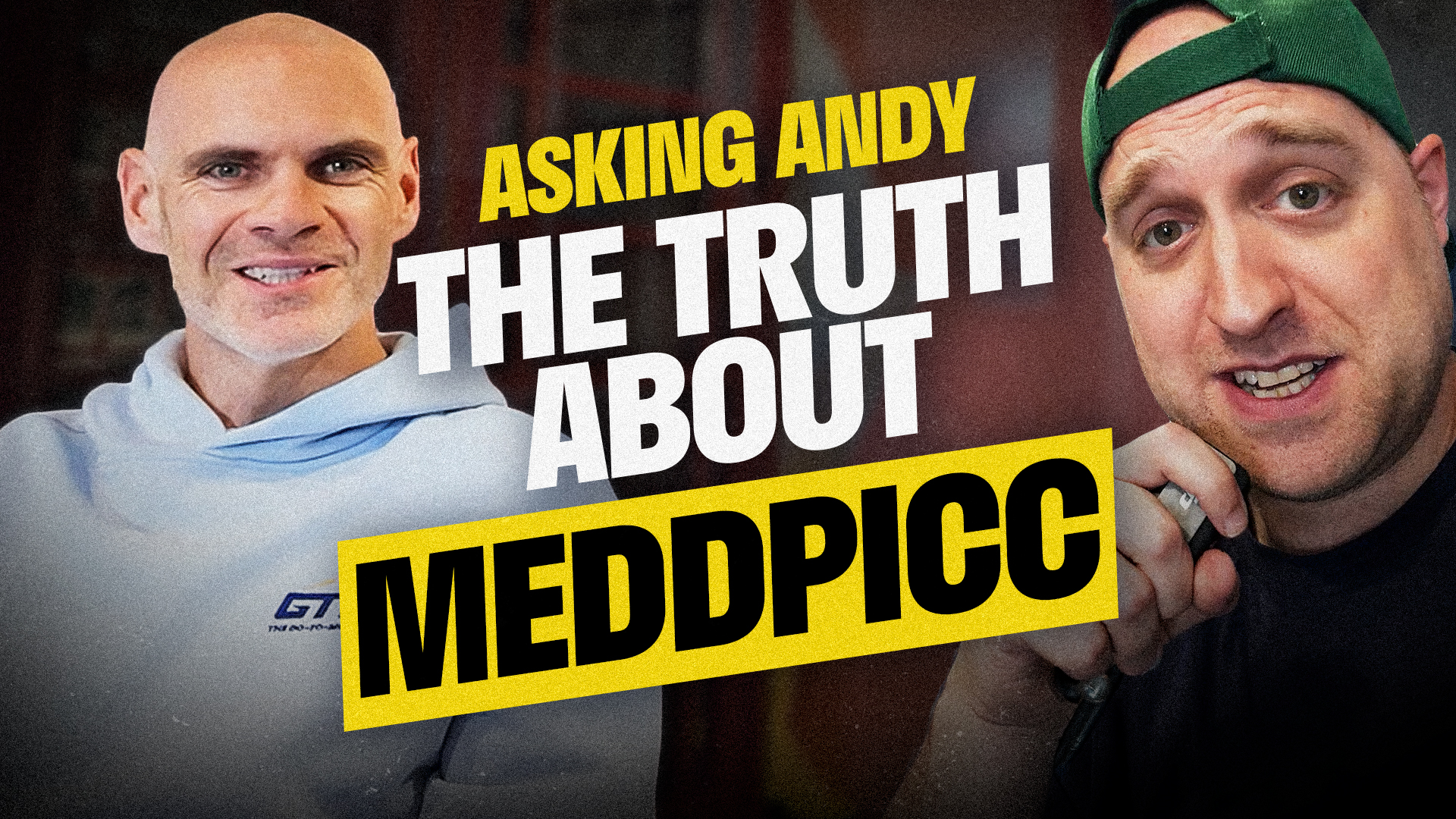
Richard Dufty joins Andy Whyte on Masters of MEDDICC to explore fixing broken go-to-market, the business flywheel, and why authenticity still wins in enterprise sales.
July 23, 2024
62 minutes
NOTES
GUESTS
TRANSCRIPT
KEY TAKEAWAYS
-
Go-to-market works as a flywheel, not a funnel. There is no silver bullet. Not ABM, not PLG, not AI. The companies that win are the ones doing the right fundamentals together, in alignment, consistently. Where A leads to B leads to C, the flywheel builds momentum on its own.
-
Work backwards from your best customer, not your pipeline target. Most GTM teams are siloed, optimising their own metrics in their own lane. The fix is simple but hard: define what your best customer looks like, understand how they buy, and cascade that understanding across every function, from product to marketing to customer success.
-
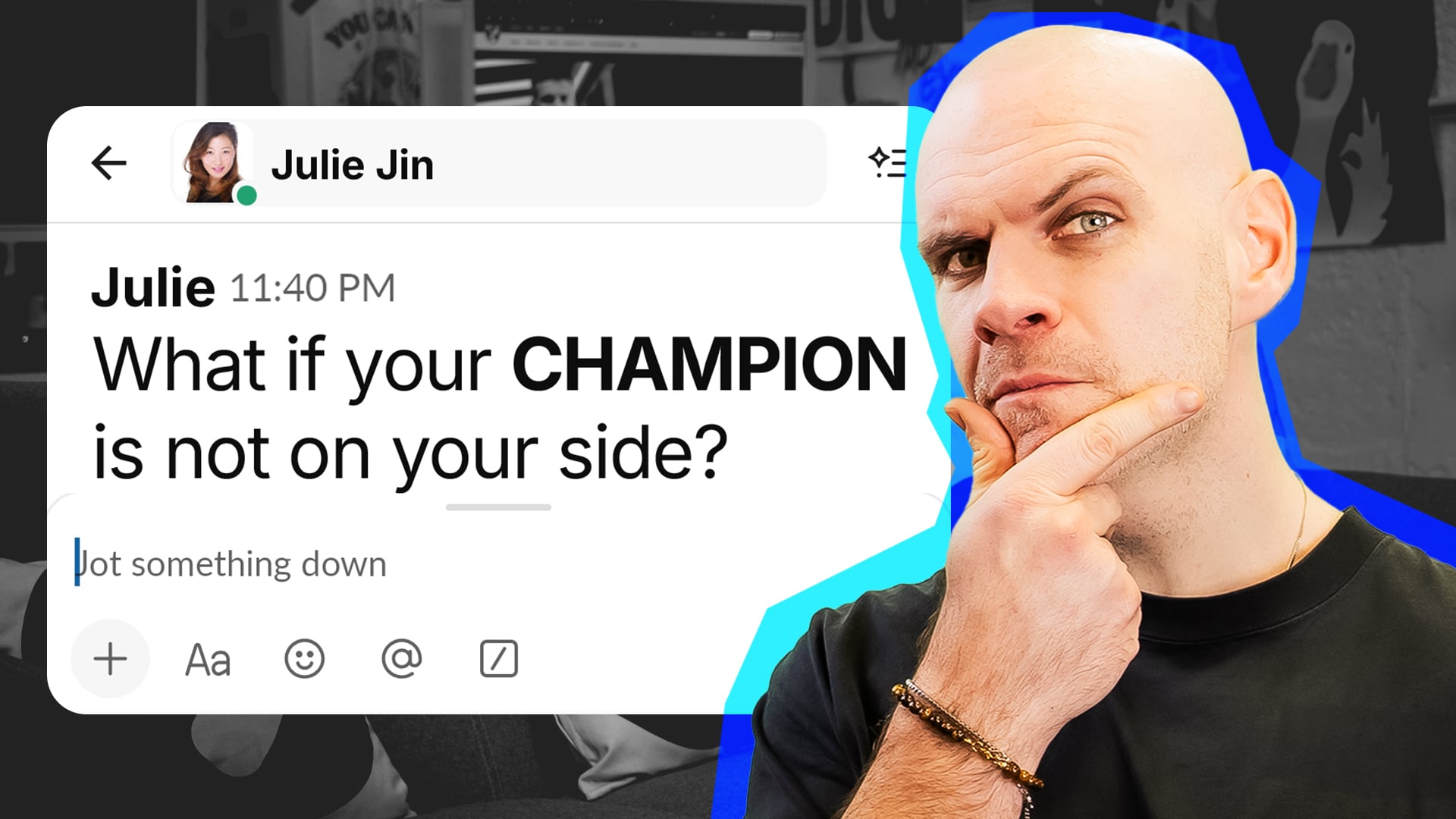
Authenticity isn't a soft skill, it's a competitive advantage. The stats say customers don't trust salespeople and want rep-free experiences. Richard's take: that's a quality problem, not a sales problem. The reps who invest genuinely in understanding a customer's world, before pitching anything, are the ones customers return to across companies, across decades, and across four car purchases.
.png?width=273&height=327&name=image%201%20(1).png)
Andy Whyte
CEO & Founder of MEDDICC
Andy Whyte has helped companies big and small grow and prosper as both a quota-carrying Account Executive and a Revenue Leader. His passion for helping sales teams succeed led him to become founder and CEO of MEDDICC and author the five-star-rated “MEDDICC” book. Known for his mantra “Nobody ever regrets qualifying out” and his expertise on the science and art of sales. Away from the day-to-day, Andy practices many skills as a chef, sports coach, taxi, and cleaner in his most important role to date - Dad.

Richard Dufty
Chief Commercial Officer at Team Cymru
Richard is Chief Commercial Officer at Team Cymru, a PE-backed cybersecurity company approaching $100M ARR, where he leads the full global GTM organization across sales, marketing, partnerships, and customer success. He's spent 20+ years scaling enterprise SaaS businesses, from #1 AE at Symantec to leading $250M ARR teams, and from $1M to $100M ARR at AppDirect as valuation grew from $30M to $1.5B. He's also the creator of The Revenue Flywheel, a GTM motion built on the principle that sustained growth comes from systems, not heroics.
Copy Full Transcript
11:52 Andy Whyte: Yeah. I concur with you on go-to-market being in a state where it's not working as it should. We talk about go-to-market as if it's just a group of department heads coming together and pulling in the same direction. I very rarely see that as the norm — it's normally the exception. And for me it all comes down to what you said: pattern recognition. Everybody's in their own lane, their own silo, looking at their own metrics the way they've always done. Some of that comes from incentives. If you think about go-to-market as the full arc — from positioning that invites the customer in, through to booking a meeting, through to selling, closing, delivering, upselling and renewing — everyone's zoomed in on their own lane. What you have is a scenario where people aren't actually looking at the one thing they should be looking at: the customer themselves. Working backwards from: what does our best customer look like? How can we find more of them — the ones who get the most value from us, love us the most, see the value fastest, and therefore buy fastest? 13:15 Andy Whyte: It's not that hard to do it that way. But if you start with "how can we get the customer's attention the way we've always done it" rather than "what really works and what do our customers really respond to" — the difference is it really comes down to quantity versus quality. If you're starting with "we need more leads, more leads, more" — that's where it begins. And the top of the funnel gets clogged. Whereas if you work backwards from "we need more quality customers" — I think that cascades down, and all of a sudden everybody is more in step, more focused on the same goal. 13:58 Richard Dufty: But it's hard. Although — I actually agree with what you said a second ago: I don't think it's hard. I think it's harder to do, and we don't do it. But that doesn't mean it's hard. Dieting isn't hard. Going to the gym isn't hard. It's the separation between intent, motivation, and execution. And I even wonder whether in a lot of organisations the intent and motivation are genuinely aligned. The best organisations I see are when the leadership team comes together driven by the same incentives, the same goals, in a way that cascades all the way down to compensation across different roles. I love the Boys in the Boat analogy — it's not about eight people in a boat, it's the boys in the boat. We are all in this together. Marketing can't hit their numbers while sales fails, or vice versa. We should only be excited when we all hit the number. 15:02 Richard Dufty: I always use the sporting shirt analogy: your name is on the back, but the team's logo is on the front. You play for the team. If we're not winning as a team, we're not winning. Nobody cares if LeBron scored 42 points last night if they just got knocked out. No one's going to remember how many points LeBron got in the last game when they lost three of the four games to Denver. We lost. Everyone's going home unhappy. That's what we try to embody in what we call the "$1 behind" rule. So this actually came up organically in a job interview — I was interviewing with my colleague Dan Taylor for a head of sales and CRO role. Final stage. The candidate said: "Any questions? " We said: "What's the culture like here? " And Dan answered: "It's like any sales culture — everyone's competitive, everyone wants to win. But the thing I think is different here is: whoever is number one wants whoever is number two to be just $1 behind them. "16:32 Richard Dufty: And I think that's exactly the thing — you want winners in your team. But you want whoever is winning to want whoever's just behind them to be just behind them. They get the glory. But as a team, you're all winning. The number one gets the recognition but their colleagues, their peers — they're winning just as much. The money's coming in, the success is there, the momentum is building. That's why we love the $1 behind rule. Because if you really think about it — if you've got a number one and the rest of your team is so far behind, it's going to catch up with you as a company. It probably means your teammates are losing to the competition. And the next time you go into a deal, the competition isn't saying "we beat that rep" — they're saying "we beat that company. " The more we can all be winning together, all tides rise. Let's all go forward together. 17:28 Richard Dufty: And it's funny — I was just thinking about something that happened recently. We have a new Chief Marketing Officer, Cynthia, and she's fantastic. I loved the first meeting. She was saying all these things. And for the first time in a meeting with a CMO, I shut up — because she was saying things like: "But who's the champion in that? " And I was like: OK. Then five seconds later, someone mentioned the number of leads they had. She stopped, looked up at the board, and said: "Those aren't leads. That's just a bunch of activity. " And I was sitting there pinching myself. It was fantastic. 18:05 Richard Dufty: But there's an example of the only way it's ever going to work. Otherwise everything will look like it works for a quarter or two — and then it will unravel. It has to happen at the top. Leadership has to come together and align on that, create one team, and that team mindset has to cascade across the organisation. And that takes you back to the point about working backwards from the customer. Because if you're not just asking "what does a successful customer look like? " but "what is the path to getting that good customer? " — and you work backwards from there — that is, through another lens, MEDDIC. That's how MEDDIC was created: from looking at why do we win, why do we lose, why do deals slip? It's reverse-engineering success. 19:00 Andy Whyte: And to your point about Cynthia your CMO — if you work backwards without MEDDIC, you end up with anecdotes. "Oh, we had that person — remember John? He was the CFO and he really put the brakes on it. What we should do in future is have some sort of strategy for John. " But is it a strategy for CFOs, or was it specific to how that particular situation played out? All of a sudden it's much more complicated and very hard to repeat at scale. Whereas if you say: "Who was the economic buyer? " — "This time it was John. " — "What about the other times? " — "Actually it was Sally, and then it was Jessica. " — and all of a sudden you've gone: "What do they all have in common? They're all CFOs. " So you can now say: "We have a common scenario where the CFO is likely to be the economic buyer. " You and Cynthia can then strategise: how do you make sure you're engaging those CFOs early? And you might also notice not all economic buyers are CFOs — you start profiling much more accurately, building strategy off the back of real data. 20:16 Richard Dufty: Agreed. And our old friend Nick at Snap — one of his favourite sayings that I love is "go slow to go fast. " One of the things every company needs to do is stop what they're doing right now, pause, and go back to the beginning. So since Cynthia joined — only a couple of weeks after me — we've been spending all our time pausing and going back to basics. Looking at the wins, the losses, talking to the team: who are the buyers? And we're rewriting it from the ground up. What's the problem we're solving? What does the market differentiation look like? The old three questions that everyone asks in different ways: why threat intelligence? Why now? Why Team Cymru? Those always come back to the same essentials — what problem are we solving, who are we solving it for, and how can we demonstrate we solve it better than anyone else? 21:15 Richard Dufty: What was great was our Chief Product Officer, Waseem, turned around and said: "This is everything I've been trying to do too. " He said: "I love using MEDDIC all the way back to product, because if I'm not building a product that truly solves a pain that you guys can go and implicate, then it doesn't matter what we build. " And this is where I think everyone has to just pause. It might be a day, it might be a week — just do a check. Have we got this? Or have we all just been running so fast for the last X years that we haven't stopped to truly understand who our ICP is, who the buyer persona is? 22:15 Richard Dufty: I think people are starting to use the right words, but I'm getting a little nervous about how deep they can really go and whether they truly understand the intent. But at least we're going in the right direction. I also think we overcomplicate things. I really do. We were down in Southern California last week and the team got to a point where we stopped and said: "Are we complicating this? What's the problem? What do we do better than anyone else? " Because we had a slide deck up and we looked at it and said: "You could put any security company's name on this and it would look the same. " And I'd said the same thing back at Arcus — at one point we just said: "This is what we do. We do this better than anyone else. Let's just call it what it is. " Then that fed into the demo deck and the pitch deck. Stop talking about all the peripheral stuff. Hit them between the eyes right up front: this is what we do, this is what we do better than anyone else, and this is why it's going to benefit you. Is this something you'd be interested in? 23:28 Andy Whyte: I love that. And we've been working on this programme to extend MEDDIC into a full value framework — that's been three years in the making and has taken up a lot of my thinking. I've been looking at how other providers build frameworks to help organisations come up with value propositions and messaging. And what I've come to realise is that a lot of those organisations' business models are built on making you reliant on them. It has to have a certain layer of complexity, because that complexity is their business model — they survive by having to fly in to help you in those meetings. Whereas our business model is completely different. We want to give go-to-market teams, leaders, and enablement teams the tools to use their own expertise. No one knows their business better than them. 24:50 Andy Whyte: And to your point about simplicity — overcomplicating is something I've been actively working against. When I think about aligning go-to-market teams, it really comes down to this: where have we done this before in a way that's relevant to this prospective customer? So we're not doing interrogation discovery — we can just say: "Hey, here's a story of an organisation we think is similar to you. Does this resonate? " That's stage one. Stage two: "Great — now let's see what this would look like for you. Let's see what value we could deliver if we did for you what we did for that organisation you just confirmed was relevant. " And if that excites them, stage three: "Then let's make those our joint targets. Here's where we've done it before. Here's what it would look like for you. And if we work together, here's what we'll both be aiming towards. "25:41 Andy Whyte: And the beauty then is: once you win the customer and deliver that value, it becomes the story for the next customer. It's a triangle, and it just goes around. The more you do it, the faster it spins. The more relevant stories you can tell, the more success stories you'll have. And those three points of the triangle help every single go-to-market function: positioning, marketing, messaging — they can speak to how they've helped before. SDRs using it to grab meetings. Channel partners using it with their networks. Sales obviously. And then genuinely handing over to the post-sales team — which is something we've not really seen before. Typically these are silos that don't talk to each other. Marketing does features and benefits. SDRs use BANT. Sales uses MEDDIC. And then customer success is just thrown the ball with no one having explained the rules or where we're going. At best there's a translation in the handover — "when we said 'pain' in MEDDIC, we meant X" — but it's fragmented. Whereas my picture goes all the way through. 27:14 Richard Dufty: Yeah, and I love that you just spent a couple of minutes talking about MEDDIC without even using any of the letters. The reason I love that is that people are often intimidated by MEDDIC — intimidated by new frameworks. And a couple of things I always try to get across to new teams: first, MEDDIC isn't a big scary framework. It's just common sense. The best sellers have been doing it all their lives without realising it. My favourite feedback is always from a great rep who says: "Oh — I've actually been doing this for 20 years. " That's exactly right. Now let's put it under the right common language. 27:50 Richard Dufty: Second, what I'm excited about at Team Cymru is that we're rolling out MEDDPICC across the entire customer journey from start to finish. And it's funny — we're about to implement Gainsight on the customer success side. I was on with Nick Mehta the other day having a great chat with him. We worked together back at Symantec — one of the most gregarious, phenomenal leaders I've ever met. And watching what's on his LinkedIn these days? Biggest Swiftie fan in the world, I think. Nick Mehta — if you didn't know that, he knows every word to every song. It's very special. 28:25 Richard Dufty: But one of the things we were discussing — and he said he's seeing it become more common — is: I'm combining our pre-sales technical organisation and our post-sales technical organisation and putting them under one leader. Someone who's been with our business for some time — Scott, great guy. And the concept there is: when you start thinking about leveraging MEDDIC as an underlying architectural framework across the entire customer lifecycle — and you've heard me talk about my flywheel concept — what you now have is the team responsible for building the technical champion relationship also responsible for continuity all the way through. 29:05 Richard Dufty: For any enterprise salesperson, ask them who the most important person in their selling life is and it's their SC — their solutions architect type. But think about it now: you've got an organisation that's responsible for building the proof of value, building that out pre-sale — and now it's the same organisation on the post-sale side. I was having dinner with one of our great client success team members, Philip, and he said: "Listen — at every organisation I've been at, you get the poor post-sales team thrown the ball, but no one told them the rules, where we were going, what the value was, or what we were meant to deliver. " So when you start thinking about things a little differently, when you start implementing MEDDIC across the entire customer journey — which is a circle, not a flat line — you start thinking about different roles you can leverage with it. And it starts getting exciting. 30:42 Andy Whyte: For sure. And it really fills a lot of the gaps that create the go-to-market problems we talked about earlier. One of my favourite use cases is for the head of product. If it's truly a loop — a customer lifecycle loop — then for the first time ever, without some additional framework that nobody's really invested in because it's not their core responsibility, we have a way of measuring and monitoring which parts of the product are being carried through end-to-end. So if we're saying at the top of the triangle: "Here's a story we think is relevant to you. Here's the before — what life is like without us — and the after — what life looks like with us. " And you start to ask from a product perspective: when we use that "without us / with us" framing, what are the things that customers always respond to and want to take the next meeting? What are the things that never land? 32:22 Andy Whyte: We call this M1 and M2. What are the M1s — the customer stories — that never progress to an M2? And what are the M2s that customers never seem to want to turn into M3s, which are the goals they're heading towards? And what are the things that, whenever we use a particular customer story or use case in front of a prospect, it always gets through? What are we winning on in decision criteria? What's the thing that, when it's present in the decision criteria, we always win? Or when we lost an opportunity — what was missing? What was the relationship or economic decision criteria element that we hadn't captured? 32:55 Andy Whyte: So many products are not commoditised on features per se — there's a lot of crossover now — and the thing that often makes the difference is the relationship or economic decision criteria. But if we're not calling those things out explicitly, we really can't learn from our mistakes. And on the integration side — we're making those decisions empirically, by talking to our customers. What products do you use? We're launching a great new product next week, and we made the first integration decisions based on user testing, not by sitting in a room saying: "Oh, why don't we integrate with this? " I've been in organisations where those conversations don't happen at all. Whereas now it's: "We're not just implicating the pain and saying we can solve it — how do we make your life easier? Will it improve the decision criteria if we can demonstrate that you can ingest our data directly into Splunk, or Tines, or whatever is most valuable for you? " And that's product making decisions informed by the MEDDIC framework — even if the product team doesn't realise that's what they're doing. 35:02 Andy Whyte: And from a personal anecdote — at the last company I worked at, we were a US-headquartered unicorn. The SaaS ran on AWS, but we didn't have EU-localised service. That was a problem for Vodafone, who basically said to us: "If you had this, we would buy from you. But you don't have it, so we're going to buy from a competitor. " It was as black and white as that. Vodafone weren't being arrogant — they were just saying: "We're one of the biggest telcos in the world. We're not trying to nickel and dime you. You're our vendor of choice. But we can't do this because it will never get through security and data protection — GDPR means the servers have to be here. "36:15 Andy Whyte: And what happened was — obviously I went to the US and said: "This is worth doing. We're going to have to do this at some point, and if you're looking for the one account to make it worthwhile, this is it. " And the response from the CTO or VP of Engineering was basically: "We don't need it. " And I thought: "I think they do. " But the point of this anecdote is: we were anecdotally able to point to many other opportunities we had lost for the same reason. But because we weren't using MEDDIC to the level we aspire our customers to — actually measuring what the decision criteria was for each customer: "EU-localised service is a hard technical requirement, and the lack of it is also a relationship decision criteria signal — it signals how invested you are in the EU market" — we couldn't quantify it. 37:23 Andy Whyte: Not only could we say "we've lost seven deals this year because of that" — we could have said "that equates to this much revenue. " Not to mention what the momentum of winning Vodafone would have meant for winning other telcos. Having that common language to be able to call things out. I've zoomed in on decision criteria here, but it's the same for marketing teams spending loads on keywords that generate activity but not sales. Back to what Cynthia was looking at earlier — that's exactly it. 37:42 Richard Dufty: And marketing thought leadership — yeah. The intent is right. But what I actually see is a lot of companies being thought leaders and it not generating sales. The amount of companies' content I download because I think it's phenomenal — but I've never taken a sales call, I'm not the target buyer. And going back to this — every time I say anything these days, I preface it with: this is hard, this isn't an accusation, this isn't saying you're doing it wrong. It's just: can we all recognise that every couple of years we get different buzzwords? We go from thought leadership to ABM to intent data to this to that. And back to the reason I love the flywheel concept — I call my approach the business flywheel, going back to Jim Collins — the whole premise of the flywheel is there is no one silver bullet. When we all acknowledge that and stop thinking that the latest greatest thing is going to work on its own — it's just good old-fashioned doing the right things, doing them properly, doing them together, and having them align. Where we do this well, it will automatically lead to that. It's not a mindset trick — in a true flywheel, A leads to B leads to C leads to D. But it's hard. 39:33 Andy Whyte: Well it's funny you mentioned that term — "old-fashioned" — because it's something I've been thinking about a lot. I've been buying every sales book I could find that is over 100 years old. There are quite a few — which surprised me. One, I'm a geek and love the history of sales. But also, there's this nonsense narrative that thought leaders and LinkedIn gurus like to peddle, which is that MEDDIC is old and therefore ineffective. My point is: I'm going through these books looking for any advice that isn't applicable today. So far I haven't found any. Of course contextually some things are different. But the underlying principles are rock solid. 40:38 Richard Dufty: And the reason is obvious — it's not complicated at all. As much as people try, for their own interests, to state that customers buy for different reasons or that customers are fundamentally different today — they're really not. They're looking for value. Not necessarily the cheapest price. They're looking for the most value for money — which might be the fastest implementation, the fastest time to value. Everyone has their own definition of value, which is exactly why it's so important to get to what value means for that specific customer. Professional selling has always been about getting as close as you can to understanding how you can bring the most value to that customer. That's it. And it's in complete alignment with what you're saying — it comes down to thinking about the customer first, and approaching it authentically. 41:42 Richard Dufty: The best salespeople I've looked up to over my career — the authentic ones. Not looking for the latest gimmick. And I was listening to a podcast the other day that was talking about some of the old names, listening to some old sales training tapes. I watched a short YouTube clip. The style is different, the times are different. But the core message is still the same: how do I help someone get what they're trying to do done? Whether it's in their personal life or in their job. Along the way, technology will change. A fax machine will come out. A thing called email will come out. ABM will happen. This and that. 42:22 Richard Dufty: But if you rely on those tools alone, what we're all seeing over the last few years is: when no one was doing it, you stood out. Now no one opens emails anymore. Cutting through the noise with the latest tricks — look, technology is great. AI will be the next one. But at the end of the day you're just trying to get there faster or do something different. And you can't do any of that without the core principles, the fundamentals — truly understanding the pain. 43:01 Richard Dufty: I think about enablement in three buckets in any organisation I work with. And you remember Julian — we did a lot of this together. I've got a great new guy on the team called Cam. Three buckets. Number one is market enablement. That's the most important. Does everyone understand the problems that your prospects and customers are dealing with? Because if you can't live in their shoes, if you don't really understand what it looks like — you can do everything else right, but if you never really understood what they're trying to achieve in the first place, you can't actually solve the problem. The second is value enablement. OK — now how do we really help solve that problem? But always through the lens of: did I really understand the problem in the first place? We've all been sold to when it's clear someone has sent us some "insight" but has absolutely no idea what we're dealing with, what problems we have, what we're trying to do. Why are you even reaching out to me? And the third is making you better. That's the personal development piece — that's MEDDIC. That's going to events with my teams. Meditation, mental fitness, physical fitness. Those are the things that move the needle. Not the latest coolest tech stack. 44:31 Andy Whyte: No, absolutely not. And speaking of old-fashioned approaches — I spent three minutes yesterday morning over a cup of coffee looking through some direct mail I received. A brochure from a company that does device-as-a-service — laptops and hardware for startups. And I sat there genuinely thinking about how we could do the equivalent for our world. Because it caught my attention. It was tactile, relevant, and actually sent to me physically. And the thing you mentioned about buzzwords — it's always been the same for me. "Social selling. " I've had tremendous success with what people class as social selling. But I also believe social selling is complete nonsense as a term — because it's just selling, on social. We don't call it phone selling or email selling. They're just different channels. I think the term serves people who don't understand social media, so it gives them a framework to engage with. 46:03 Andy Whyte: And the same with product-led growth. Don't get me wrong — I understand the strategy. If your solution allows it, giving access to a prospective user — not customer, prospective user — so they can kind of demo themselves, that's great. If you've got a product that can do that, that's wonderful. But really, up to a certain point, it's a marketing motion rather than a sales motion. What you're doing is moving where in the journey you first engage with the customer. It used to be you couldn't even get product information without engaging a salesperson. Then there were online videos you could sign up for but were still behind a paywall. And now you're giving the customer access to the product itself. Now — I'm not saying it's a bad thing. This is a good thing if you can do it. But let's not pretend it's a sales motion up to the point where sales engages. All of what makes it successful up to that point is marketing: getting the person engaged, keeping them engaged, feeding them information so they invite other users and so on. That's a marketing motion. 47:40 Andy Whyte: What's really important is that along the way of that PLG journey, we're helping that customer understand what they need from a solution like ours. So when the time comes and they have to take it to procurement — if you've perfected that motion — they're not even bringing in other vendors. They can say: "This is the only solution for us, for these reasons. " And that, by the way, is decision criteria — technical decision criteria that you've been building with them through the PLG experience. 47:40 Richard Dufty: So it's not a bad thing. We shouldn't be dismissive of it. But it's different. And we have a tendency to throw a buzzword at something and apply it to everything. We're launching a PLG motion at Team Cymru — we actually sat down as a leadership team and mapped out the entire journey and got very common-sense about what this really means. And the beauty of it is it becomes much more efficient for the prospective buyer and for us. Putting this tool in someone's hands and letting them explore it — they don't have to talk to a salesperson. They can do it at 11pm when they've finally put the kids to bed. 49:03 Richard Dufty: And we then mapped out the trigger points: when do they do something that signals us to reach out and offer some help, offer some white-glove attention? And it also depends on the market. If you're selling Canva or Beautiful. ai at $12 a month, you can have PLG the whole way. But Monday. com — I was at a conference last year and the founder was there saying: "Yes, we were PLG, but we're not anymore. " He said enterprise now accounts for more of their growth than any other part of the business. "We have an enterprise sales team — don't think we don't. There are people selling Monday. com to the biggest companies on earth for $500K or a million a year. " So rather than a debate of whether PLG works or doesn't work — it's: what are you trying to sell, to whom, at what price point, and what do you need from the motion? 50:16 Richard Dufty: In our case, for example, PLG will give us a tremendous amount of new pipeline. But the exciting thing is it will be qualified pipeline. So when people come through having already used the product and got value from it — realising it's intuitive and solves their problem — and we reach out to them, we're reaching out to someone who already understands what we do. They just need some help getting over the line. And to me, that's a beautiful coming together of product, marketing, and sales. 50:16 Andy Whyte: And the thing with quality over quantity — there is only one flaw: it requires more investment of time. Time is the most important asset in our industry. To make sure we're not wasting it, we have to qualify really well. And when I think about all the buzzwords — PLG, social selling — they all come back to the quality-over-quantity thing. I've been doing some research lately — there are some really interesting statistics out there. In 2015, Forrester predicted that 20% of US B2B salespeople would be made redundant by 2020 — a million people in B2B sales losing their jobs because of digital evolution. I think it was Gartner that said 73% of people don't want to engage with salespeople — they want a rep-free experience. And there's a HubSpot report saying only 3% of people find salespeople trustworthy. All of these things, for me, are issues with quality. 52:44 Andy Whyte: In every one of those instances, you would not prefer a rep-free or purely digital experience over what we know good looks like. One of the defining traits of the best reps is their ability to instantly build credibility that leads to trust. And that's only possible through quality. And one of my bugbears about AI — and I can see all the advantages, I'm not a Luddite — is around what happens when you remove the human element of research. Of course you might now ask an AI to summarise an annual report for you rather than reading it in full. There are wins in efficiency there. But some of my best thinking happens in what I'd describe as the daydreaming mode — when I'm actually reading an annual report and I suddenly think: "I wonder if this person is like that person" — and all of a sudden I've linked this customer's problems to an organisation I've helped before. I'm building a bigger picture that gives me much more contextual richness in front of that customer. And that contextual relevance is what truly stands out as quality — not being able to reel off bullet points that an AI gave you, but being able to bring genuine context that makes the customer feel like you truly know them. 54:18 Richard Dufty: Everything you're describing yells authenticity. And when I hear those stats — of course I have a visceral reaction as a sales professional and leader. But I think they're representative of the transactional sales culture that exists. When I look at the team I inherited here at Team Cymru — thoughtful people who have truly understood the problems, gone in deep — and when I've met with them and our customers, it's very clear. There's a strong, warm, trusting dynamic. I was just in San Diego at a conference, and André and the team had four or five different customer meetings. And in every single one of them, the customer wanted to be there. They were enjoying it. And why? Because she has taken the time to invest in those relationships, understand their problems, deliver for them, and make them realise: I'm here to solve your problems, not sell you something. 55:49 Richard Dufty: It's like car dealerships — they get a bad rap all the time. And I used to think: I want to just walk in and look at the cars myself because of the poor experiences I've had. But I've had a saleswoman I've bought my last four cars from. I email her when my lease is coming up. The value she provides — she remembers me, truly understands where I'm at, will even reach out proactively: "You've got a couple of little kids now — I'm not sure the same car is going to work for you anymore. " That authenticity and trust. As a sales profession, when we start there and end there — and you truly invest in your heart in that relationship — that's where it all comes from. 56:47 Richard Dufty: And to me that's where it's exciting too. It's a game of chess. Doing this for 20-plus years, I still get excited when I'm solving people's problems — knowing that I can help you with things you might not even know you need yet, because I've seen it 20, 30, 40 other times. But I'm going to do that in a respectful, authentic way. And curiosity is essential. Ask sales leaders and sales professionals what key traits are — the word "curious" will always come up. And to be truly curious, you almost have to resist the shortcuts. You can't take the shortcuts if you're really curious, because you feel like you'll miss something. You're almost averse to it, because you don't want to miss those little cues, those threads you can pull on that take you somewhere unexpected. 57:44 Richard Dufty: It takes effort, thoughtfulness. Think about it like catching up with a friend. If you and I catch up once a year and I say "how's things? " — you give me a pretty short answer. Because I'm not that curious. But if I really stop and say: "Andy — how's this specific part of your life going? How did that thing work out that you were trying? " Then it's a real conversation. We go somewhere neither of us knew we were going, and it leads somewhere special. Versus just: "How've you been? " "Fine thanks. "58:40 Andy Whyte: And that comes back to your car example as well. If there's anything commoditised, it's cars. Through a decision criteria lens: technical criteria are largely commoditised — same make, same model, different dealerships. Economic criteria is somewhat commoditised too — you'll probably get similar deals. But relationship? That's the one that's very, very hard to do as a checkbox. You can't just tick off "sun visor" and "miles per gallon. " The salesperson has to invest genuine quality for that. And she understands: you've now got two little kids. How are you using the car? What do you actually need? Versus: "Our car is better than that car. " That's not what I asked. Well, this has been awesome, Richard. I'm already thinking about pulling you back into the studio the next time you're in London. Thank you so much for coming on. And Team Cymru are hiring — so where should people reach out if they're interested? 59:37 Richard Dufty: LinkedIn is probably the best place. But I hope that as people have listened along, they can see we're in a really special place at a really special time. I choose roles the way a VC would: I look at the culture, the people, the direction, the product-market fit, and the opportunity — not just for yourself, but the opportunity to make an impact and deliver real value. We're looking for people who want to make an impact. Who genuinely want to get outside of the buzzwords and have a real purpose. People who can be part of something exciting, working with some of the biggest companies on earth, with a really important mission — helping save lives and protect organisations by leveraging AI technology. 60:15 Andy Whyte: Yeah. From what I've seen so far: best product in the field. And you're not resting on your laurels — new things coming out all the time. 60:15 Richard Dufty: We're broadening our team. The products we have today are used by the biggest companies on earth, but what we're doing is democratising access to that. Our product and engineering teams have been working hard to expand and simplify the usability and accessibility — leveraging AI and other capabilities — so that now nearly every enterprise can benefit. That has overnight created a significant increase in our TAM, SAM, and SOM. So we're looking for people who understand threat intelligence, who know how to sell to Security Operations Centres — to come on board and be part of this. Great product, expanding space, strong partner network, great leadership team. And whether you're looking here or anywhere else: really understand the dynamics of where you're going. Is the leadership team connected? Are they aligned on where the company needs to go? Because that's the only way you win. 61:25 Andy Whyte: Love it. Well, thank you so much, Richard. 61:25 Richard Dufty: And thanks for having me. Look forward to the next one. 61:25 Andy Whyte: Alrighty. Likewise.
No transcript sections match your search.
This is a lightly edited transcript. Some sections have been condensed for readability.
ABOUT THIS EPISODE
SHOW
MASTERS OF MEDDICC
EPISODE
S1 | EP18
DURATION
62 mins
PUBLISHED
2024
Video
Masters of MEDDICC
Masters of MEDDICC - Season 1
CHAPTERS
01:00
Intro & Richard's New Role at Team Cymru
03:19
The Funded Startup Trap
09:24
Go-To-Market Has Been Broken for a Decade
12:48
Work Backwards from Your Best Customer
15:02
The $1 Behind Rule and Team-First Selling
18:05
MEDDIC as a GTM Architecture, Not Just a Sales Tool
25:41
The Business Flywheel - No Silver Bullets
28:25
Pre-Sales and Post-Sales Under One Roof
39:33
Sales Fundamentals Don't Age
46:03
PLG Is a Marketing Motion, Not a Sales Motion
52:44
Curiosity, Authenticity, and the Shortcuts You Can't Take
59:37
What Team Cymru Is Building and Who They're Hiring
GET MORE MEDDICC IN YOUR INBOX